
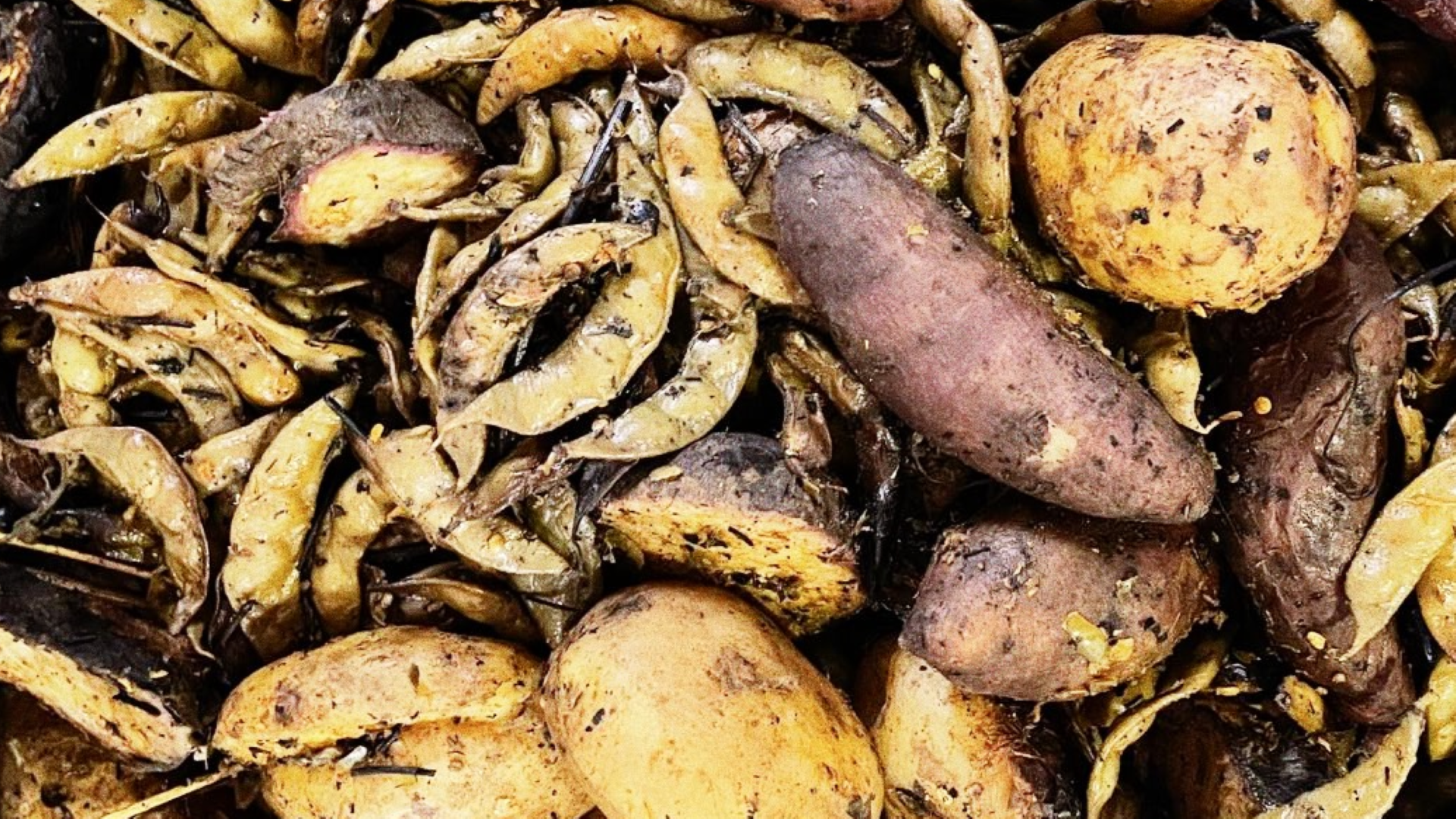
Like many vernacular dishes, umbadiyu resists codification. What you make will depend on what grows near you, what is seasonal, what you like to eat, whether it is cooked on a direct heat source. The version below is adapted for a diaspora kitchen in the UK.
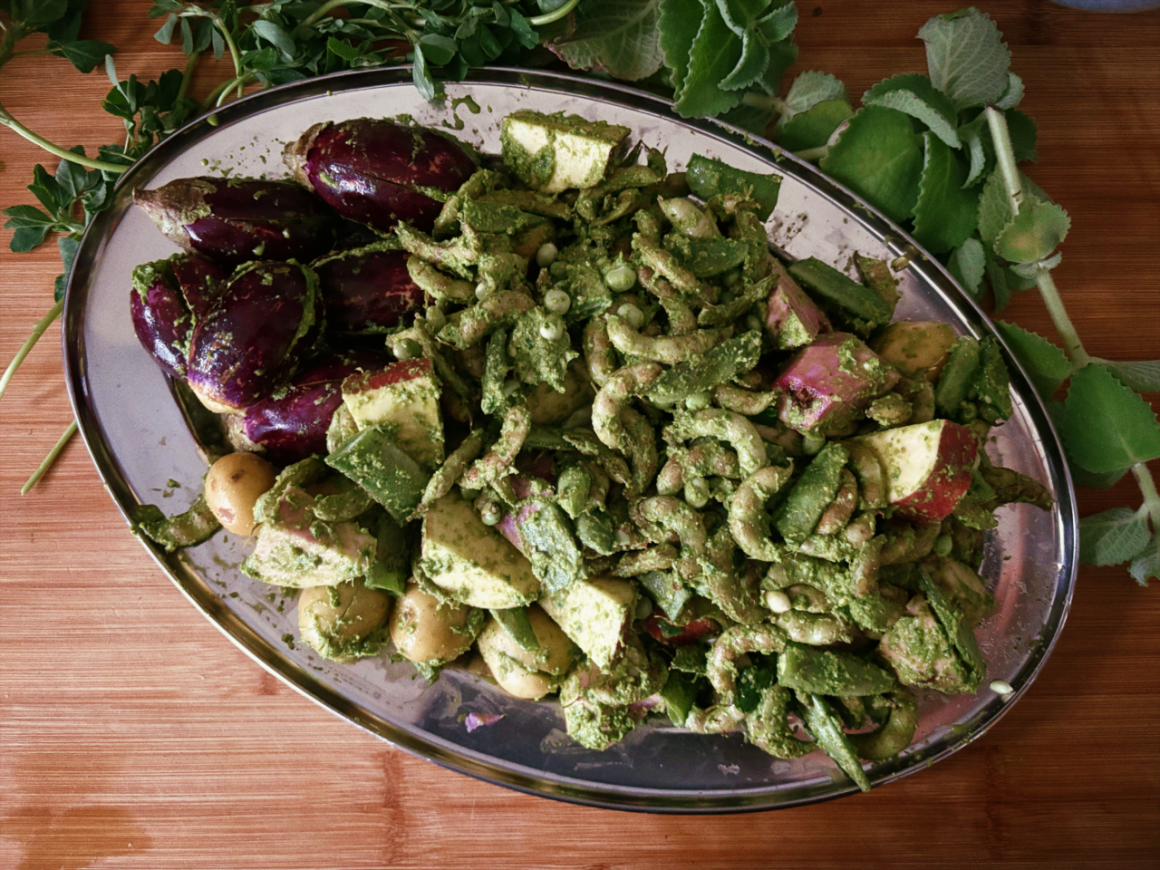
Umbadiyu
Ingredients
Vegetables and legumes:
Choose according to taste and what looks good. Most of these ingredients can be found in an Indian greengrocer’s throughout winter (in the northern hemisphere).
- Waxy potatoes: 5-6 Qty small
- Purple yams (ratalu): 2 medium, peeled and cut into chunks. If you can’t find it, use any waxy tuber like taro or cassava.
- Sweet potatoes: 2 medium, white-fleshed if possible, cut into chunks with skin left on.
- Round aubergines: 3-4 Qty small, or use regular aubergine cut into thick rounds.
- Fresh broad beans or Flat beans: 200g, in their pods. Surti papdi or valor varieties if available, otherwise use what you can find: lima, fava, hyacinth beans all work.
- Fresh pigeon peas (tuvar lilva): 100g, if in season, or substitute fresh peas.
For green chutney:
This is what gives the dish its brightness. Adjust quantities to taste.
- Fresh coriander leaves and stems: Large handful
- Green chillies: 3-4 Qty (more or less, depending on heat)
- Fresh ginger: 3cm piece
- Garlic cloves: 2-3 Qty, or a handful of wild garlic leaves if you can find them
- Roasted peanuts: 2 tbsp
- Lime: 1 Qty (Juice)
- Salt: to taste
- Water: as needed to blend
Seasonings:
- Ground turmeric: 1½ tsp
- Ground cumin: 1 tsp
- Ground coriander: 1½ tsp
- Ajwain (carom seeds or Bishop’s weed): 1½ tsp
- Unrefined rock salt or sea salt: to taste
- Smoked salt: a small pinch, optional
- Sesame oil: a drizzle, optional
Wild greens (kalher vanaspati):
This is where adaptation becomes necessary. In Gujarat, umbadiyu cooks use kalher and kambhoi, wild grasses foraged from roadsides along the NH-48 Highway. You won’t find these outside Gujarat, but the idea is to use something pungent and herbaceous that complements the smokiness. Use a generous handful, enough to pad and partially seal the pot.
Try:
- Cuban oregano (Indian borage)
- Common nettles, blanched to remove the sting
- Cabbage leaves or banana leaves
- Fresh fenugreek (methi) stalks, though this leans the dish closer to undhiyu
Equipment:
- A clay pot (matla) with a lid, or a tagine, or even a heavy-bottomed casserole dish that can go on the hob, though you lose the porous quality of clay, which absorbs and releases moisture differently.
- If using a pressure cooker, the cooking time should be adjusted accordingly
- Flour dough to seal the lid (optional)
Method:
- Blitz the chutney ingredients together in a food processor or pound in a mortar until you have a coarse, vivid green paste. Taste and adjust with salt, sugar or lime juice.
- Cut small slits into the potatoes and aubergines. Using your fingers, push a teaspoon of chutney into each slit.
- In a large bowl, toss all the vegetables and legumes (including the stuffed ones) with turmeric, cumin, coriander, ajwain, salt, and another tablespoon or so of green chutney, until the mixture is coated. If you are using smoked salt to achieve a barbecue flavour, add a small pinch now. You can always add more at the end.
- Line the bottom and sides of your pot with the wild greens, kalher, nettles, Cuban oregano, whatever you’ve managed to find. This creates a fragrant cushion and helps the vegetables to steam without burning.
- Pack the seasoned vegetables tightly into the pot. The tighter, the better; they should be snug. Tuck more greens over the top. To create an airtight seal, roll out a thin rope of dough and press it around the rim where the lid meets the pot. This traps the steam inside.
- Place the pot on the lowest possible heat on your hob. The dish wants to cook gently, for 1½ – 2 hours, allowing the vegetables to soften and tenderise in their own steam.
- If you are worried about burning (and you should be; the bottom will char, which is part of the flavour), you can add a tablespoon or two of water to the pot before sealing.
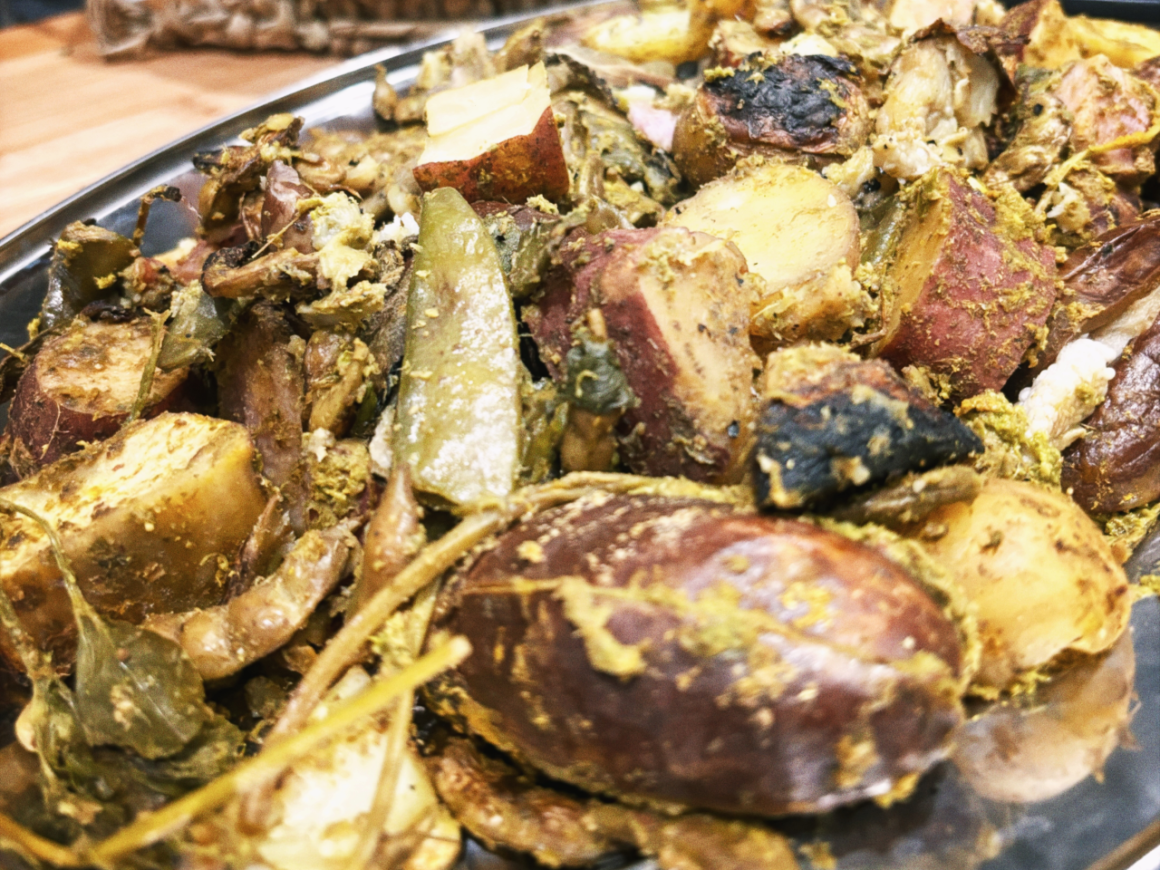
- When the pot is opened, you should be met with a cloud of fragrant steam. The vegetables will be soft, slightly charred, the greens wilted into scraps. If you didn’t add smoked salt earlier, taste now and see if the dish wants it. A drizzle of sesame oil can be added before serving, if you have it.
To Serve:
Umbadiyu is eaten with jowar rotlo (sorghum flatbread) and chaas (buttermilk) to drink, although you can also enjoy the dish as it is served, without accompaniment. The vegetables can be served whole or broken up. There’s usually green chutney on the side, for those who want more.

Usha Bhalla is a second-generation Gujarati who cooks, eats and writes in London. Her writing focuses on food, place, and the distance between them. Usha is a senior leader in a UK organisation that catalyses finance flows and delivers nature-based solutions that support regenerative land management and ecosystem resilience. You can follow her on @ushbhla.
Translations and detailed descriptions are provided to give a better understanding of the story to people from different cultural backgrounds across the globe.