
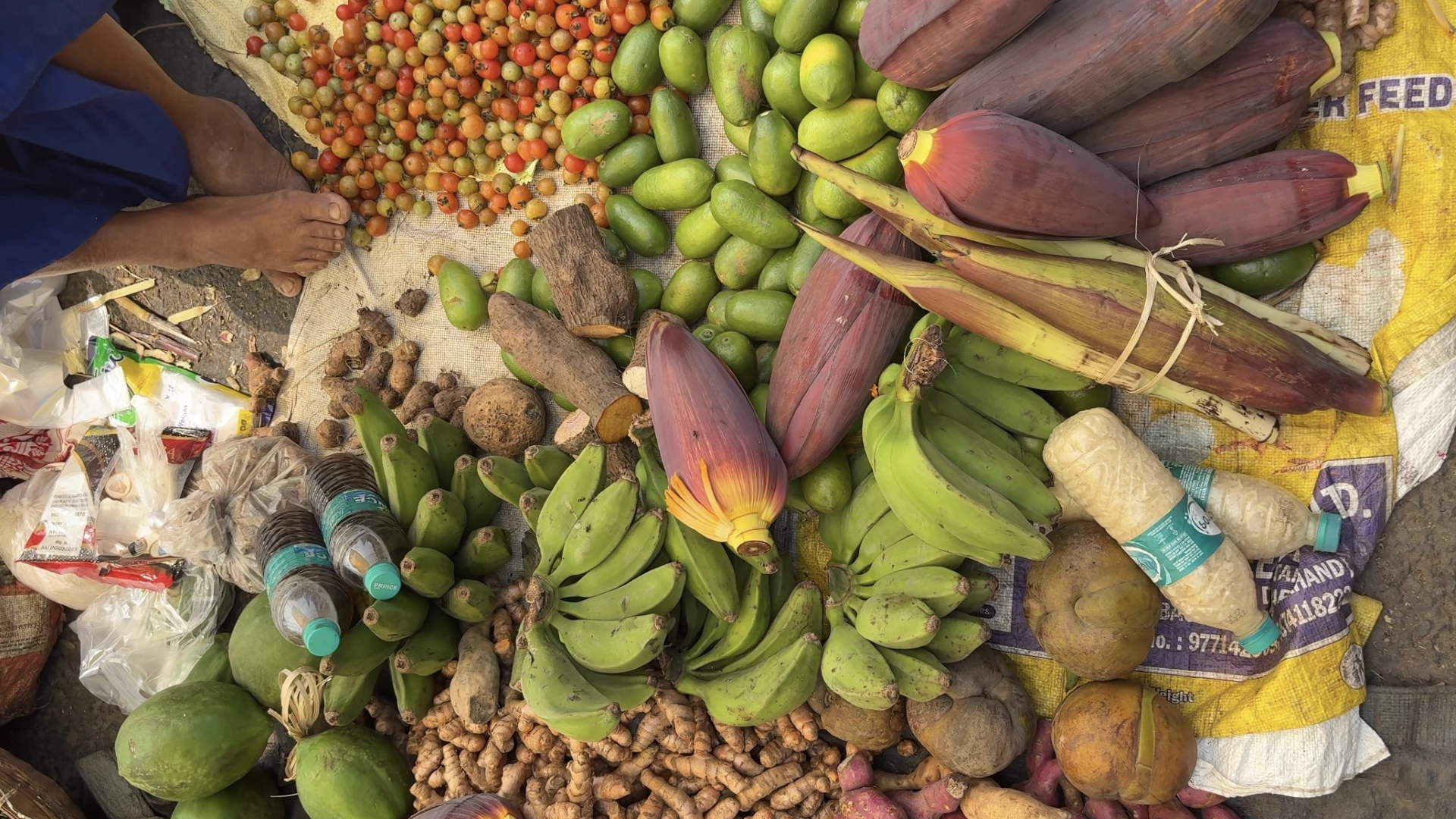
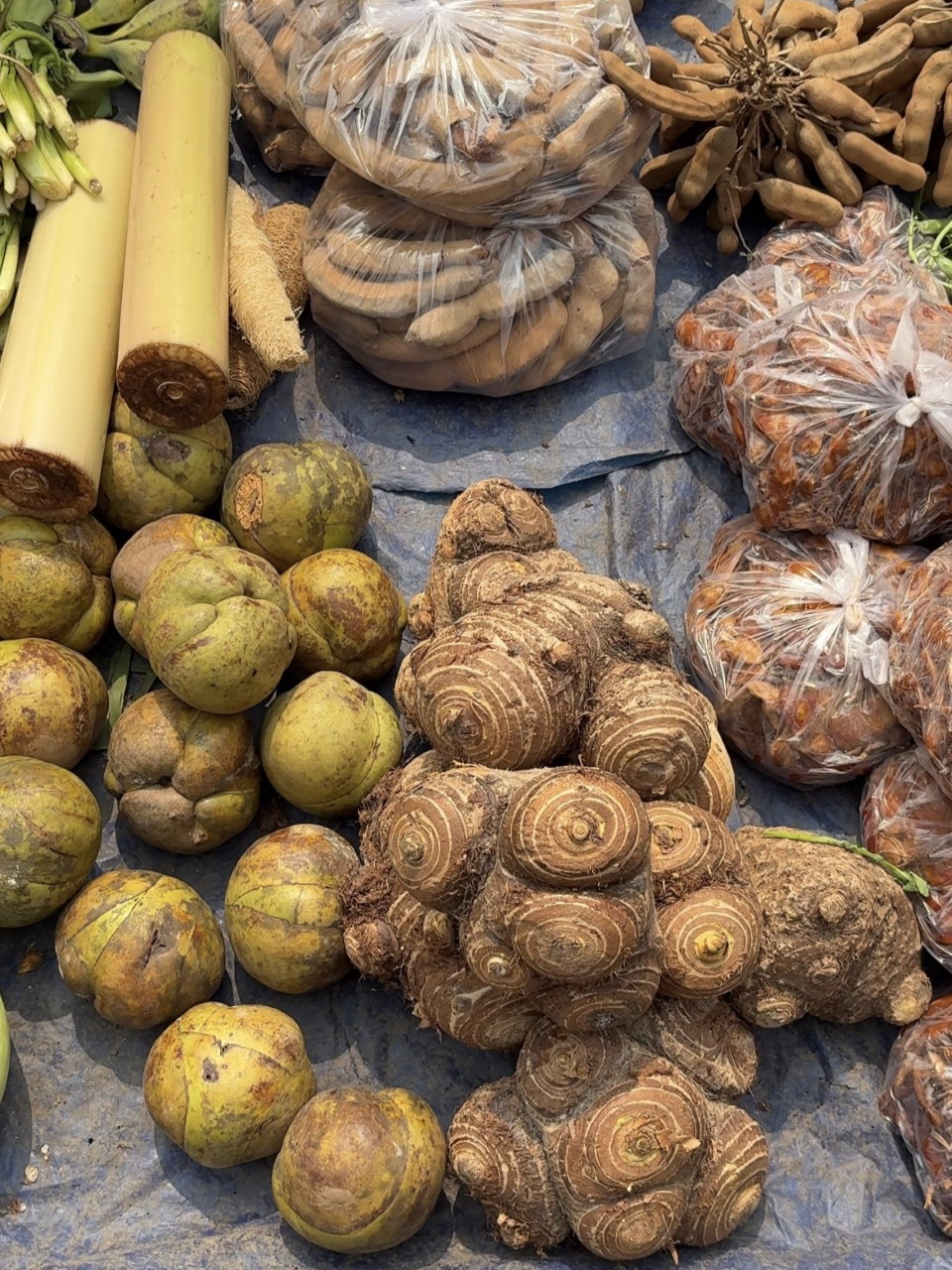
Growing up, as it is for most children, green vegetables were my most dreaded enemy. For a long time, I survived solely on butter, seni (sugar) and bhat (rice), and any traces of haldi (turmeric)—from any sabji or curry—felt like a violation of the white rice on my plate. While I kept a fine distance from vegetables, one day, almost without warning, something shifted—the vegetables no longer felt like intrusion. The weekly grocery bags filled with vegetables that my dad used to carry home, started holding my attention. In a way, apart from the summer and winter vacations that signalled the year’s quiet passing, the vegetables my dad brought home served as markers of the changing seasons. The kothalor guti (jackfruit seeds) and ou tenga (elephant apple) were like quiet announcements of summer, while sojina-guti aloo bhaji (moringa-potato fry) and olkobi (kohlrabi) would bring the essence of winter.
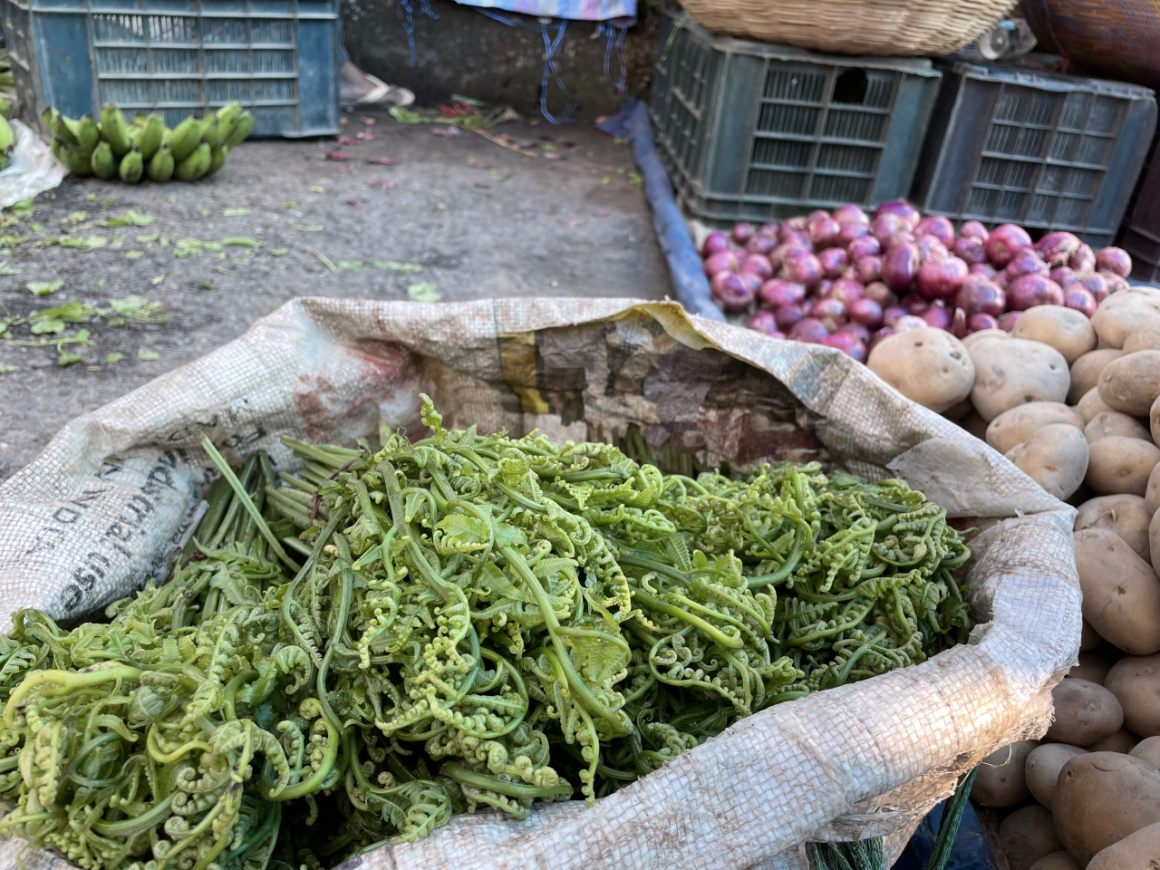
Leafy greens, however, were something I paid attention to much later when I moved awayfrom home. It was in Delhi that I quietly started missing the abundant presence of xaak (leafy green vegetables) back home—dhekia (fiddlehead fern), laur aag (bottle gourd leaves), kolmou (water spinach), lai (mustard greens), puroi (red wine spinach), kosu xaak (taro leaves), manimuni (gotu kola), tengesi (sorrel leaves) . . . the list is endless!
However, vegetables and ingredients that I once detested have now become an inseparable part of everyday life. The careful manoeuvre of picking out the best produce after close inspection and shaping meals around it has become its own kind of therapy, bringing comfort in the most unexpected ways. For someone like me, who thrives on the excitement of choosing what is fresh, seasonal, and laid out in abundance, the Beltola Bazaar is an absolute paradise! It is where you can walk through without a plan, guided by touch, smell and instinct, mentally mapping out dishes as you go, while navigating a sea of fresh produce—vegetables, fruits, herbs, poultry, fish, and more.
The Roots and Rhythm of Beltola
Beltola is a prime residential neighbourhood located in the southern part of Guwahati, Assam. The name ‘Beltola’ is believed to have come from ‘bilva patra’, referring to the sacred leaves of the bael (wood apple) tree. The leaves of this tree are an integral part of ceremonies and rituals in Hindu tradition. It is believed that a considerable quantity of these leaves were once sent to the Kamakhya Temple to be utilized in rituals. Hence, ‘Beltola’ was the name given to this place, and it has been known by that name ever since.
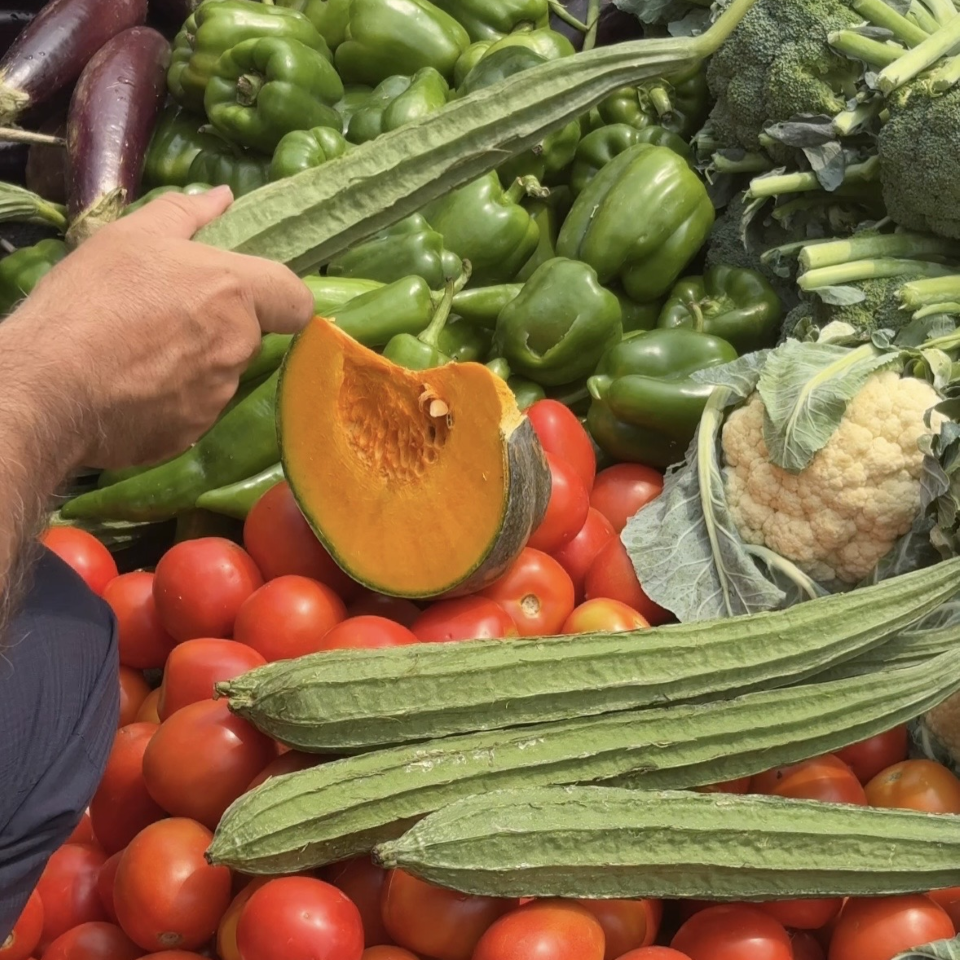
Haats are found in most parts of the country. They are scattered trading grounds for local produce. While they have no distinct infrastructure, you almost always find everything that you are looking for. There is a distinct pattern these haats may follow, with various items being grouped separately in pockets. For example, everyday vegetables like potatoes, tomatoes, onions and garlic may be found towards the beginning of the market area, after which you’ll come across indigenous cooking supplies and ingredients. When it comes to Beltola Bazaar, you can sense a similar pattern here too. It starts with regular day to day vegetables and slowly immerses into seasonal greens, root vegetables, fruit vegetables, stems, bulbs, flowers, herbs, spices, dried items, poultry, etc. The Bazaar assembles every Thursday and Sunday. It is historically quite significant because, for a long time, it has been an important trading point for people from the Khasi Hills in Meghalaya and local traders of Assam, especially those coming from Boko, Sonapur, Dima Hasao and Karbi Anglong. So, by extension, this space is also a lively network of regions and communities along with fresh, seasonal produce, each part supplying an ingredient to build the full meal we enjoy.
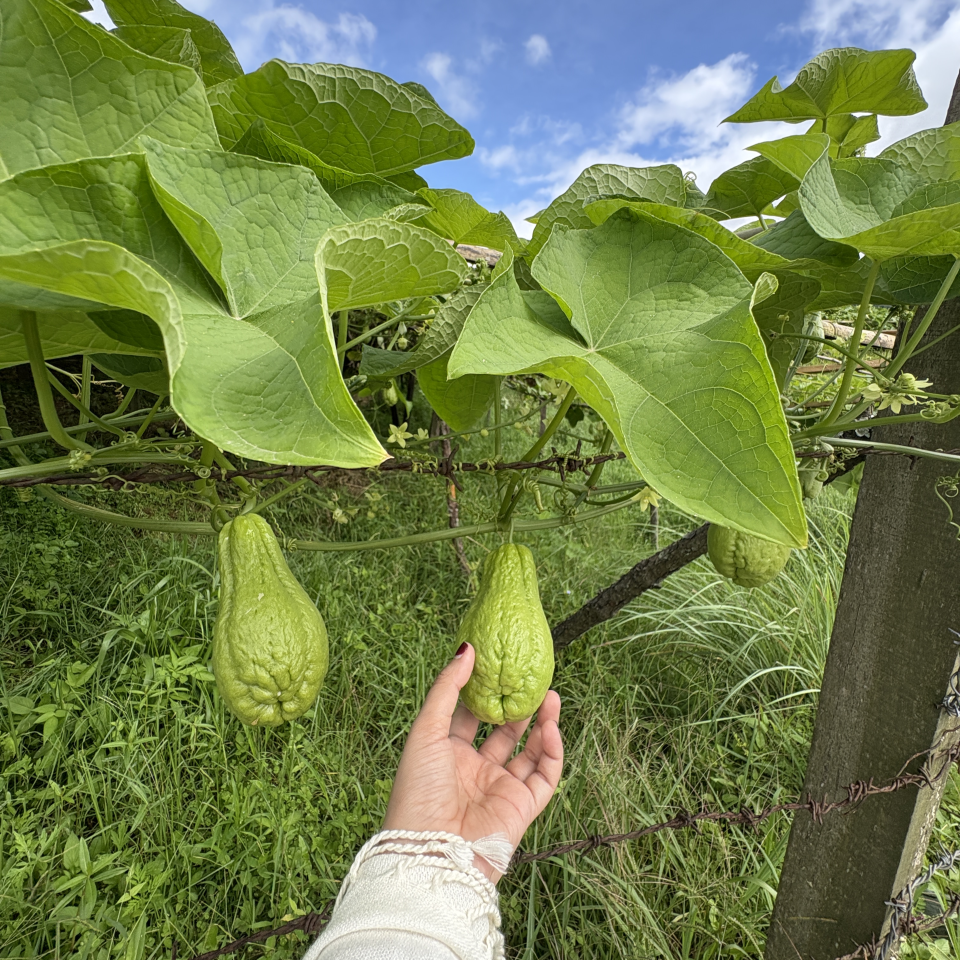
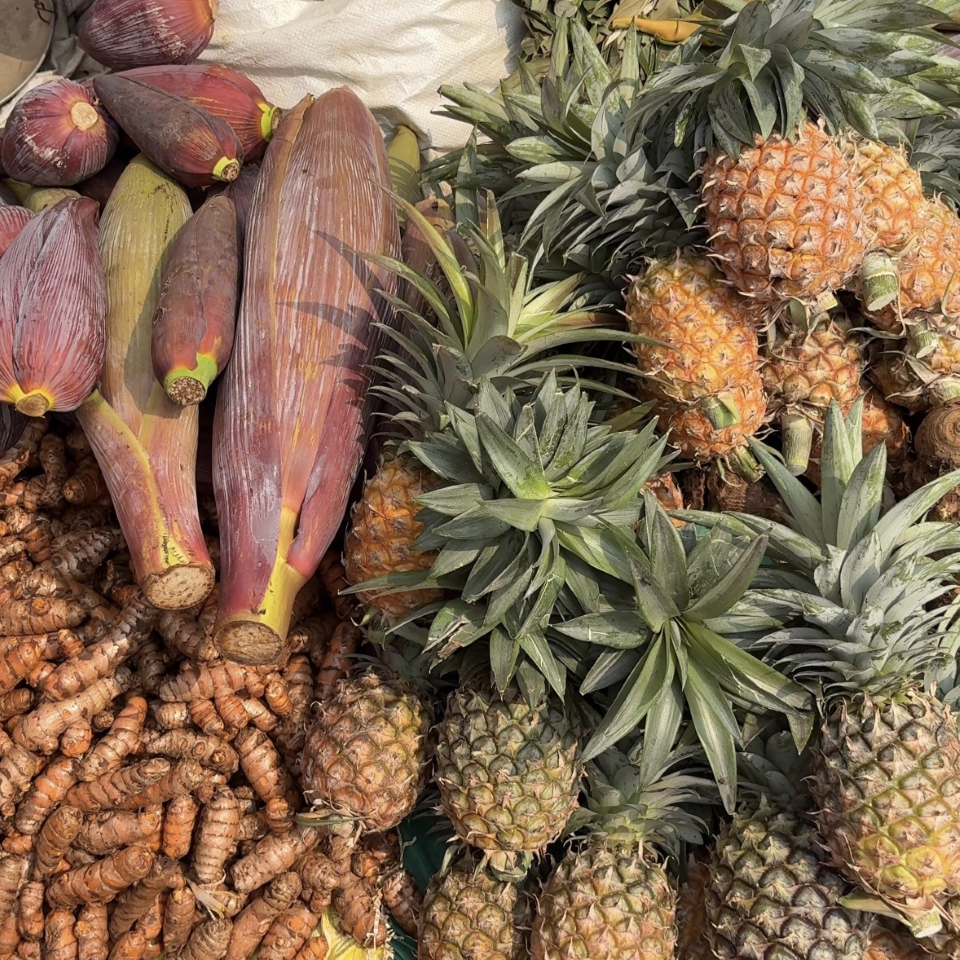
I remember passing a squash plantation on my way from Shillong last year and being mesmerised by loads and loads of squash being freshly harvested and loaded onto a truck. When asked where they were being transported, we were told they were headed to the ‘bazaar’ to be sold the next day, which was a Sunday. The pale green, field-fresh squashes were on their way to markets like Beltola and eventually onto our kitchens! It’s not just the squash but also other produce like the sweet pineapples of Meghalaya that make their way into the bazaar.
Returning to the Bazaar
The last time I visited Beltola Bazaar was in 2021. Back then, I was enamoured by the sheer vastness of the market. The streets stretched endlessly on both sides, lined with regular vegetables, local produce, poultry, leafy greens, and ingredients I didn’t even know existed. It is only when I visited the bazaar in March 2026, that I started paying close attention to the colours, textures, and the sheer beauty of the produce in front of me.
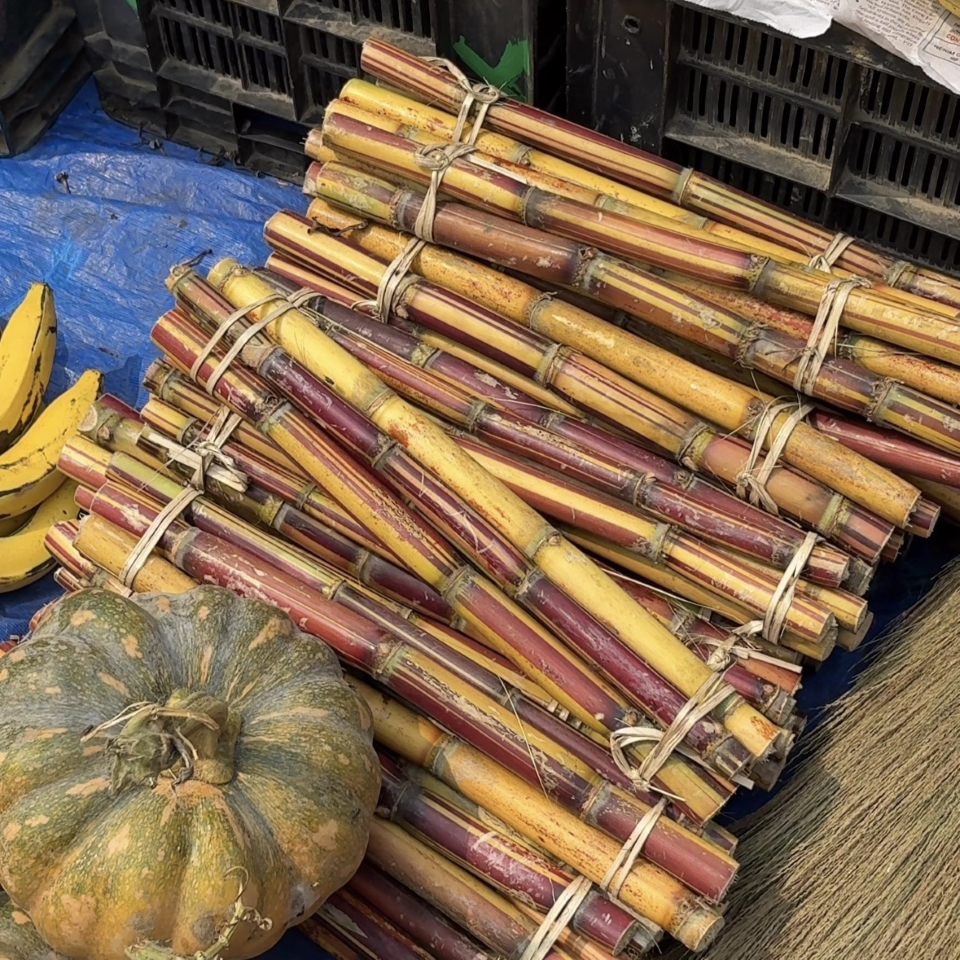
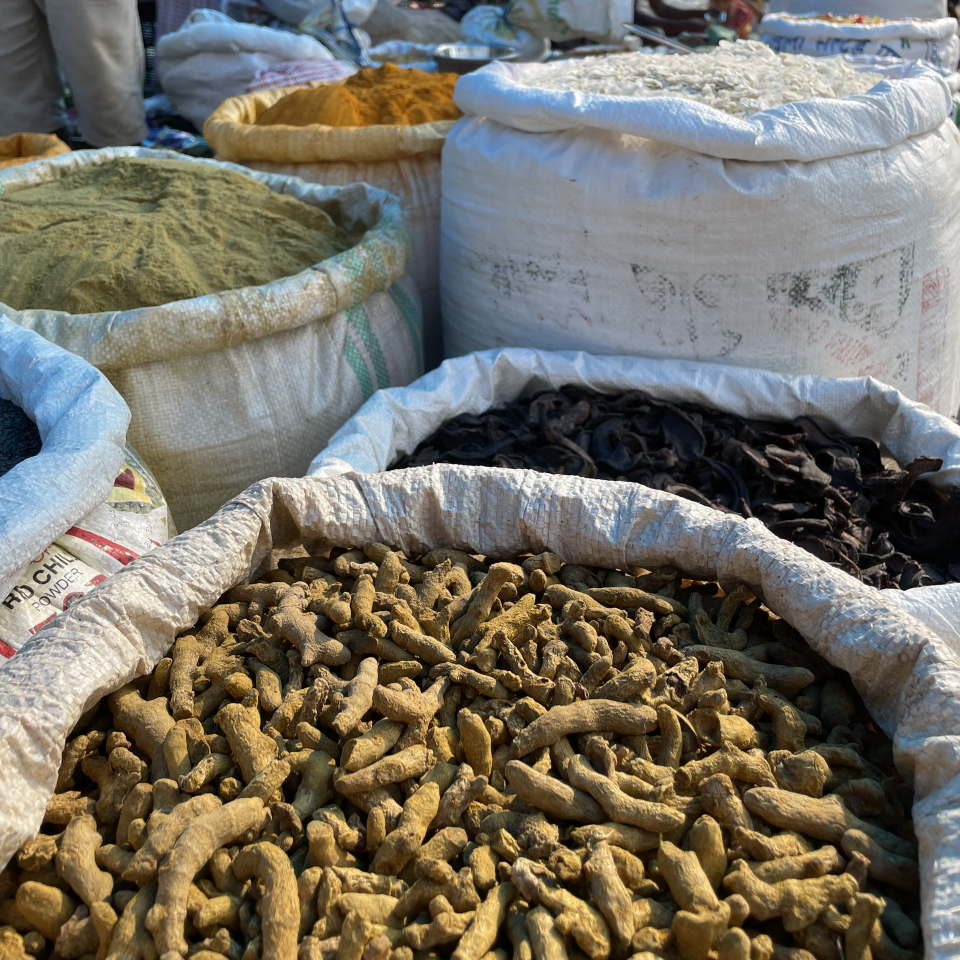
It is not just the quantity of produce that is striking, but also the variety within it. One can find all kinds of bananas (malbhog, jahaji, bhim kol, kaskol, chinichampa), potatoes (ronga aloo, mitha aloo, notun aloo, guti aloo, badami aloo), chillies (bhut jolokia, bird’s eye chillies, dry chillies), along with different types of rice, lentils, and grains, all laid out in abundance. Each variation reflects a difference in terms of smell, size, colour, and preparation style. The bhim kol (banana variety traditional to Assam), for instance, is large and dense, suitable for preparing kol khar (alkaline), while chinichampa is a small-sized banana, very sweet in taste and fairly aromatic. Hence, while choosing from the endless varieties of produce, you’re also choosing how a meal may eventually unfold.
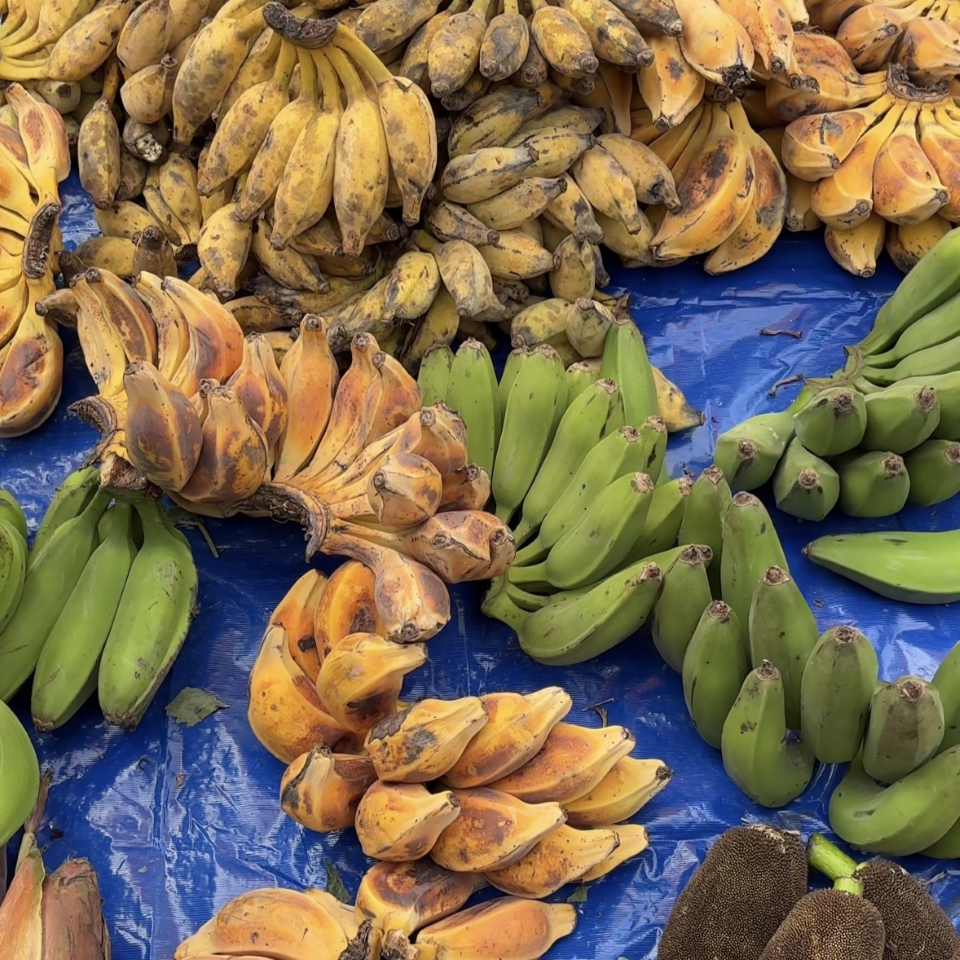
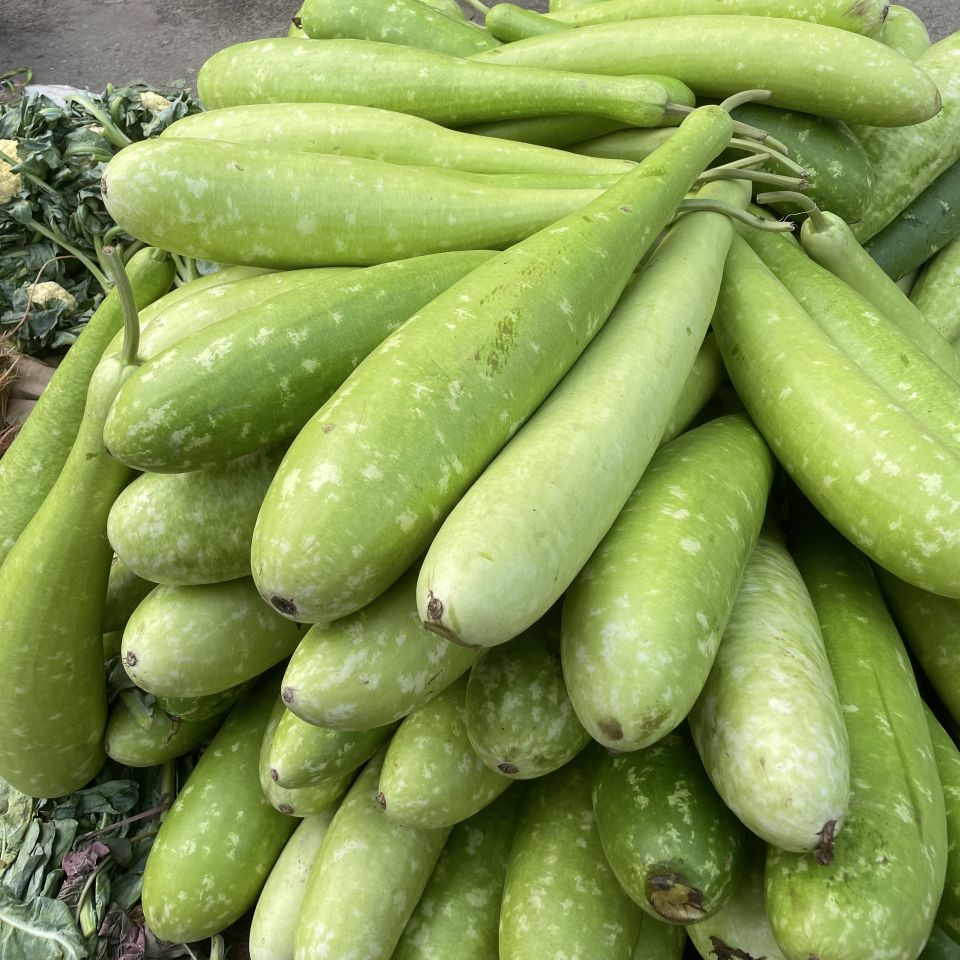
The colours of the produce are endless too, with different shades of green, from deep green to sage; bursts of reds, yellows, and oranges marking the raw and the ripe; and deep purples. Various types of seasonal berries and fruits add to this colour palette, be it bogori (Indian jujube), leteku (Burmese grape), poniyal (Indian coffee plum), jamun (black plum), and so on. The textures shift just as much across the bazaar—be it the spine gourds; the smooth bottle gourd; the knobbly bitter gourd; the sweet, sticky honey, or the pungent, astringent herbs and aromatic spices.
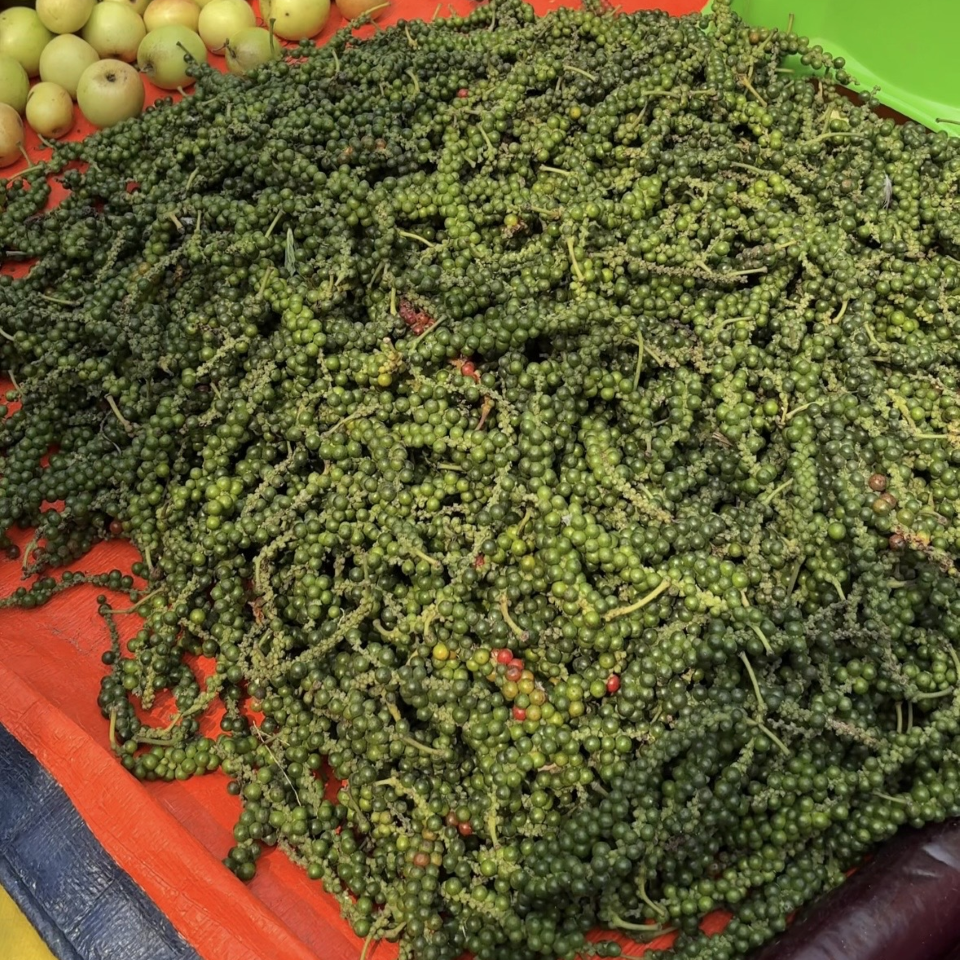
Some vegetables are stacked in neat piles while others spill out of baskets and over tarpaulin sheets. The air is filled with sounds of vendors bargaining, the rustle of bags, the clank of measuring scales and steel bowls being filled, and the occasional honk of a two-wheeler weaving through the crowd. As you walk through the bazaar, the ground shifts between dry dust and damp patches, carrying the faint smell of earth, greens, and poultry. It’s a space where something or the other is always in motion, be it the people or produce, each part feeding into the larger system of exchange that sustains the bazaar.
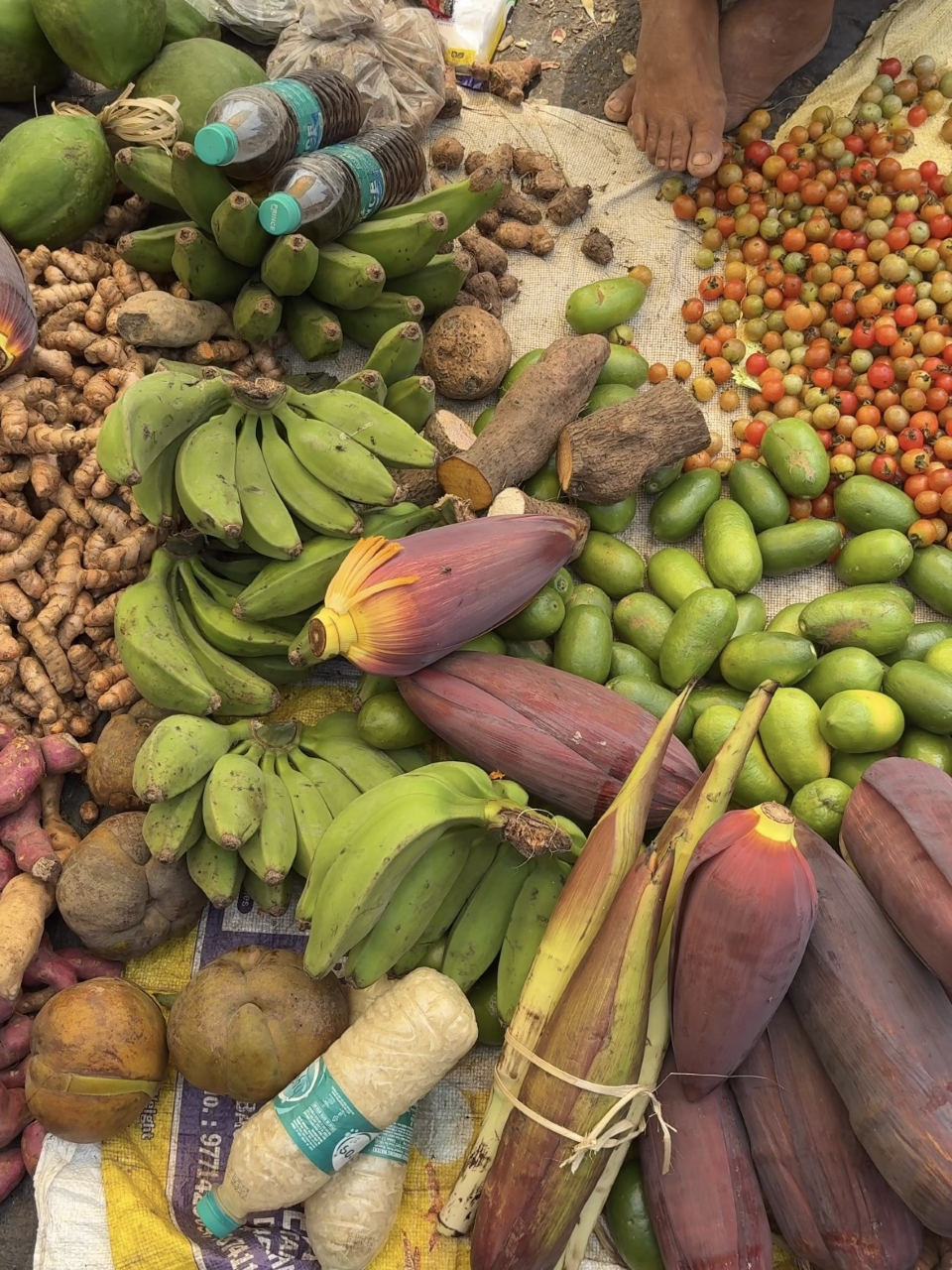
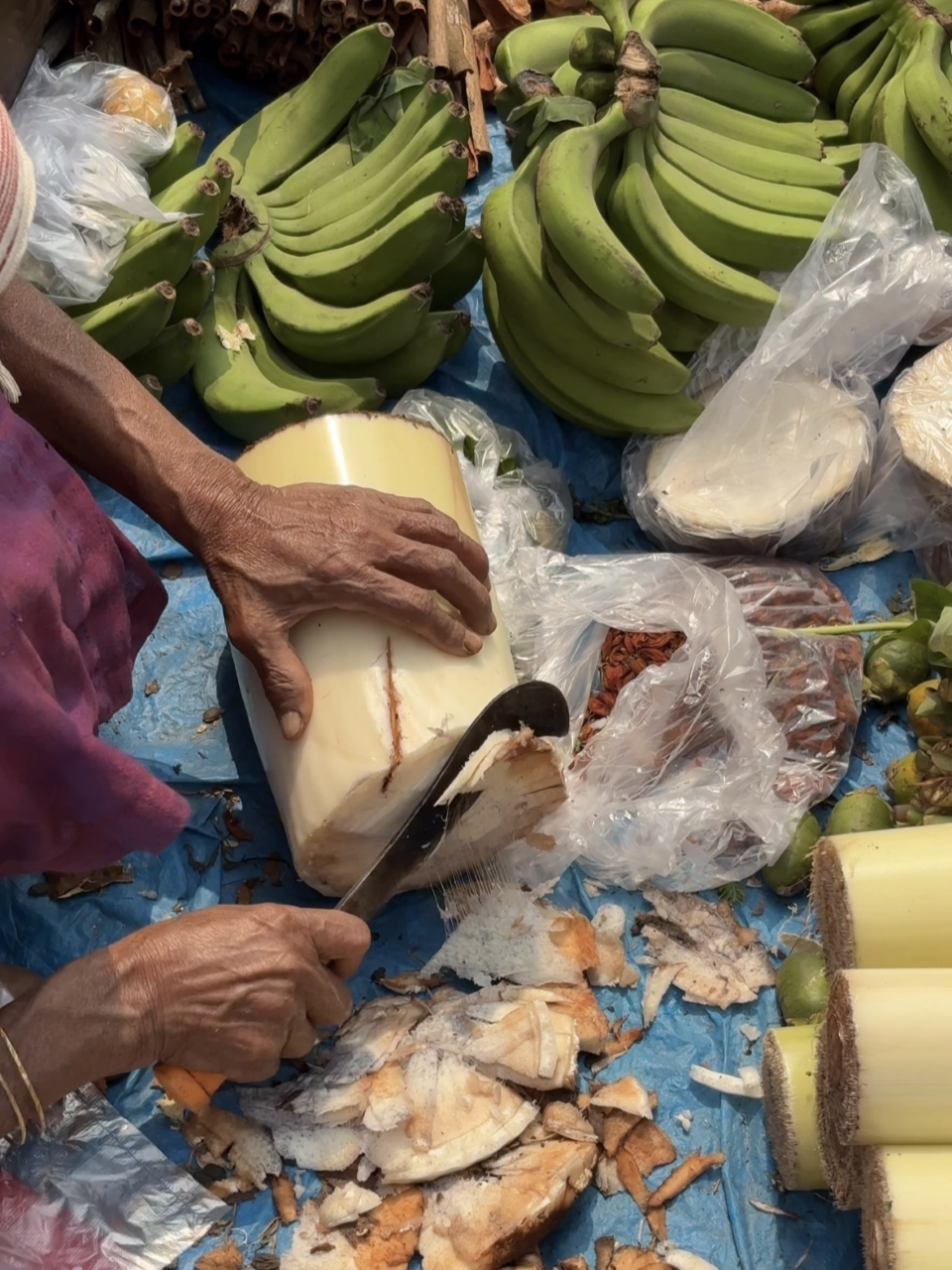
As I walked further through the bazaar, I found myself in search of the perfect trunk of posola or banana stem. When I asked an old lady vendor which posola to choose, she instinctively picked out a fresh stem from among the lot, and certainly enough, it was the sweetest, crispiest and most tender banana stem. In moments of confusion like these, there is always someone in the bazaar ready to guide you.
A Day at the Bazaar
We reached the Beltola Bazaar at around 10 am in the morning. By this time, the market is filled with a bustling crowd, with people either filling their bags or walking through with them already full. The sellers or street vendors begin procuring their items as early as 4 am and start setting up their areas by 5–6 am. Most of the items are brought in by vendors from large mandis located in the city’s wholesale hubs in Fancy Bazaar, Beharbari, and Machkhowa. Produce also arrives from nearby farmlands such as Hajo, Sonapur, Kharupetia, and Boko, as well as from districts in Meghalaya that lie close to Assam’s wholesale markets.
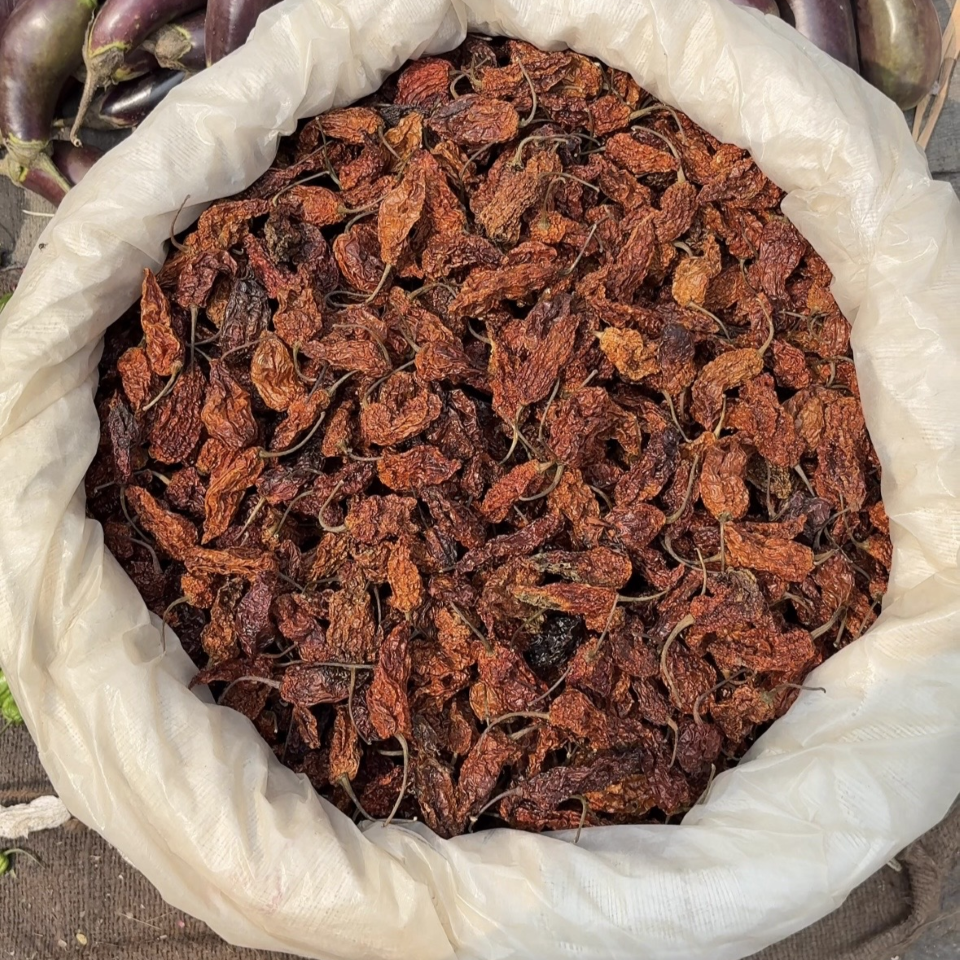
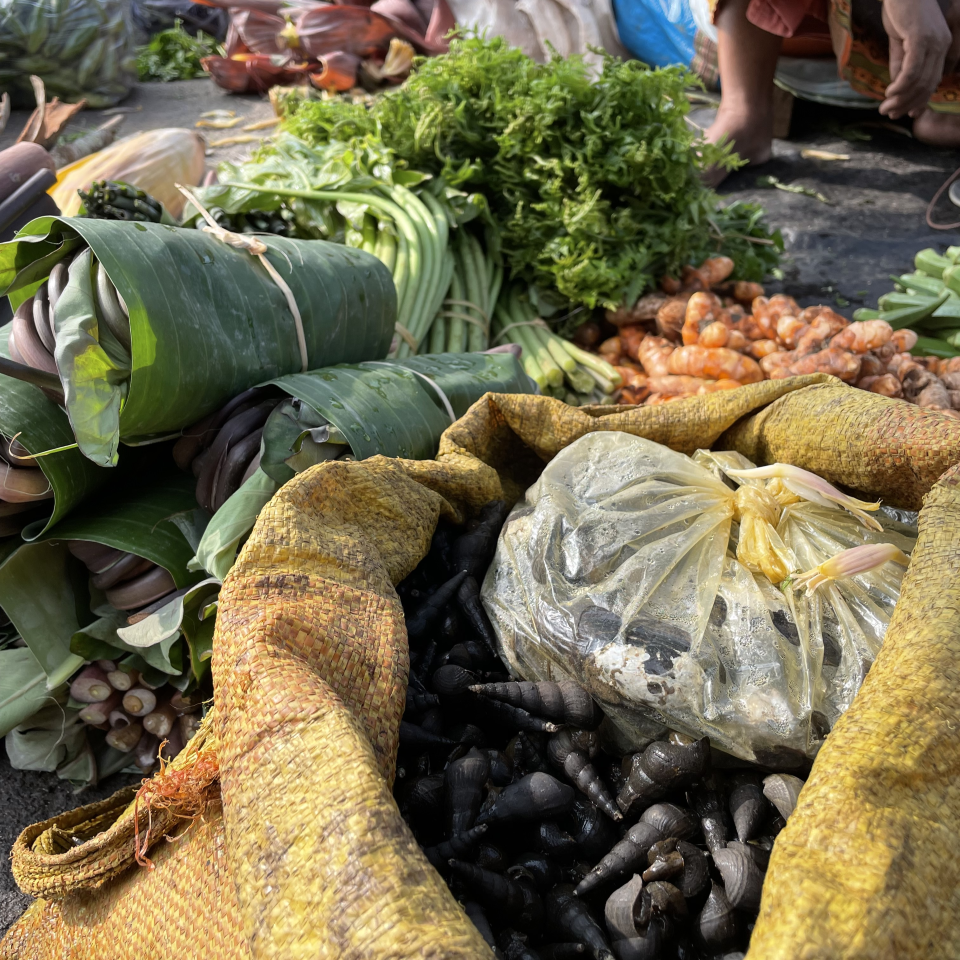
There are also a few small-scale stakeholders who avoid these wholesale hubs and sell directly to consumers. These are generally farmers working with locally grown or sourced produce from backyard farms, offering items like dhekia (fiddle head ferns), crabs, snails, koldil (banana flower), posola (banana stem), bah gaj (tender bamboo shoots), and kusia maas (eel) in smaller quantities. Their presence hints at the shift from bulk trade to intimate exchanges, where knowledge of produce is tied to its sale.
Beltola Bazaar through the seasons
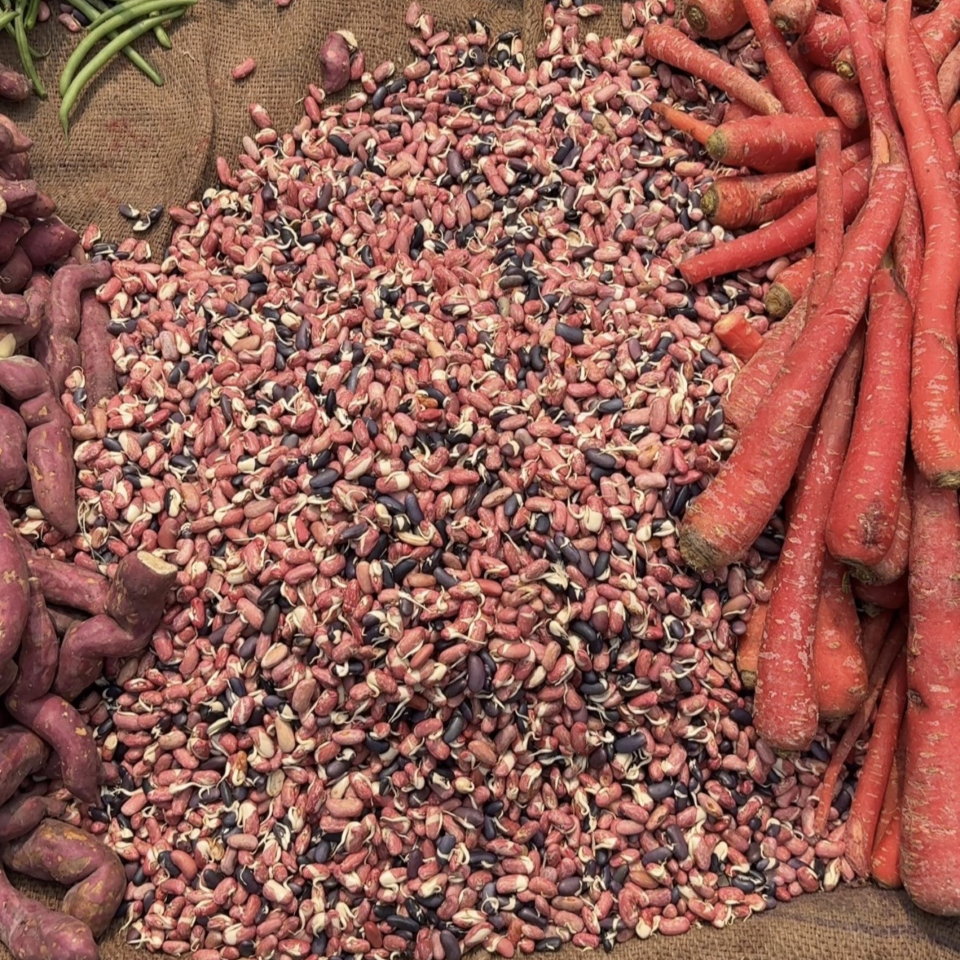
Beltola Bazaar strongly echoes the seasons. The winters here are a time for kath alu (yam), fulkobi (cauliflower), olkobi (kohlrabi), bondhakobi (cabbage), bhaat kerela (teasle gourd), lai (mustard greens), mitha aloo (sweet potato), robab tenga (pomelo) etc. While winter produce like cauliflowers, carrots and peas are tender, slightly sweet and enrich your dal when added to it, citruses like robab tenga, seasoned with spices and green chillies, are meant to be relished under the winter sun.
The summer months witness an abundance of bhendi (lady finger), ou tenga (elephant apple), tiyoh (cucumber), jati lao (bottle gourd), bhul (sponge gourd), sojina (drumstick), and many more! These are produce that are light, cool and are meant to cut heat during summers. Fish cooked with ou tenga, jati lao, bhul, or thekera tenga (lentil fritters in a light, soupy and sour gravy) are summer staples in Assam.
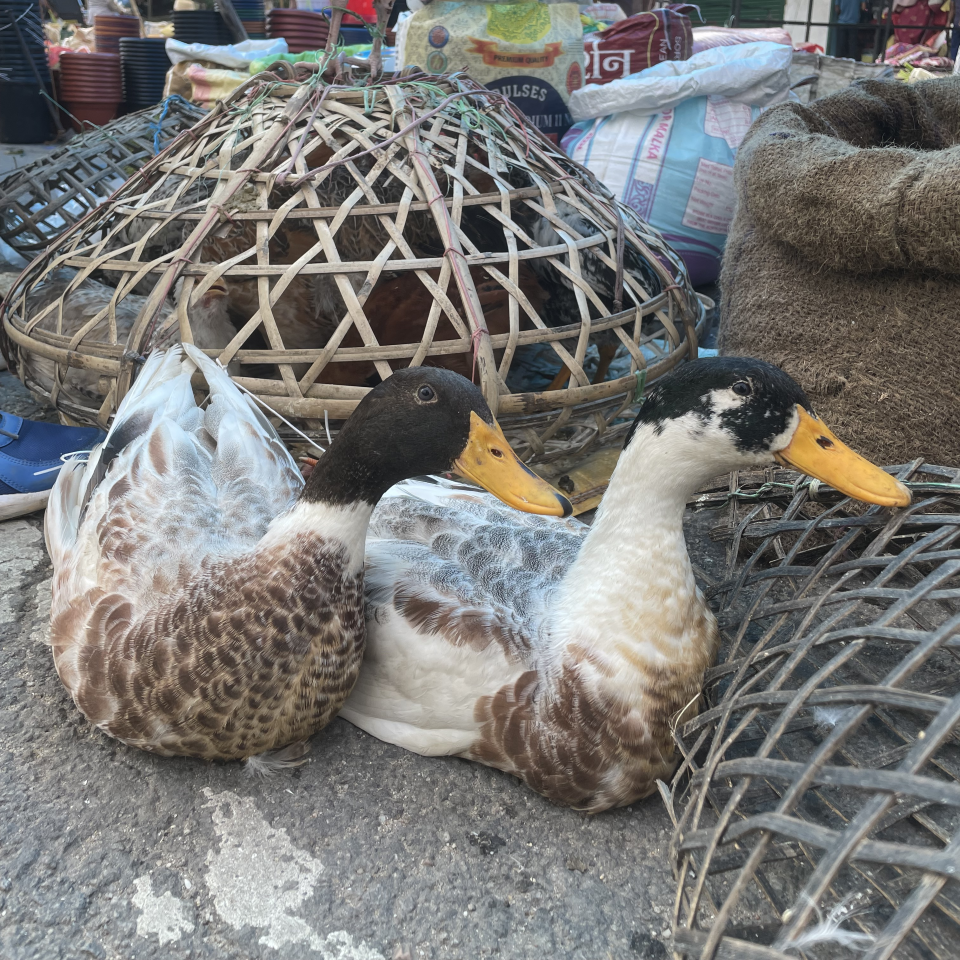
Some other items in the bazaar include fish, duck, pork, local chicken, dried fish, snail, and the larvae and pupa of silkworm. These varieties form a culinary rhythm in the kitchen. The dishes prepared at home are not driven by fixed menus but by what arrives in each season. As I explore more bazaars and return to the dishes my mother once prepared (and still does when I visit home), I find myself drawn back to fresh produce again and again, quietly marking the seasons, just as they once did! The Beltola Bazaar, like many other weekly haat bazaars, is more than a place to buy vegetables. It is where culture, traditions, food habits, and memory converge. Every ingredient carries a story and the essence of the journey it has been in, and in cooking, eating and remembering, we become a part of that journey.

Namrata Sarma is an editor at Penguin Random House India with an enduring curiosity for stories in all their forms. She loves capturing memories through digital art and animation, travelling, exploring local streets, cooking with fresh, colourful ingredients, and will almost certainly never pass a cat without pspsps-ing. If you’re interested in exploring a place through its food and culture, or collaborating on a project that celebrates both, she’d love to hear from you!
“The views, historical interpretations, and opinions expressed in this article are solely those of the author and do not necessarily reflect the official position or stance of Bruite Magazine.”
Translations and detailed descriptions are provided to give a better understanding of the story to people from different cultural backgrounds across the globe.