
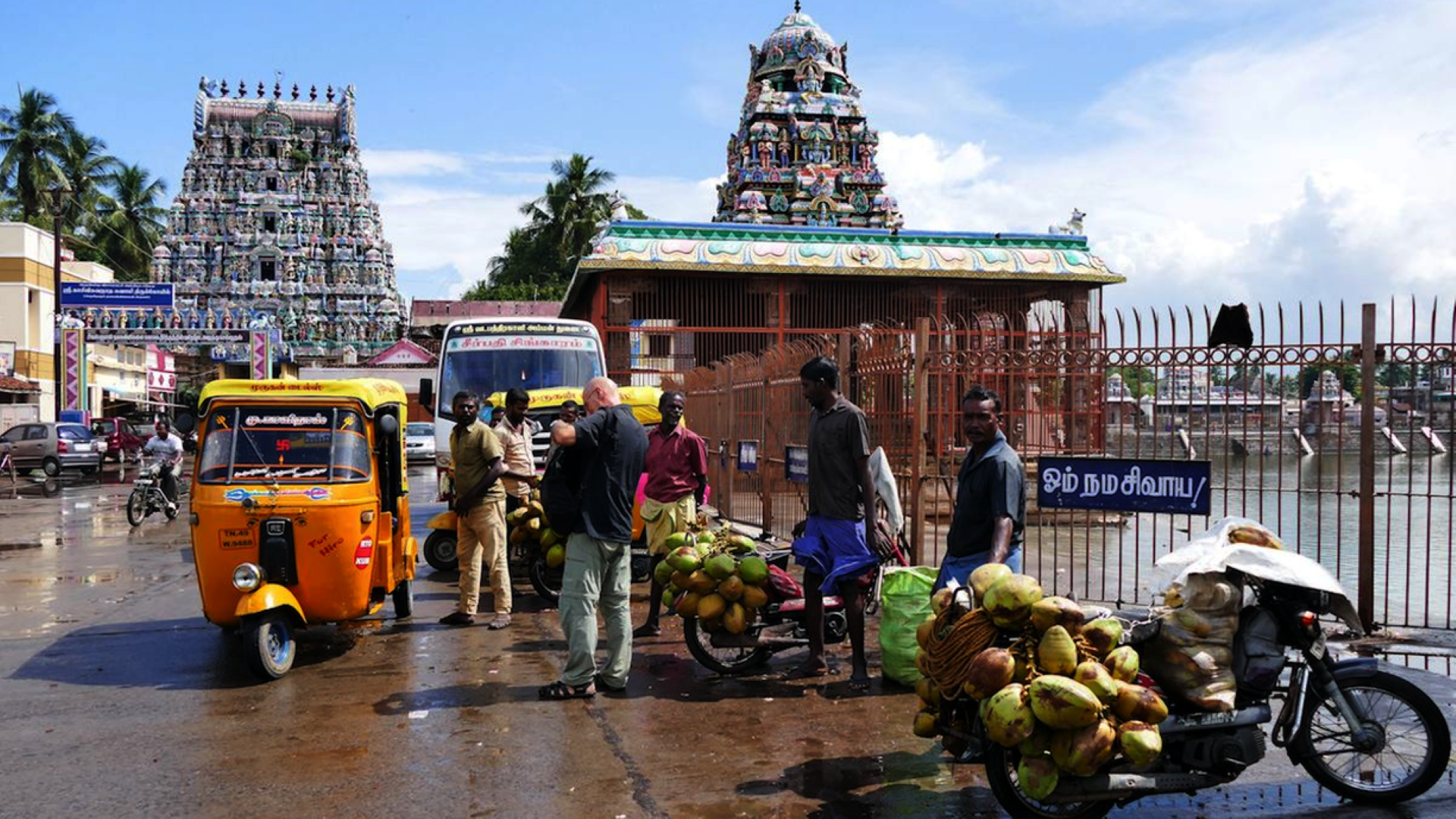
Against the backdrop of rivers that skirt the highway, snack foods between temple towns appear like edible chronicles of culture, carrying imprints of pilgrimage, agricultural produce, and kitchen instinct in North-west Tamil Nadu.
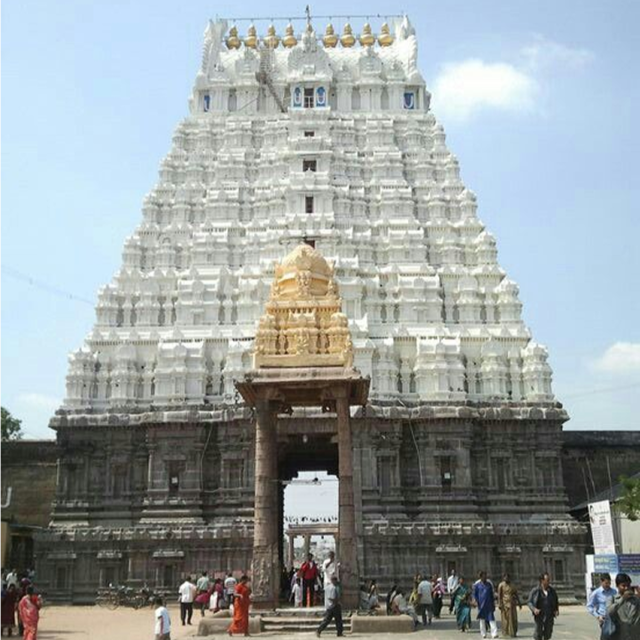
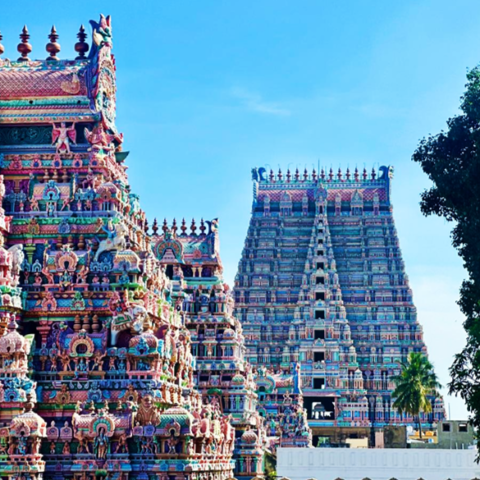
A winding road in Srirangam with its innumerable food carts ends at a huge pastel coloured gopuram. Even before the first light of the day touches the intricate carvings of gods, goddesses and mythic animals on the facade, the scent of dairy and coffee blends with the floral notes of roses and lotuses that are laid out by vendors for veneration. For devotees, this is the step to worship. For some others, the real destination is the fried, portable food.
The flimsy carts are made of scrap tin in a twisted manner, protruding into the road just enough to allow five or six people to sit comfortably. At the center of everything is a huge steel milk cauldron, continuously boiling. Every few minutes the cauldron is replenished with fresh milk, while a jug is dipping in and out, filling the signature stainless steel davaras where filter coffee decoction is already waiting. My penchant for a hot, piping cup of filter coffee would give the publishers of the pre-colonial magazine Stri Dharma, who famously advocated against women drinking coffee in 1926 Tamil Nadu, some serious acid reflux. Although that morning, my ritual of drinking coffee was broken by the sight of fresh lentils being fried for the malagu vadai from one stall over.
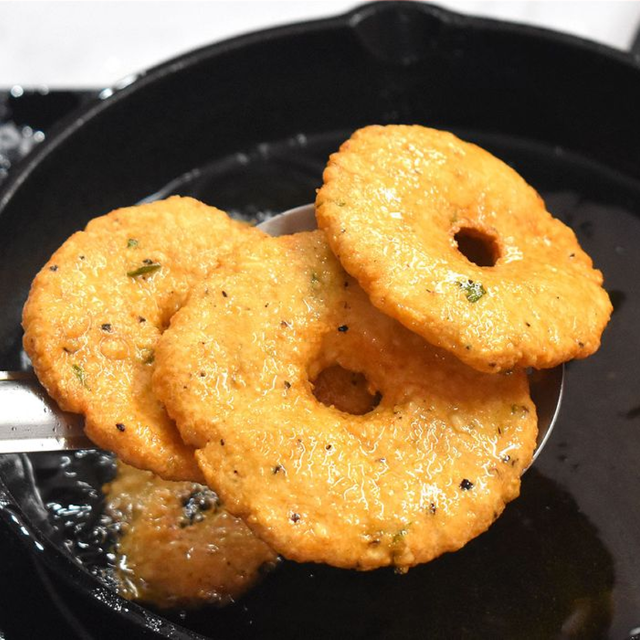
In Srirangam, malagu vadai is both ritualistic and functional. It is served to the devotees inside the temple after the day’s first veneration, and also makes for a travel-friendly snack that stores well. This piquant fritter is made primarily from black gram lentils and tempered generously with freshly cracked black pepper, striking the balance of heat and texture. Whole black gram is used instead of split urad dal as it slows digestion and contributes to the feeling of satiety, which is much needed during a long pilgrimage.
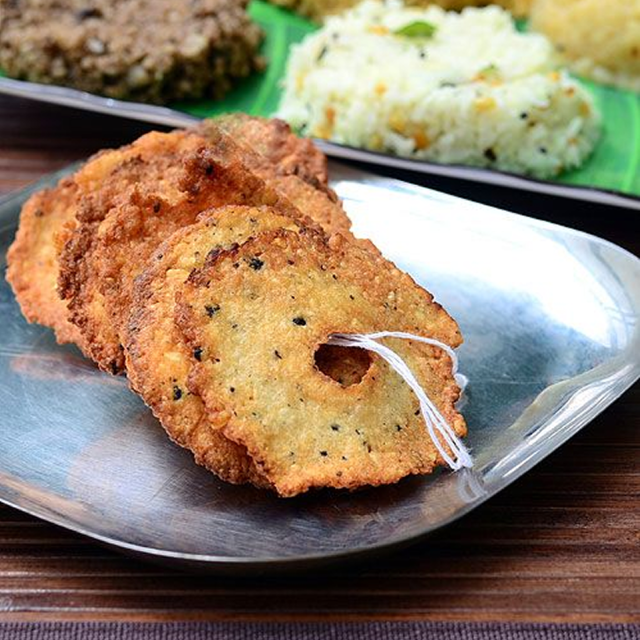
Malagu vadai is distinguished by its slightly coarse, rustic grind, allowing the sharp peppercorns to burst through with every bite. The grind is lightly patted and shaped between banana leaves, before being fried long enough for the moisture to disappear. It then starts its own journey with pilgrims who may eat it later in the day or even several days after. Yet, it keeps its irresistible delightful taste. Some places may add red chillies, dried ginger, curry leaves, and fennel seeds which also aid a travel-struck, slow digestion.
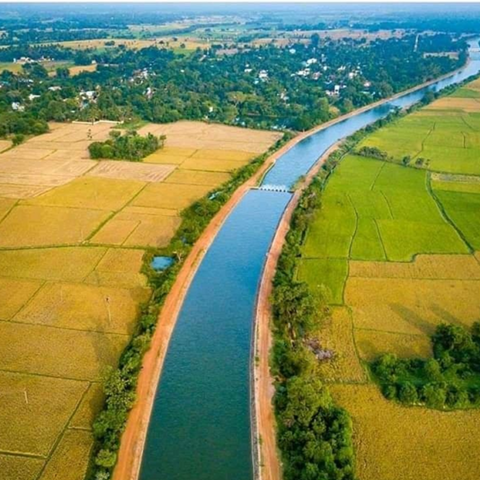
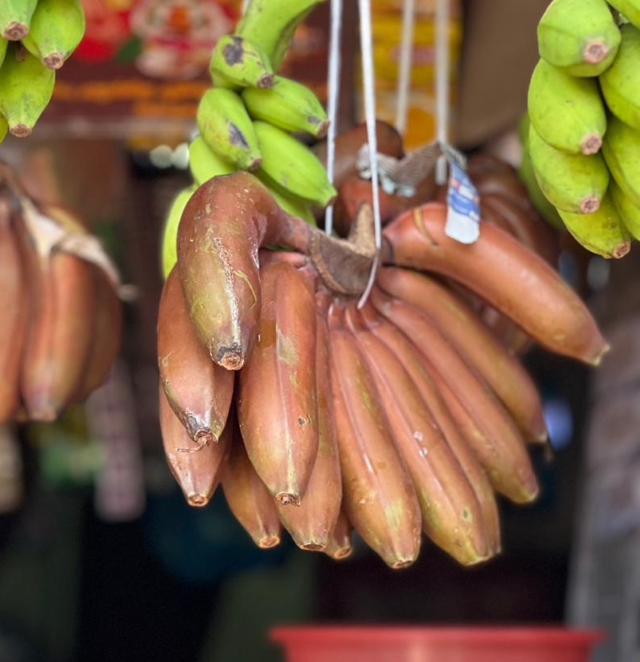
I tucked the vadai away in my tote as we continued the journey along the open road. The road to Thanjavur stretches with huge fields on both sides where banana, sugarcane, coconut, and betel leaf are the main crops, watered by a series of canals that take off from the twin river system of Cauvery-Kollidam. The view is interspersed with little villages, where small colourful shrines emerge from the thick bushes at every corner. From February to May, a very distinctive crop appears on carts coming from the fields- Sevvazhai, or red banana, is usually brought all the way from farms outside Kanyakumari. Red bananas have a creamier, sweeter texture with slight sourness that brings a depth of their flavour. The fruit is very difficult to grow, thus its annual appearance is a cause for celebration.
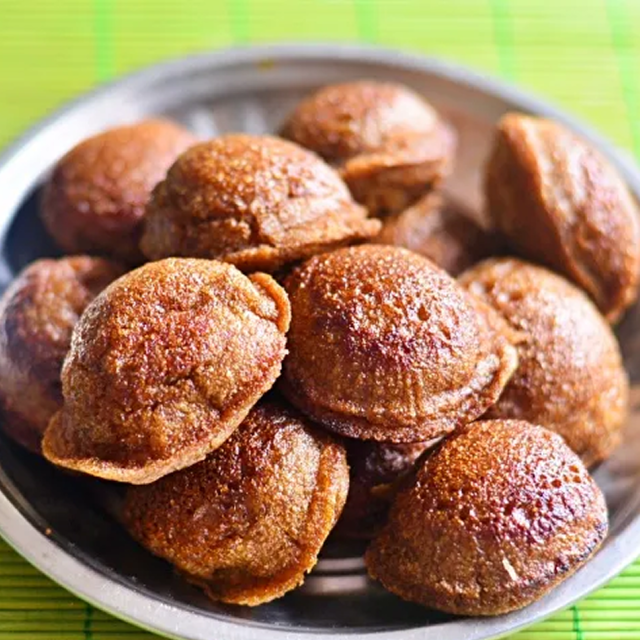
Makeshift local shops serve sevvazhai paniyaram in generous heaps to make the most of this seasonal bounty. On a route where most snacks are made to last the length of the pilgrimage, hot, piping paniyarams served with a generous dollop of ghee are quite the treat. A keen eye can spot them being made roadside in a cast iron pans on a wood fired stove, which gives it a firm, crisp outer layer and a soft interior. The wood fire imparts a mild smoky flavour, and the cast iron helps bring out a more rounded taste. Put together, they make the paniyaram taste heavier and warmer, which filled our stomach and sustained our walk around Thanjavur.
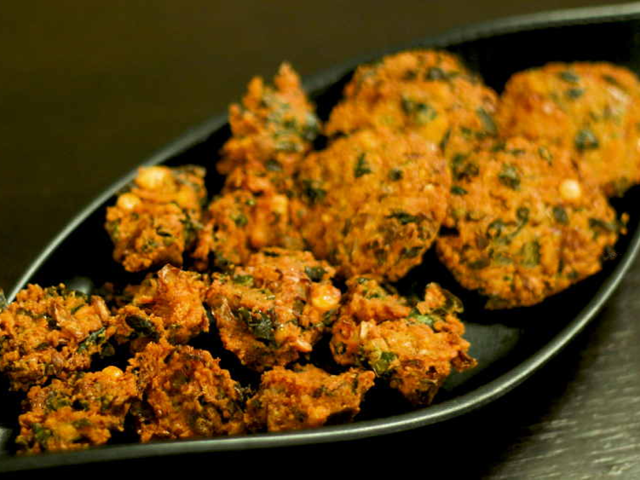
The hunger after a walk in the city of Thanjavur feels more like a reward than something incidental. Murungai keerai pakora (drumstick leaves pakora) stalls line the street outside the Brihadeeswarar Temple. The leaves are gently tied with gram flour, cumin, pepper, and curry leaves, and fried in a little oil. The spring harvest of drumstick leaves is especially rich in nutrients, although they are available throughout the year. Walking through the colourful stalls of the bustling city centre with a paper cone full of pakoras, our eyes fell on bottled elaneer payasam, which is served chilled as a drink rather than in a bowl to refresh visitors on the hot day. Made by combining finely chopped tender coconut flesh with tender coconut water, a little cooled coconut milk, sugar, and cardamom, the fragrant concoction is crafted to meet the needs of travellers while reflecting Thanjavur’s ability to adapt to travelling folk without compromising its culinary heritage. Alongside the payasam, regular murukku eaters rekindle their love for a different version, which looks as if it has been meticulously carved.
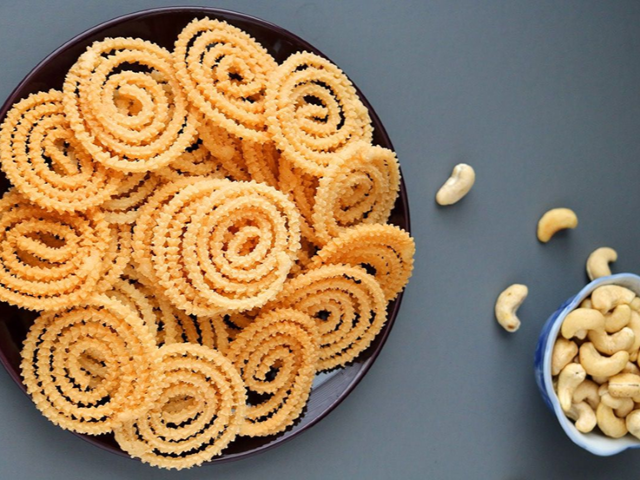
Kai murukku (Kai meaning hand in Tamil) is particularly associated with Thanjavur, and is a material manifestation of the town’s devotional spirit and agricultural bounty. The murukku is made using urad dal flour and homemade flour of the sivan samba variety of rice. Sivan samba is native to the Thanjavur district and benefits from the rich, loamy soil of the Cauvery delta. The harvest season of the rice coincides with pongal, and during spring, this fresh batch of aromatic rice is lightly pan roasted to enhance its nutty flavour. For the murukku, it is then hand-pound in a mortar and pestle for a coarse texture, and added to the ground urad pulse, lots of ghee, and spices to form a granular but soft dough.
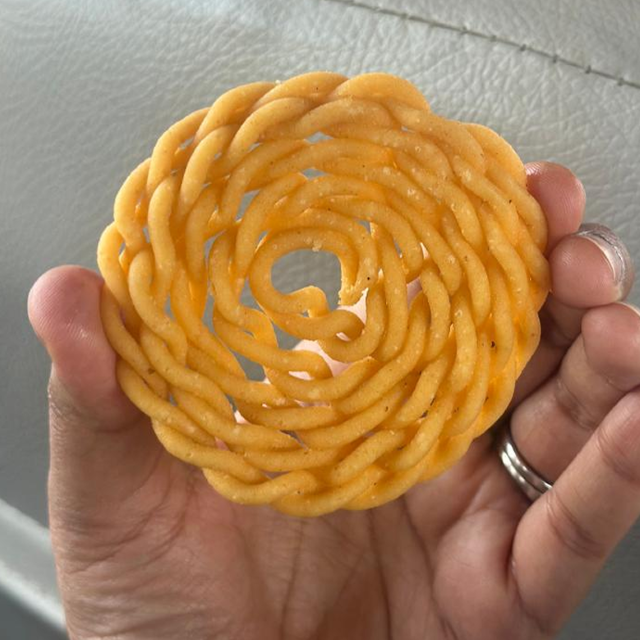
Along the peripheries of the temple, where devotees walk in reverent circumambulation, women sitting at makeshift food carts echo the rhythm by pinching, and twisting the dough. The result is a perfectly braided murukku with an edible record of touch. This act of braiding is almost meditative- like devotees turning the beads of a rosary- and a great example of the combination of generational culinary knowledge and muscle memory shaped by years of observation. Unlike uniform murukku shaped with the help of a mould, hand shaping also gives the snack variations in thickness, density and the little imperfections that allow it to bite and crumble differently. Along with the sounds of horns, carts and the gentle swish of paddy fields, the steady crunch of the kai murukkus became a soundtrack for the rest of our journey.
Kumbakonam, a historic town where the Tamil religious and cultural life reached its zenith during the Chola and Nayak dynasties, is about an hour’s drive from Thanjavur on the way to Puducherry. The pilgrims see it as one of the places where it is nice to stop and offer prayers. However, a visit to a town is also worth it if you are a traveller with a big appetite and a sweet tooth. The people of the city have, for a long time, been served by a sweet shop whose legacy is still intact, and it has changed the way we think of gulab jamun without much noise.
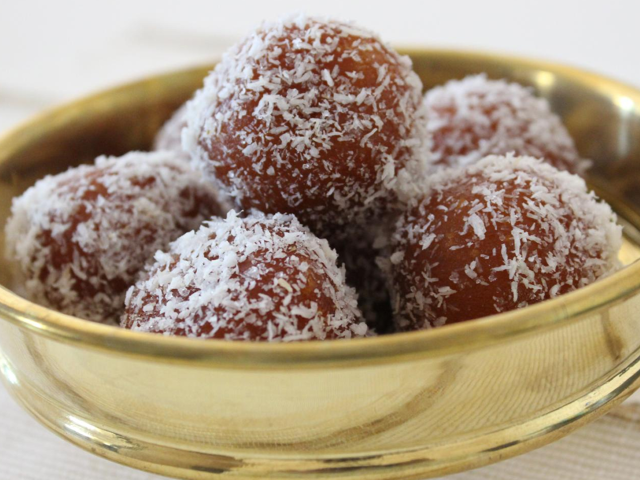
Kumbakonam gulab jamuns are dense and satisfying, and the lack of syrup is not missed. Patrons at sweet shops unapologetically dunk the sweet into their cups of tea and coffee, much like a biscuit. The delicacy is a mix of khoya, milk powder, ghee, cardamom powder, nuts, and flour mixed together, which gives it a barfi-like consistency. The rich, fatty spheres are then deep fried for the crisp, caramelised texture and coated with the powdered sugar. Unlike the syrupy kala jamun of North India to which this version is most often compared, Kumbakonam gulab jamun is designed for travelers going from one temple town to another, and for those who wish to carry a spill-proof souvenir. Sweets in this region are also largely influenced by seasonality, and gulab jamun is just one of the sweets that have been locally transformed.
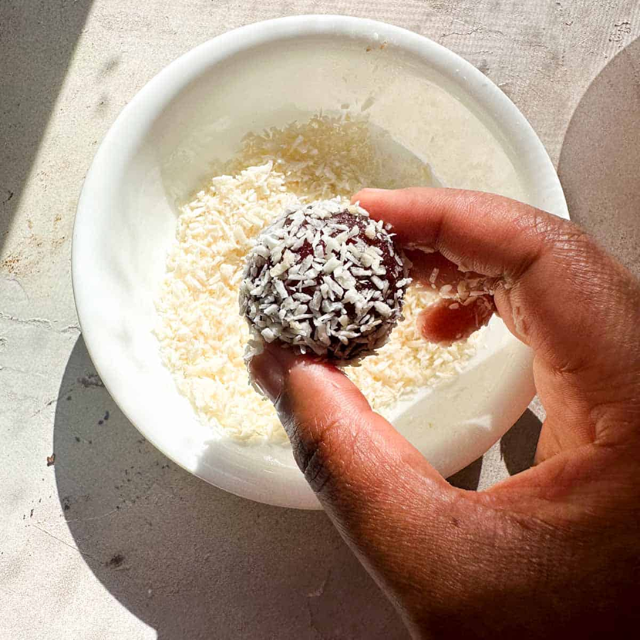
Spring marks the end of the date palm jaggery harvest, a highly skilled, hereditary practice known as karupatti extraction. In Tamil food culture, karupatti has traditionally been used more for functional and medicinal purposes than as a confection. However, growing demand for natural sugar and sugar-free sweets has led to the introduction of sweets made with karupatti in local shops, a phenomenon less than a decade old.
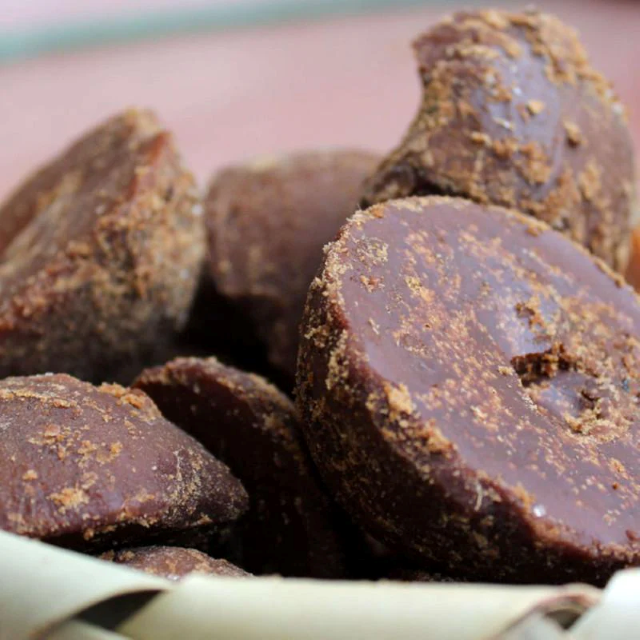
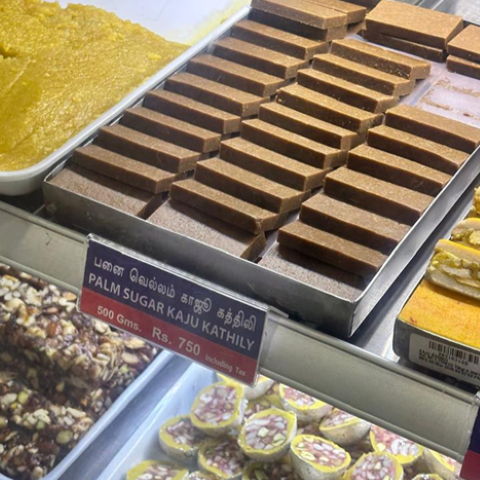
Responding to the demand for a healthier sweetener and abundant use of local produce, karupatti kaju katli emerges as a thoughtful reinterpretation of a classic. Just short of Puducherry, cashew orchards in the Cuddalore district come alive as picking season begins at the end of March. The nuts are hand-sorted and pan-roasted to develop a rich, creamy flavour. Combined with the last harvest of date palm jaggery, they form a kaju katli that is earthy, soft, and soothing.
A little ahead on the road, Cuddalore is just 25kms from Puducherry. Here, the rhythms of temple offerings also give way to Puducherry’s French colonial culinary legacies. The scent of the sea mingles with spices along the streets, and snack culture shifts towards fried and breaded treats, culminating in the fish cutlet, a local adaptation of the Portuguese bolinho, a deep-fried fish-and-potato croquette. The Cuddalore fish cutlet is where coastal ingredients meet colonial technique in everyday culinary culture.
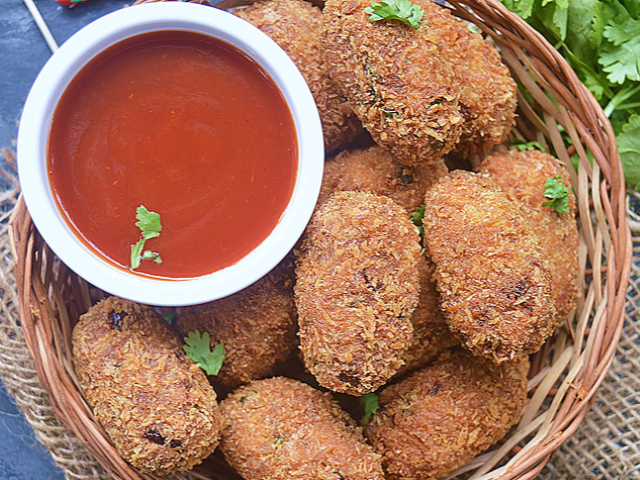
The first secret of the Cuddalore fish cutlet lies in the freshness of the fish, as even the mackerel are caught locally, and smaller shops refrain from selling these cutlets as monsoon rolls around, as it is believed that one may catch a fish with eggs during the season and disrupt ecological balance. For the cutlet, the fish is then combined with mashed potatoes, finely chopped onions, green chillies, ginger, garlic, black pepper, and roasted cumin. This mixture is shaped into small patties, coated first in a thin layer of flour, dipped in beaten egg, and finally rolled in breadcrumbs for a crisp exterior. Served at tea with a squeeze of fresh lime and coriander, the cutlets are slightly crunchy while remaining moist and flavoursome inside.
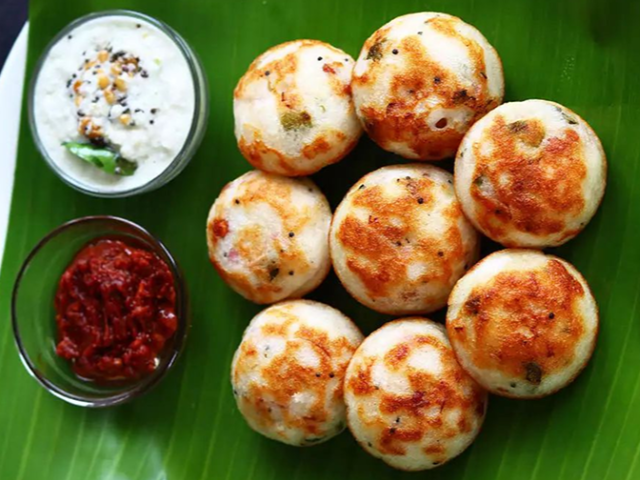
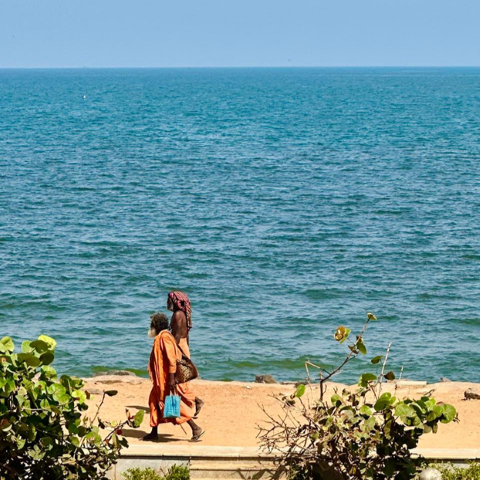
By the time one gets to Puducherry from Srirangam, handbags are laden with snacks, each one a small souvenir. They are shaped by devotional, agricultural and colonial undertones in the form of the vadai, murukkus, portable payasam, and cutlets. Each snack carries with it generations of knowledge, seasonal timing, and local taste sensibilities to create a culinary landscape where culture and daily life converge to remind us that the simplest treats hold the deepest stories.
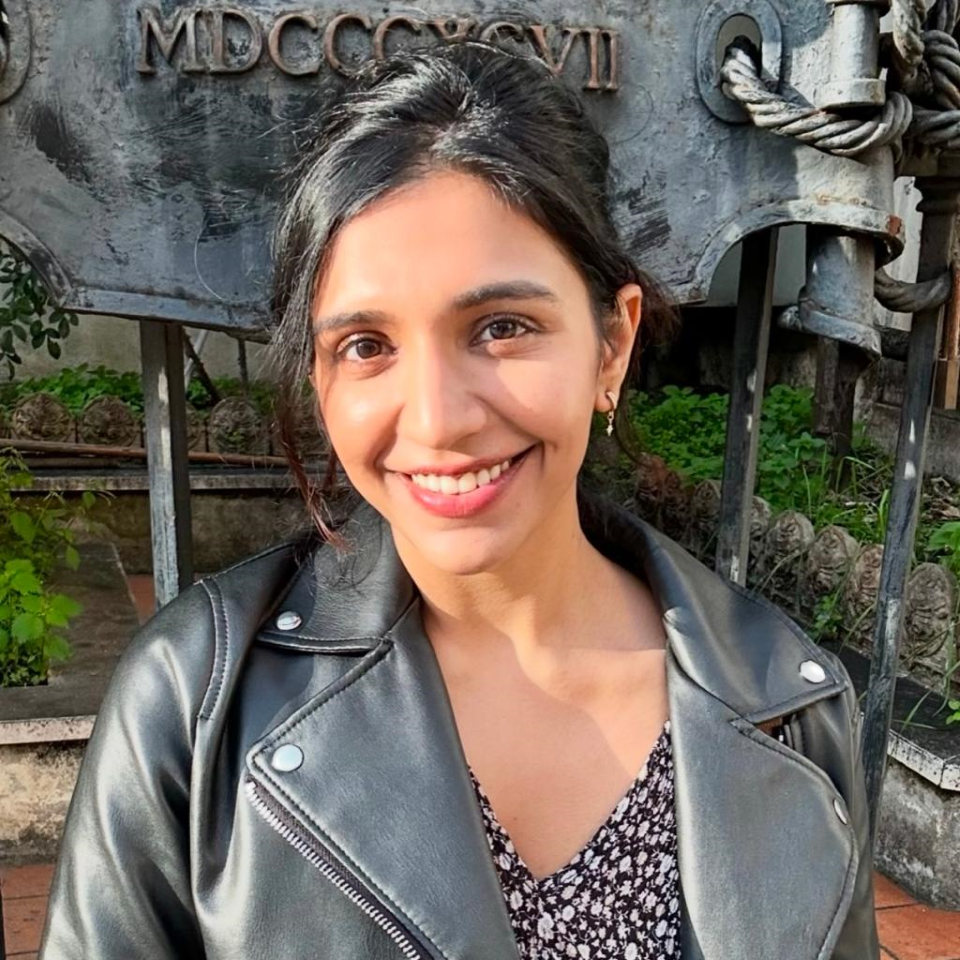
Tanushree Kulkarni is a cultural historian and food researcher with a decade long background in art history, cultural development and museum practice. Trained in the pastry arts, her work examines the history and cultural power of Indian snacks, bakeries and sweets.
“The views, historical interpretations, and opinions expressed in this article are solely those of the author and do not necessarily reflect the official position or stance of Bruite Magazine.”
Translations and detailed descriptions are provided to give a better understanding of the story to people from different cultural backgrounds across the globe.
What a lovely read this was! Makes me want to retrace the route n live it, hopefully soon!