
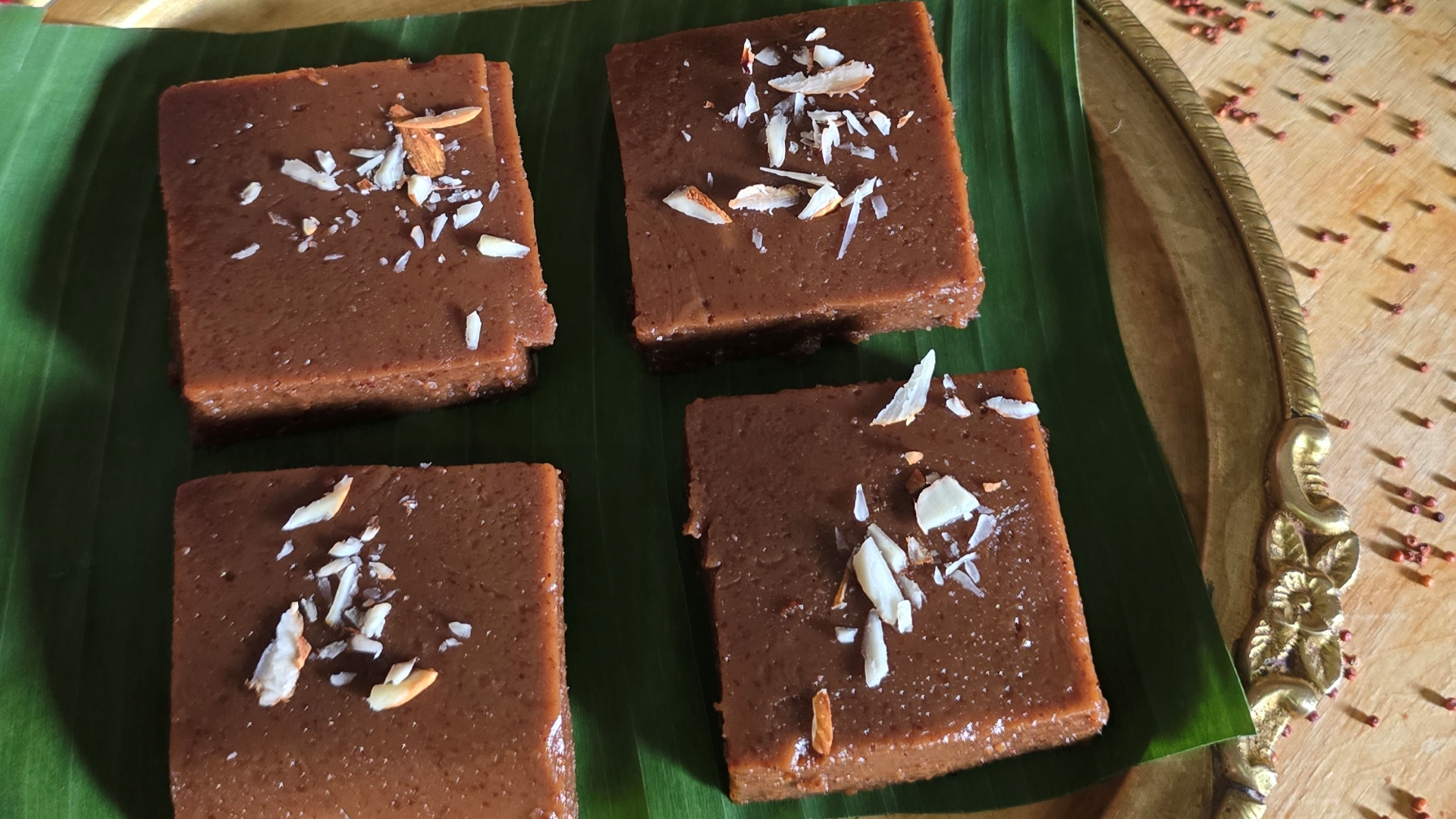
Ragi Manni (Finger Millets pudding) is a traditional dessert from the coastal regions of Karnataka, made by extracting ragi milk and cooking it with coconut and jaggery.
Ragi Manni is one of those dishes that carries both memory and meaning for me. Growing up, ragi was not spoken of as a “superfood” — it was simply food that sustained families. For me Ragi Manni was a dessert, my Amma made once in a while.
Today, when ragi is celebrated for its nutritional value, this dish feels even more relevant. Ragi Manni represents the wisdom of traditional kitchens — where taste and health co-existed effortlessly.
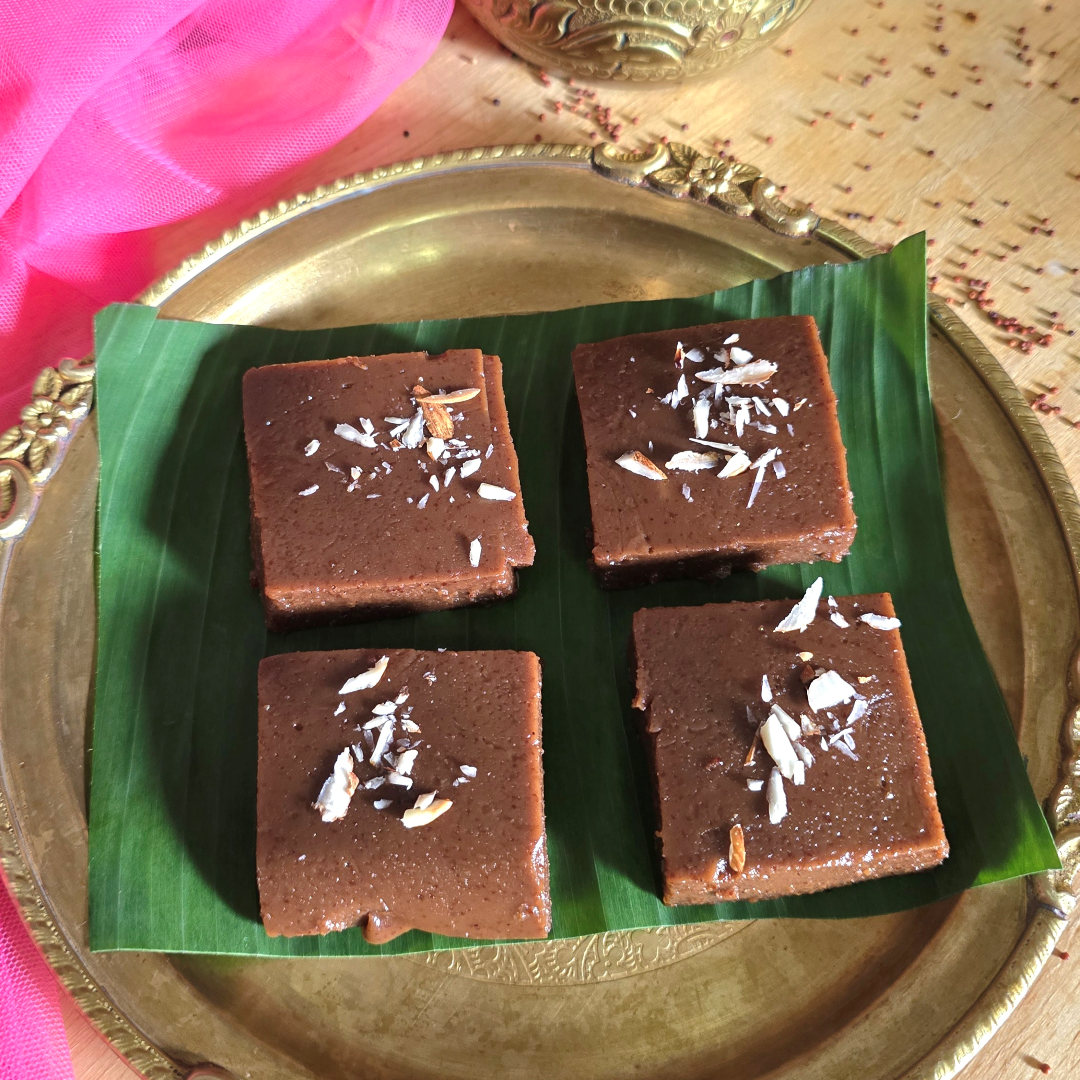
Ragi Manni
(Finger Millets pudding)
Ingredients
- Finger millets (ragi/ nachni): 1 Cup
- Freshly grated coconut: 1 Cup
- Jaggery powder: 1 Cup
- Ghee: 2 tsp
- A pinch of salt
- Cardamom powder: ½ tsp
- Water: 5 Cups
- Almond slivers: 2 tbsp, for garnishing
Method:
- Wash and soak ragi for 5 to 6 hours or overnight.
- Drain the water and add the soaked ragi to a mixer jar.
- Add grated coconut and a cup of water.
- Blend to a fine paste. Using a sieve, strain the mixture and extract the ragi milk.
- Return the residue to the mixer jar and add another cup of water. Blend again. Keep repeating this process until all the milk is extracted.
- Transfer the ragi milk to a pan.
- Add salt, cardamom powder and jaggery powder.
- Cook it on low heat and keep stirring continuously. The mixture will start thickening.
- Add ghee and keep stirring till the mixture starts leaving the sides of the pan.
- Pour it into a greased tray and let it set for about an hour. When it cools completely, cut it into small pieces.
- Garnish with almond slivers. Refrigerate and serve chilled. Ragi Manni tastes best when chilled.
Vanita Tipnis is a qualified Company Secretary and spent over a decade in the corporate world before stepping away, to focus on raising her children. As her children grew, her long-standing love for cooking took a new direction, leading her to start a food blog and a YouTube channel “Vanita’s Corner” in 2018.
Her work centres around traditional and regional Indian home cooking — everyday dishes that have nourished families for generations but are slowly disappearing from modern kitchens.
Alongside cooking, she has an interest in gardening. She grow vegetables, microgreens, and flowering plants at home. At its core, her journey is about documenting, preserving, and sharing the quiet wisdom of home-style cooking.
Translations and detailed descriptions are provided to give a better understanding of the story to people from different cultural backgrounds across the globe.