
Before soya chunks, chaap or tofu, India had its own ingenious mockmeats. In the east, fried lentil cakes called dhoka have sometimes been likened to fish or meat. Raw banana has also been used in place of chicken, especially in koftas where its firm, fibrous texture could remind one of shredded poultry. To this day, raw jackfruit is relished as a substitute for mutton, with Bengali preparations such as echorer kalia often served at weddings, instead of kosha mangsho.
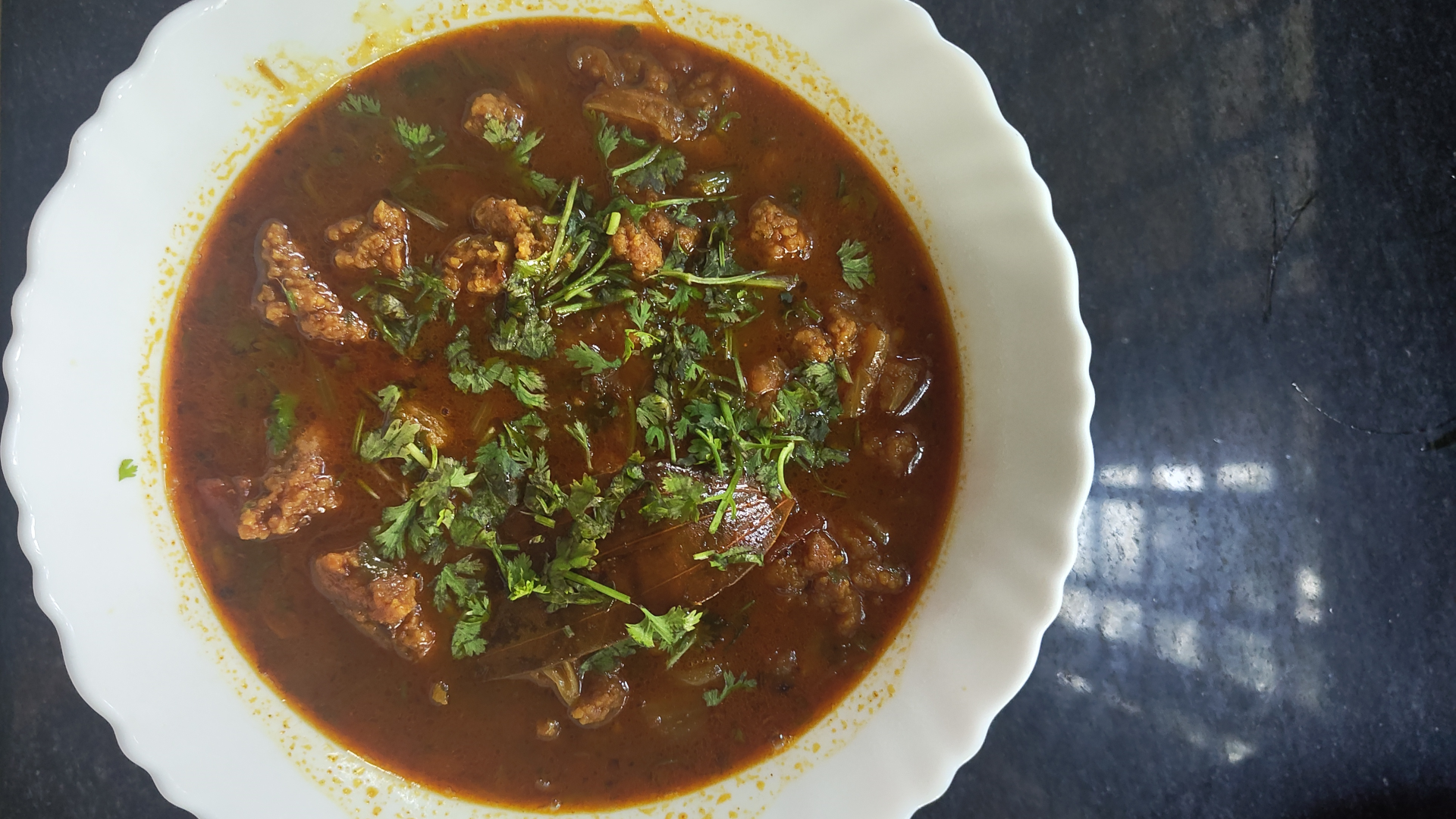
Recently, I stumbled upon yet another mockmeat preparation with a bold claim to pass for vegan liver. Hailing from the state of Bihar, this curry was known as Boot Kareji, its first name derived from the humble Bengal gram, colloquially known as boot, and its second name from the Hindustani word kaleja.
Bengal gram, depending on how it is processed and powdered, yields two pulse flours: sattu from roasted gram and besan from unroasted gram. Although they are used differently from grain flours, their protein and dietary fibre content make them excellent staples for plant-based diets. The former is frequently used in summer coolers, desi protein shakes and stuffings for daily breads, whereas the latter’s versatility knows no end.
Besan is the culinary equivalent of a broke student juggling half a dozen gigs to manage tuition. Making an appearance in our breads, curries, snacks, confections and even cosmetics such as face packs and scrubs — I thought I’d seen it all. Its role as a meat substitute, however, led me to boot kareji, a dish in which it is the star ingredient.
I heard about this tale of vegan liver at a social gathering. My dad’s friend, Prashant Uncle, spoke of its texture as marrying Rajasthan’s besan-based gatta curry with West Bengal’s lentil cake, dhoka. Vegetarians could never know the taste of meat, so for their sake it was likened to kaleji or liver. My vegetarian sister didn’t even hear him beyond the name of the dish, convinced that it was made with actual liver.
The story began with meat not being allowed inside homes back in his village, Badshahpur, in Sheikhpura. In the households he described, meat was considered sinful and impious; women didn’t consume it, refusing to bring it inside their homes where puja ghars housed idols and statuettes of deities. Much to my disbelief, they still cooked it for the male members of their families in the aangan, or courtyard. Uncle fondly recalled his mother making mouth-watering mutton curries in her heyday without ever tasting a spoonful. Even now, he prefers to eat mutton at his elder brother’s place, where his sister-in-law makes gorgeous gravies but doesn’t ever bring a morsel of it to her mouth.
It must’ve been especially cherished by women who’d otherwise never got to experience the textures and flavour profiles of meat, I’d imagine. But that wasn’t it. Uncle went on to explain that there was a seasonality to the dish. There shouldn’t have been — seeing as pulses, and by extension their flours, were by no means easily perishable and were stored for months on end. That was precisely why it was made in times when the produce from farms became scarce or uncertain. In the monsoons, when rains threatened to ruin vegetable beds and meat could be harder to preserve, besan and sattu were relied upon for meals. Boot kareji’s prevalence in the monsoon began to make much more sense after this revelation.
With this reasoning, Uncle gave us more of a glimpse into the place he grew up in. Up until the early nineties, he recalled, there was never a sabzi mandi in his village. Bottle gourds were grown on shed roofs and vegetables such as okra and eggplants were grown in kitchen gardens — everyone ate whatever they grew and exchanged with neighbours what they couldn’t consume. As he remembered it, there was exactly one tradesman for every trade, whether it was a barber, carpenter, ironsmith or even a gardener. These tradespeople exchanged services for produce, with almost every household paying only once a year for their services, usually in the form of a share of the harvest, fresh produce or cereals from the granary.
Uncle’s deference for his community was plain as day when he told us about how a wedding had always been the most celebratory occasion of the village. Everyone in the community came together with highly specific roles. For instance, the barber’s wife, the naaun, would apply alta to the feet of the women in the family. The kahaars, or palanquin carriers, would carry the groom to the bride. He smiled as he recalled that he was the last groom in his village to be carried on a palanquin.
The village community was among the first to take a hit when people started migrating to cities. An otherwise self-sustaining economy struggled to recover from the loss of labour to urban spaces. I was astonished to hear that the first shaving kits were bought only after the barber moved away. But such was the case, and Uncle still laments that life would never be the same.
I enquired if the attrition of the rural economy had something to do with recipes such as boot kareji never becoming a part of mainstream Bihari cuisine. Uncle disagreed — it wasn’t as much a lost recipe as a forgotten one. It simply fell out of everyday rotation.
Which brought me to my next question — was it made differently in different parts of the state? Uncle didn’t think so since his in-laws in Bihar Sharif made it quite close to his grandmother’s preparation. Perhaps simpler times asked for recipes that made the most of things without any fuss.
His words remained with me as a reminder that recipes are forgotten because people simply stop making them. Chef Sheeba Iqbal, in an interview, regretted never learning the recipe for lehsun ki kheer from her mother. Also known as benami kheer, the dessert is now often regarded as an endangered Awadhi recipe. Likewise, boot kareji needs to be cooked more often, lest future generations grow up unaware of the heritage of village monsoons, quietly tucked away in the forsaken corners of urban kitchens that now seem to know so much about veganism.
RECIPE
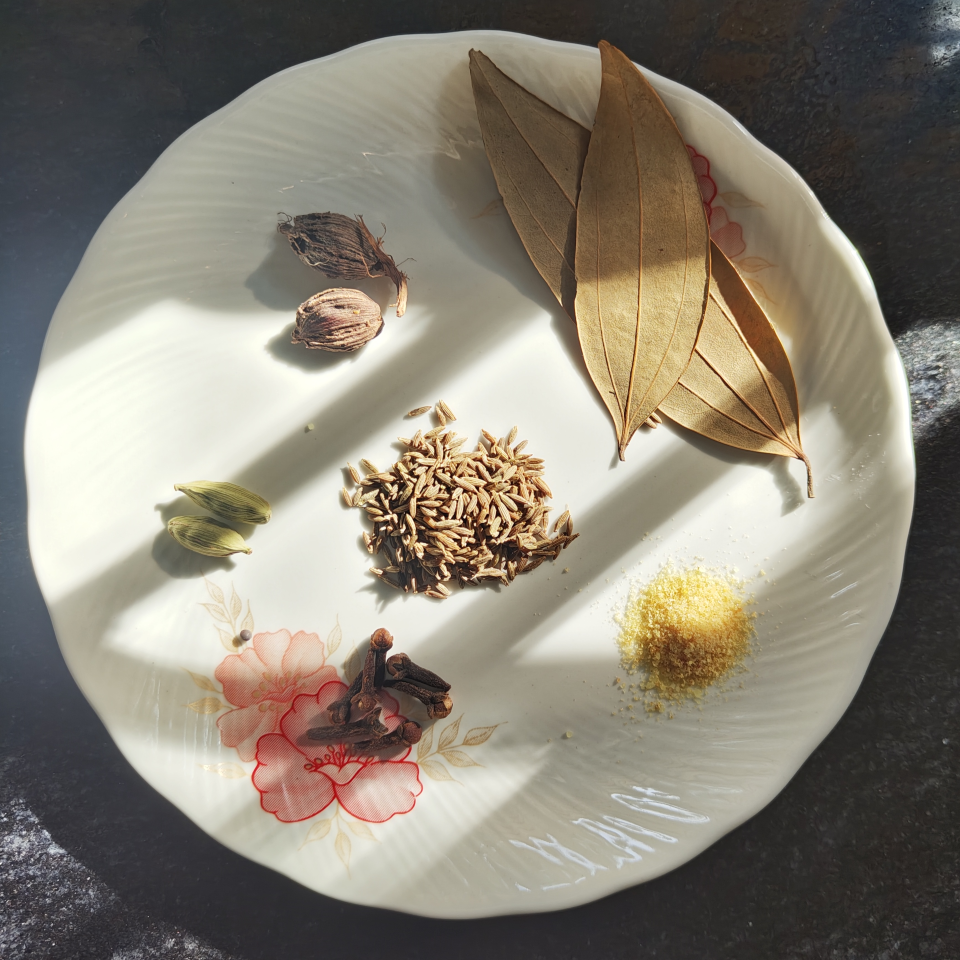
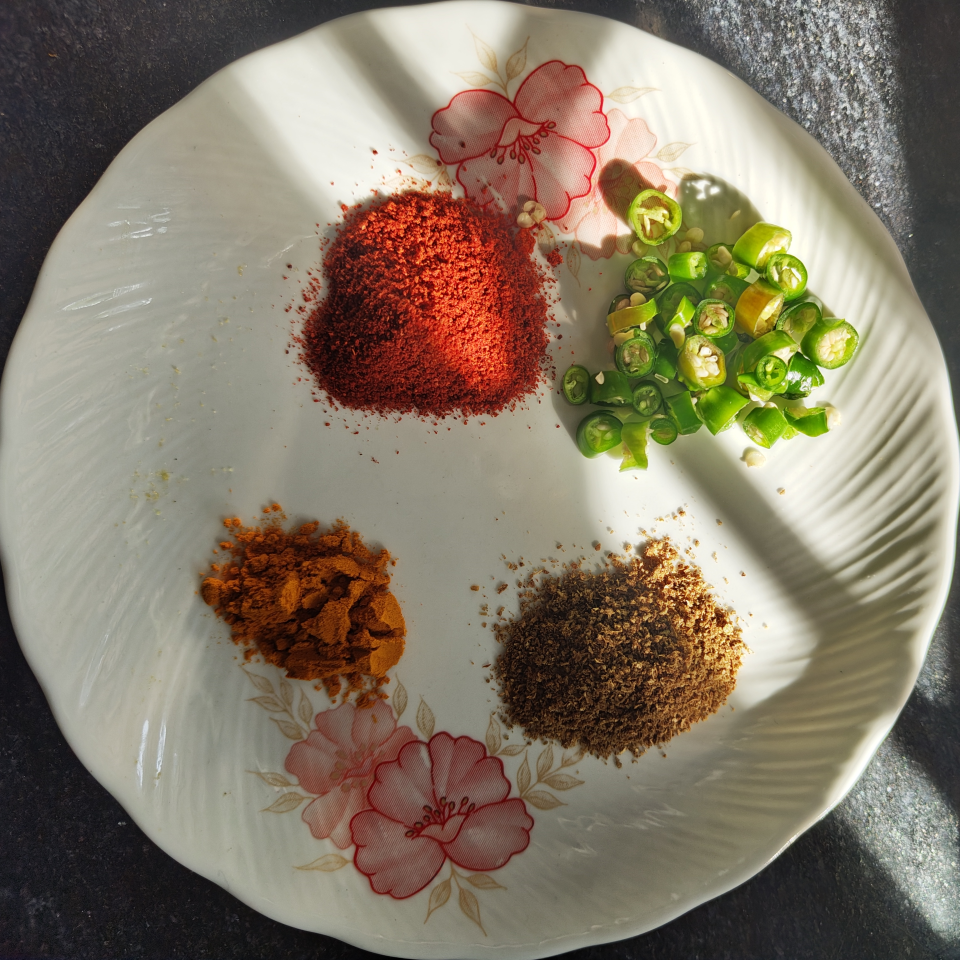
It all begins with dry mixing besan with salt and powdered spices such as turmeric, chilli and coriander in a bowl. Sometimes cumin and pepper are used, whereas additions such as onion, ginger, garlic or green chilli paste are occasionally suggested.
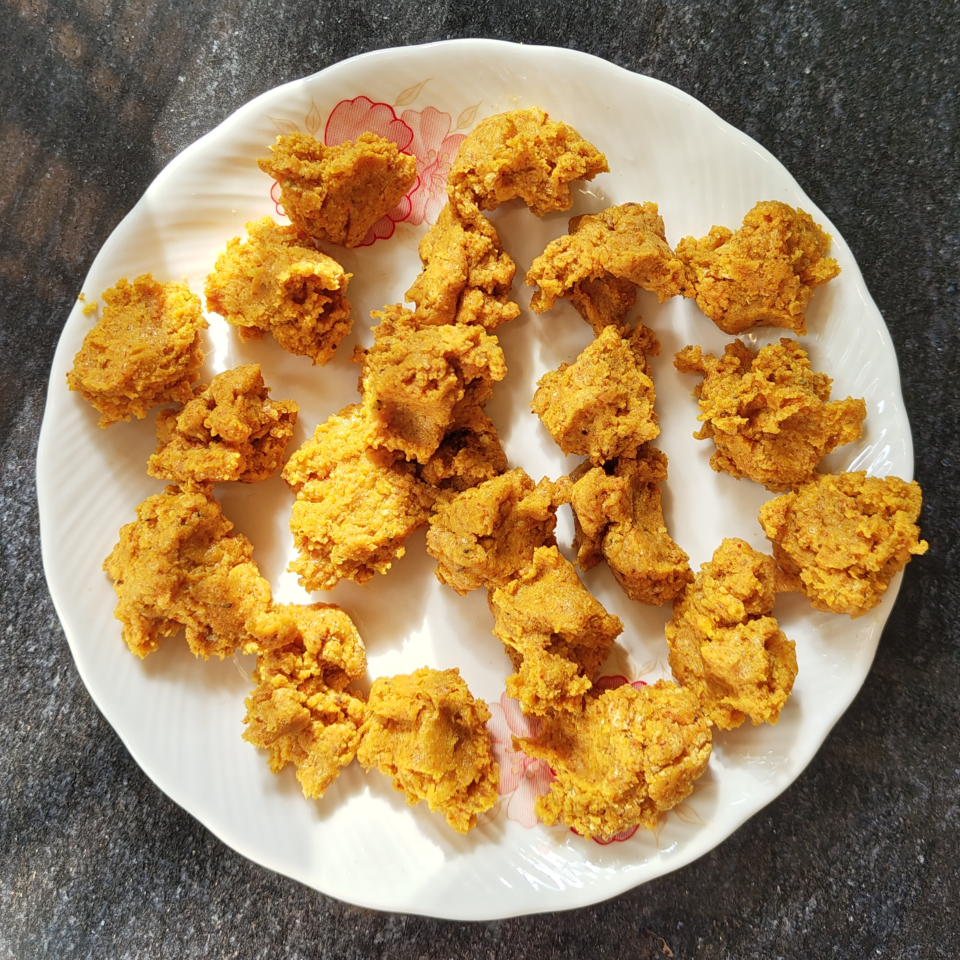
Using as little water as possible, these dry ingredients are combined into a shaggy dough. Bite-sized chunks are torn from the dough. The instructions explicitly say to leave them as they are and not smooth them into rolls or pellets the way recipes such as gatte and pitor call for.
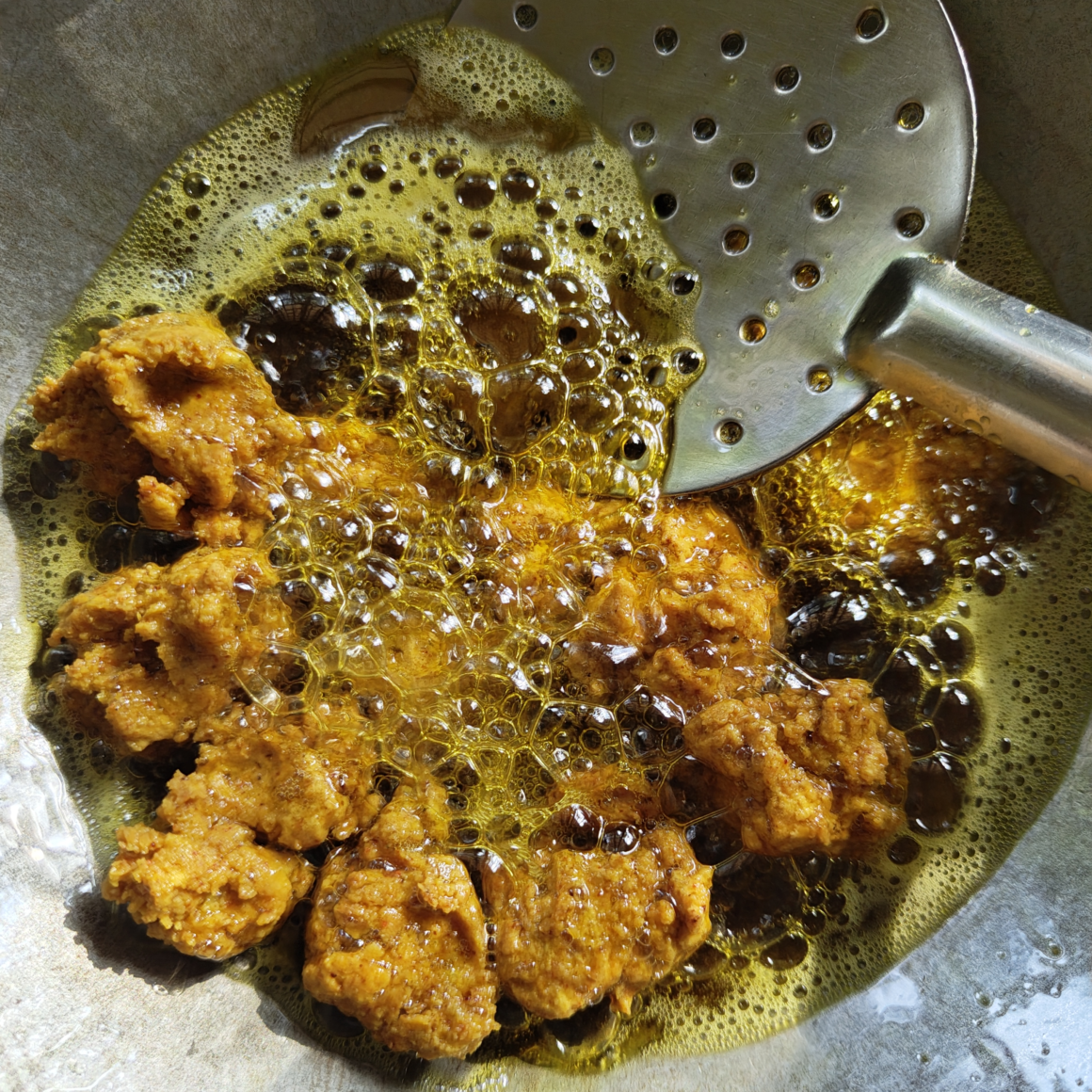
These chunks are boiled for a couple of minutes and then shallow-fried in mustard oil for another few so that a light-brown, crispy exterior forms while the interior turns crumbly. In appearance, they closely resemble chicken nuggets. Even simply fried, these nuggets can be enjoyed with coriander or mint chutney or a hot cup of tea.
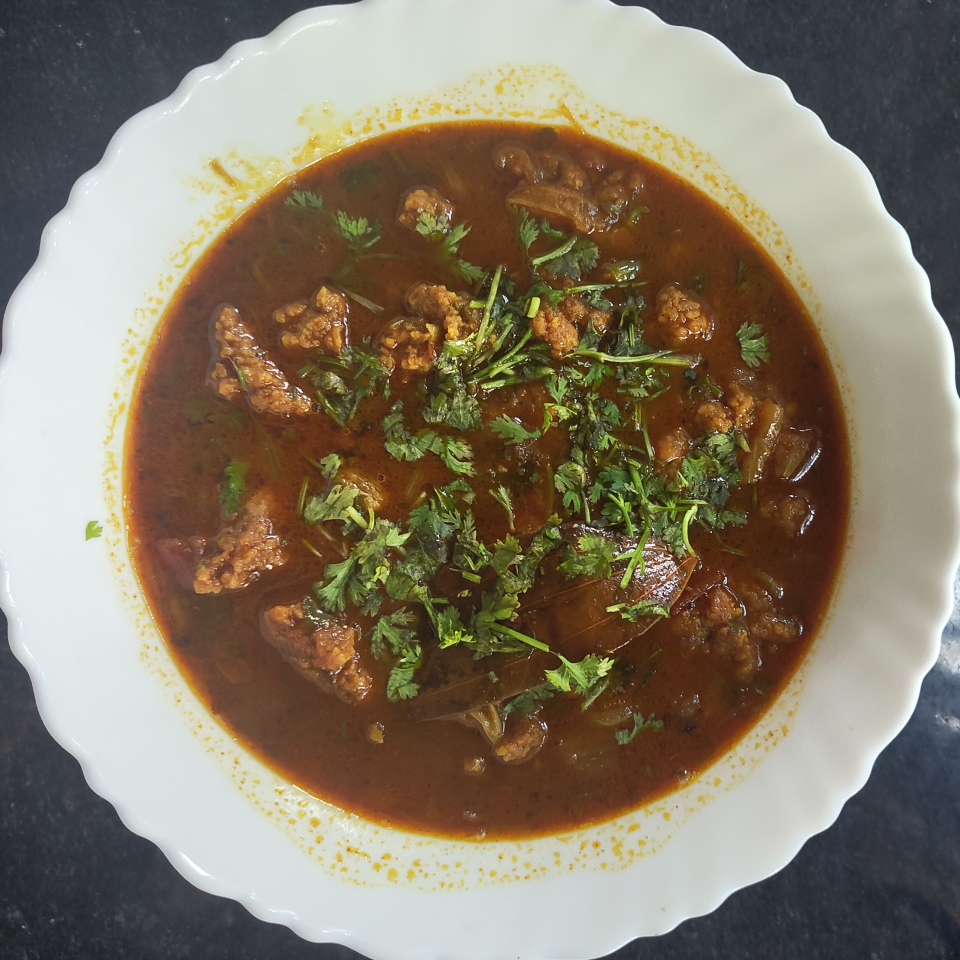
Then, chopped onions and tomatoes along with ginger and garlic pound together, are assimilated into a rich gravy that non-vegetarians have long come to associate with the aroma of a typical home-style mutton curry.
The gravy is made a little watery, because the besan nuggets are meant to soak up the liquid for a few minutes before the heat is turned off. Surprisingly, in this preparation, the instructions for cooking kaleji (goat liver) and besan nuggets in gravy are much the same. Cook them on medium-high heat for a few minutes, adding salt at the very end.
Letting it rest in the pot for a few minutes gives us ample time to admire this dish for what it is — an inventive chewy meat alternative in gravy. Even its looks are deceptive enough to mislead the best of non-vegetarians.
Anushka is a writer as much as she is a gastronome. Her work has appeared in GOYA, Steam Ticket: A Third Coast Review (Vol. 29), Sweet Potato Mag (Issue 6), Tint Journal (Fall ’26 Issue) and Quilted Magazine (Issue 2).
“The views, historical interpretations, and opinions expressed in this article are solely those of the author and do not necessarily reflect the official position or stance of Bruite Magazine.”
Translations and detailed descriptions are provided to give a better understanding of the story to people from different cultural backgrounds across the globe.