
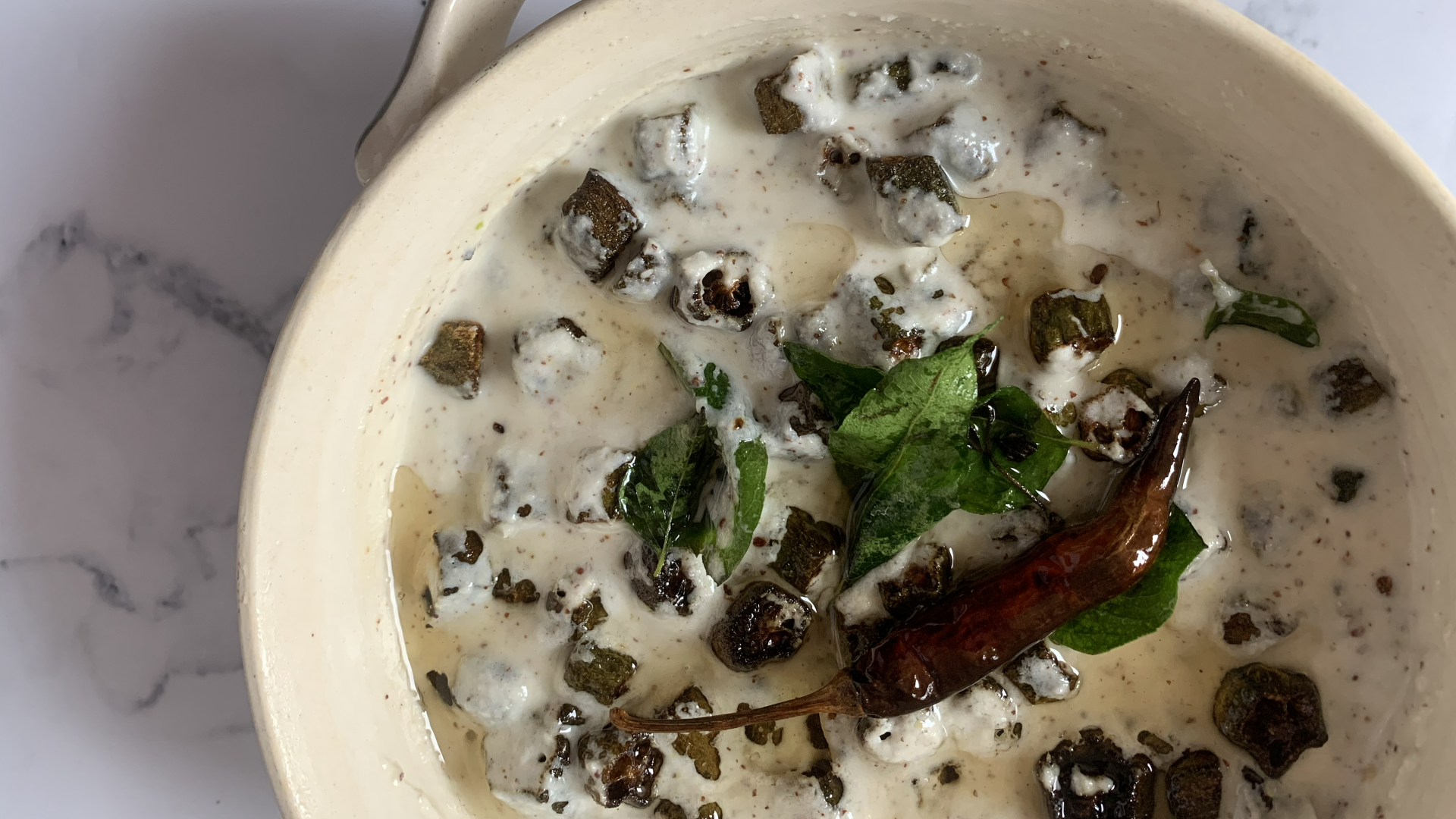
Like every year, in the week leading up to Onam, my social media feed has been inundated with white-and-gold kasavu sarees, Onam sales, recipes for payasam, and recommendations for the best places to enjoy a banana-leaf sadhya in your city, from Bandra to Basavangudi and beyond.
Onam has taken on a pan-Indian character of sorts, largely because of the sadhya and its novelty. It is a complex celebratory meal with dozens of elements, textures and flavours, and it must be served just so: a place for everything and everything in its place. If you’re in a Malayali home and place the banana chips on the wrong side of the raw mango pickle, rest assured, generations of elders will waste no time in telling you where you’ve gone wrong!
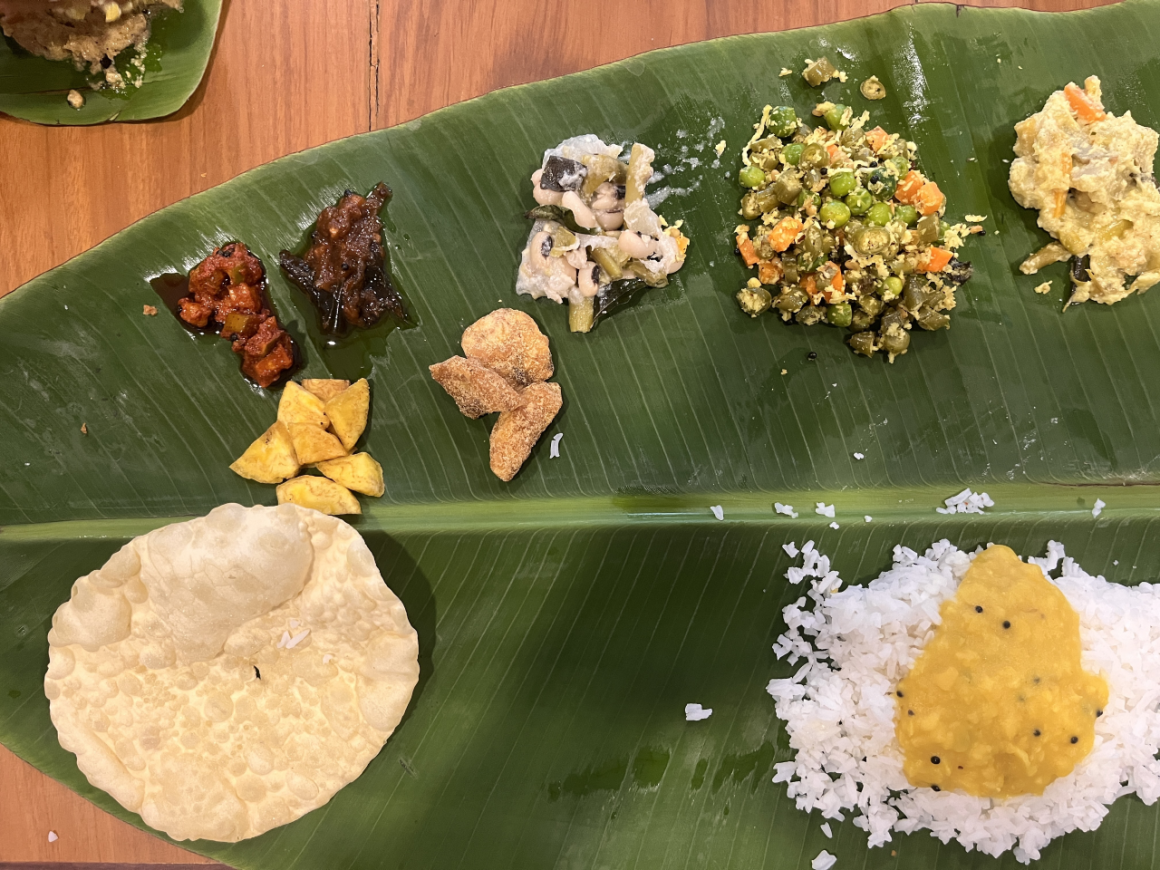
The anatomy of the Onam sadhya
A sadhya can have anywhere between 20 and 30 dishes, and sometimes many more, depending on how grand the feast is. Back in the day, sadhyas were community affairs, prepared at home with several family members and cooks involved, so no two Onam sadhyas could ever be the same. And they still aren’t. But there is a general framework, with certain flavour profiles and dishes that must be part of the meal.
Chef Arun Kumar TR’s Feast on a Leaf, a rare book dedicated to the history and traditions of the Onam sadhya, goes into great detail about each element. The sadhya balances the six major tastes recognised in Ayurveda: sweet, sour, salty, bitter, pungent and astringent. All these tastes are present in some form or another. Payasam, or kheer, provides sweetness; sambar falls into the spicy or pungent category; and maanga curry, or mango pickle, supplies a sour element.
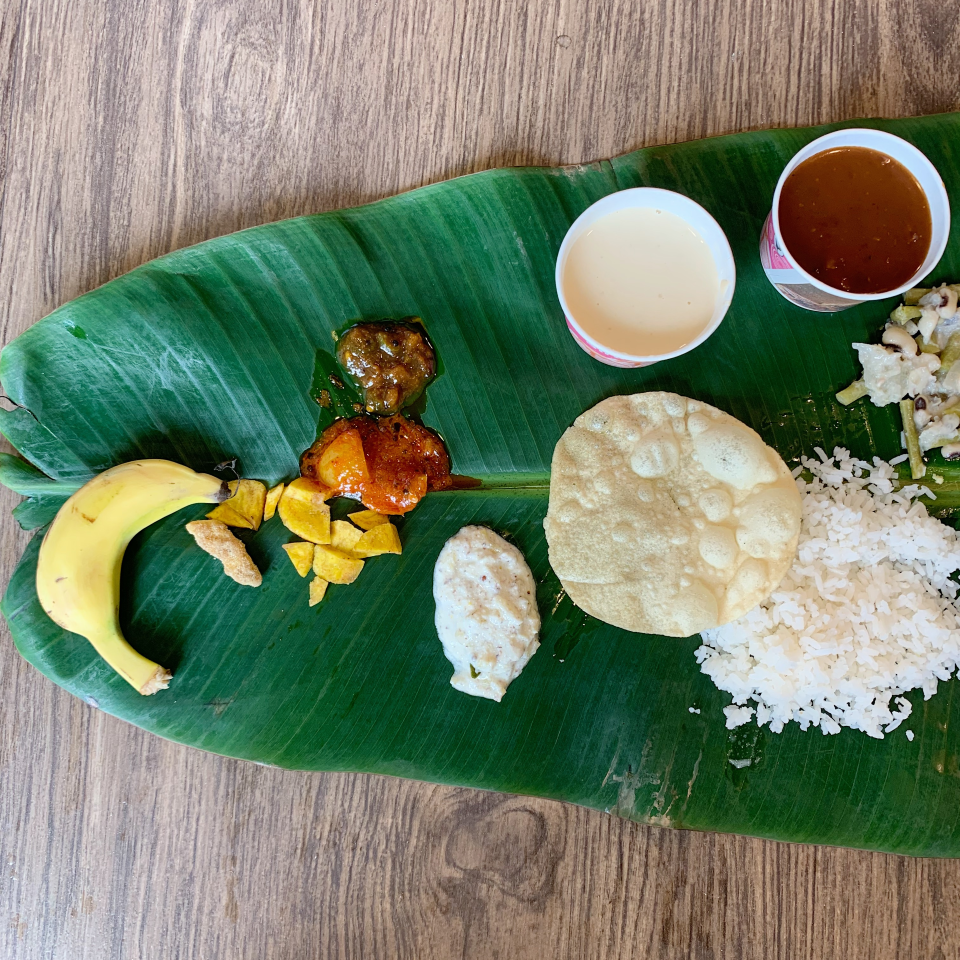
Some dishes bring together multiple tastes. Pachadi and kichadi, for instance, can be sweet, sour and astringent all at once. They are also two sadhya preparations that tend to cause considerable confusion. Ask one Malayali to point out the pachadi on a sadhya leaf, and there’s a good chance someone else will insist it is actually kichadi. No relation to moong dal khichri, FYI!
Pachadi and kichadi
For someone who has never tasted either, the dishes can be described as similar to raita, except with more spice and texture. Fruits and vegetables are lightly cooked or pan-fried, mixed with a coconut-and-spice paste and yogurt, and finished with a simple tadka: the Holy Trinity of mustard seeds, curry leaves and chillies.
On the banana leaf, pachadi or kichadi can usually be found on the upper right-hand side, near the drier dishes such as avial. Trying to understand the difference between the two sent me down a rabbit hole of YouTube Shorts, Facebook videos and blog comment sections, some dating as far back as the early days of Web 2.0 in the aughts. The preparations vary from north to south and even from community to community. A pachadi prepared in a Hindu Nair home, for example, will likely taste different from one made in a Syrian Christian home.
What the cooks say
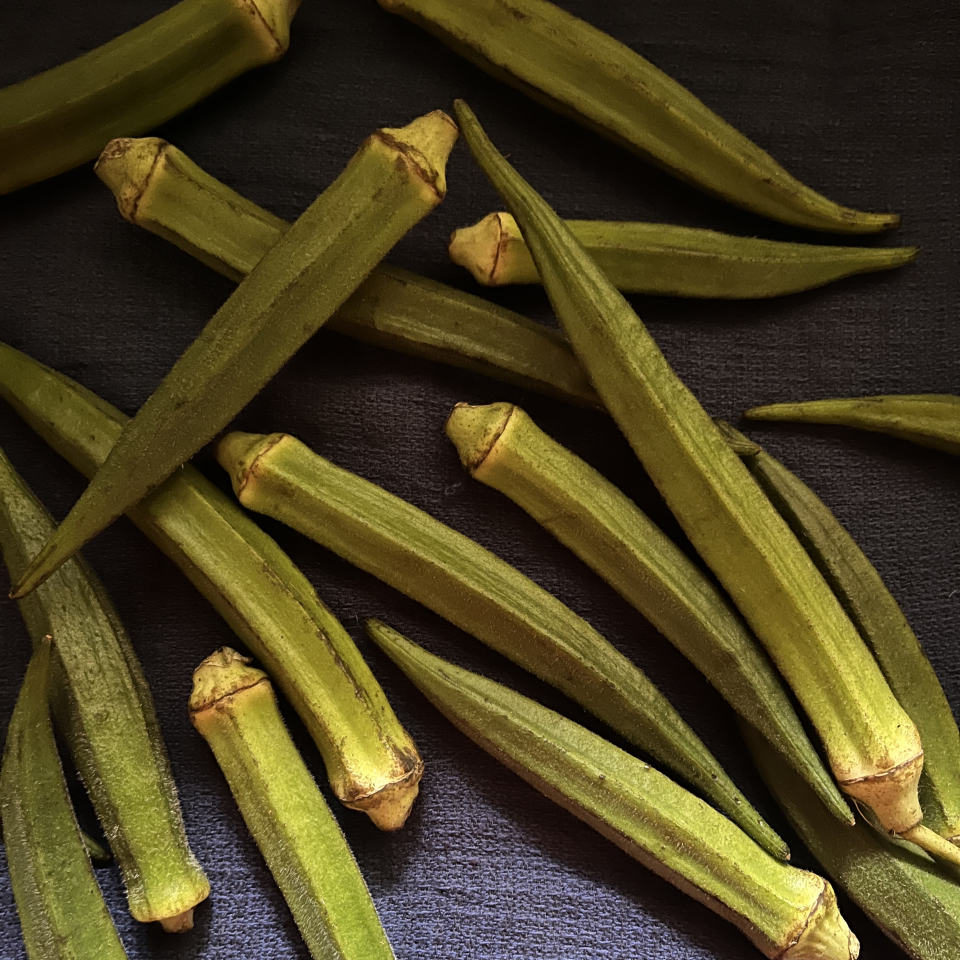
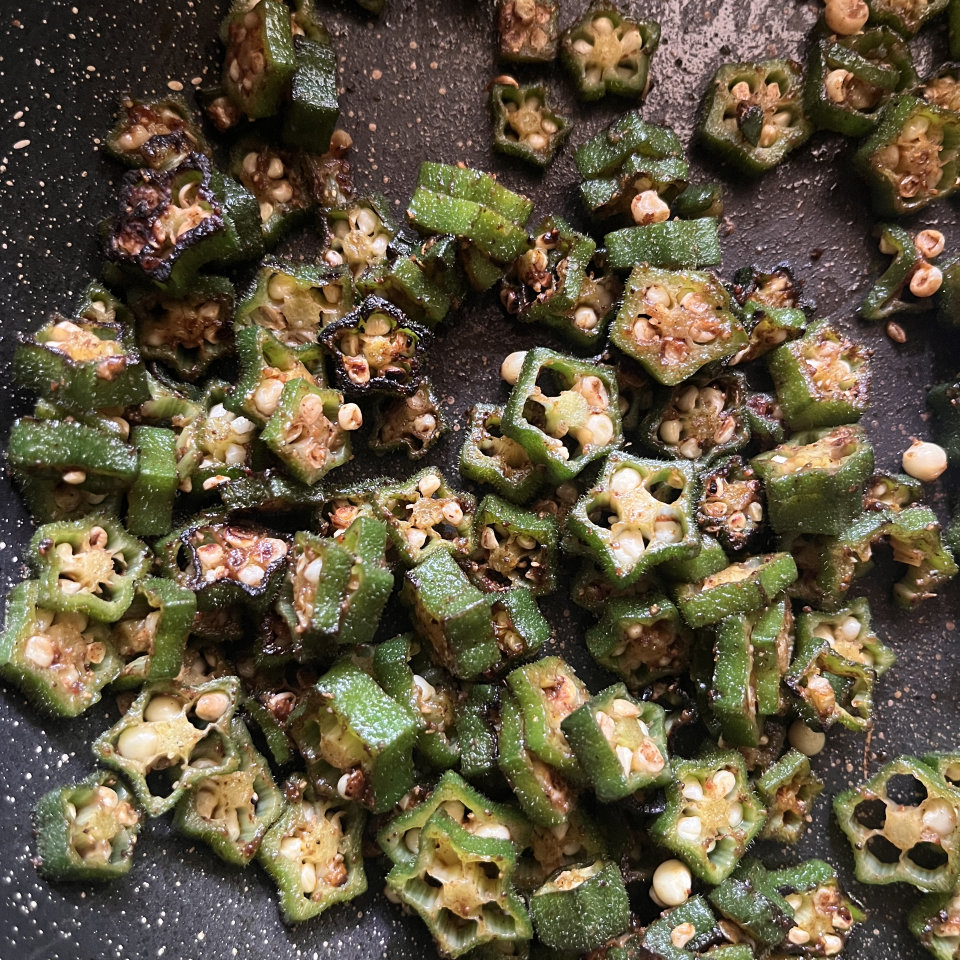
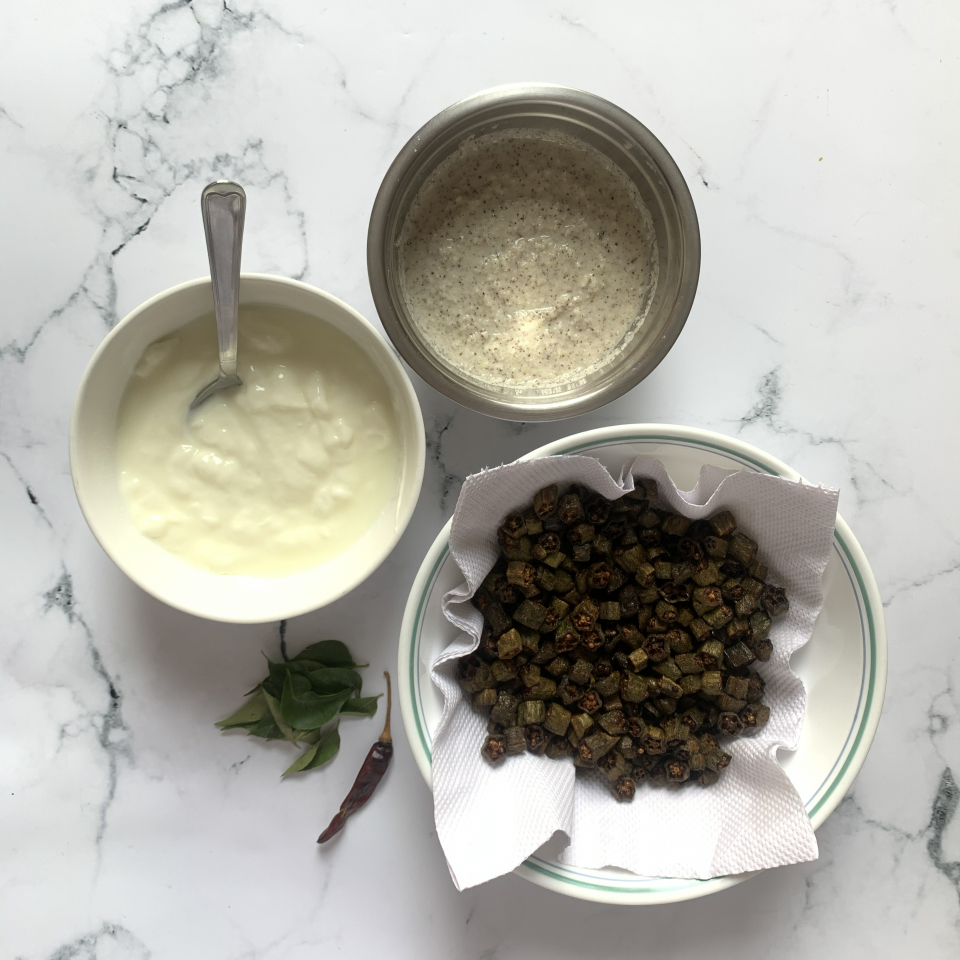
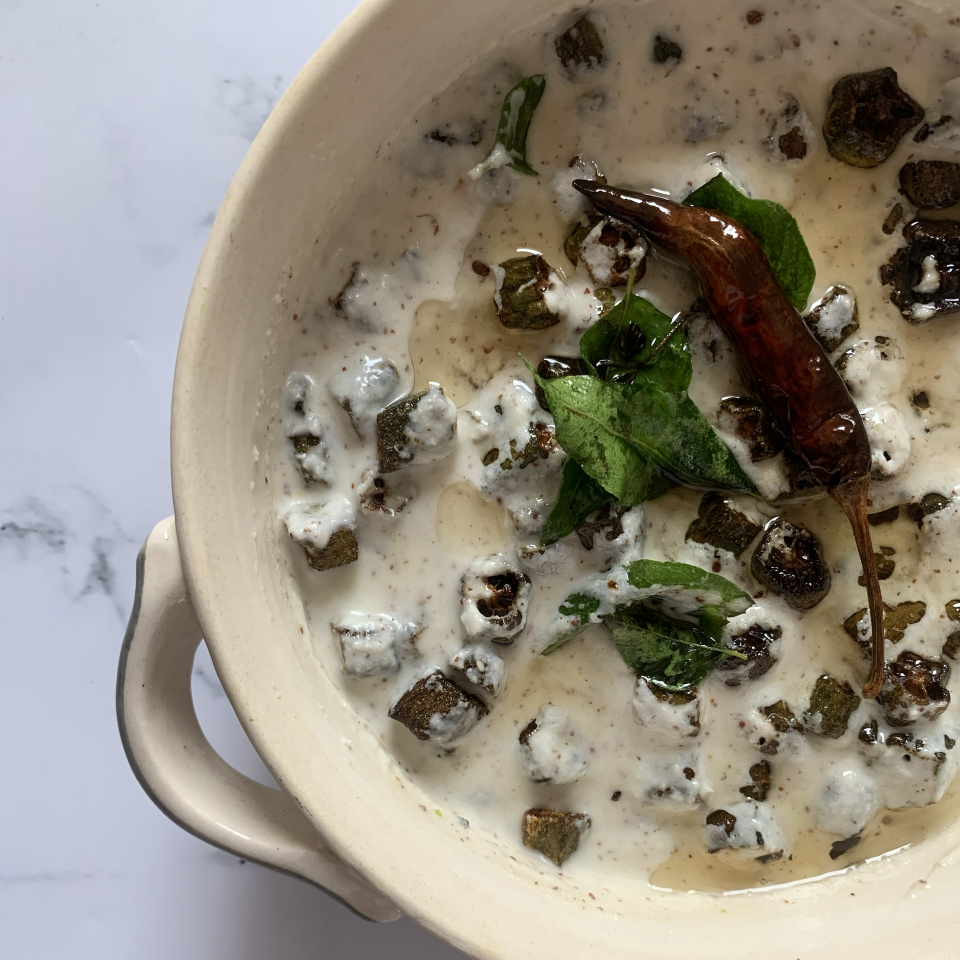
I started with my own family, calling my vellyammayi, or grand-aunt, Valsala, the oldest living member of her generation. She put it simply: kichadi is savoury and pachadi is sweet. With kichadi, vegetables such as lady’s finger and bitter gourd are pan-fried, added to whisked yogurt and finished with a simple tadka. Coconut paste, she said, could also be added, usually if the yogurt fell short or the cooks needed to increase the quantity to cater to more guests.
Pachadi, on the other hand, she said, is made with fruits such as pineapple and plantain, or sweeter vegetables such as pumpkin, and may also contain purple grapes for extra sweetness. The fruits are lightly boiled with salt and turmeric, mixed with whisked yogurt and a paste of grated coconut and mustard seeds, then gently simmered for a minute or two.
She says getting the paste right is important. The coconut must be ground to a smooth puree in the blender, after which the mustard seeds are added and the mixture is given one final whirl. The mustard seeds do not blend in completely and remain slightly grainy and nibbly. Ground mustard seeds have a piquant, nasal-clearing quality that balances the sweetness of the coconut and fruit.
While most Nair households do not adhere to the “no-onion, no-garlic” rule, my grand-aunt tells me that “we”, by which she means people from Kochi, do not use garlic in the coconut puree. Those further south in Thiruvananthapuram do, since “they are heavy-handed with garlic and add it to almost everything”. This reminded me of how my paternal grandfather, who was from there, had a soft spot for the allium.
I had always known that the state capital favoured a different flavour profile from the spicier fare of the Malabar region and the tart curries of central Kerala. So I spoke at length with culinary expert Nimmy Paul, founder of the cookery school Nimmy & Paul in Kochi. Her knowledge of Kerala cuisine is vast, to say the least, and when it comes to researching a dish or ingredient, she always seeks out fellow cooks. In her opinion, cooking and recipes are best learnt from the hands that make them regularly.
Nimmy says that pachadi is a typical Kerala dish, and the version her mother made in their family home used vellirikya, or Madras cucumber, a vegetable with a mellow flavour that marries well with tart yogurt, creamy coconut and spices. While she was familiar with pachadi, kichadi was completely alien to her, something more common in Hindu homes.
Her research led her to cooks in Thiruvananthapuram, and the key differences lay in the base, particularly the ratio of yogurt to coconut; the spices used, namely cumin and mustard; and which dish fell into the sweet category. Thiruvananthapuram, close to the Tamil Nadu border, has some similarities with “Tam Brahm” cuisine, including an affinity for sweetness.
Nimmy tells me that, in the state capital, kichadi is sweet. She says, “What I learned is that kichadi is sweet and fruit-based, pineapple being the most popular version. Beetroot is also common, and the dish is meant to add colour and texture to the sadhya leaf. And, more importantly, with kichadi, cumin is ground along with grated coconut to make the paste, which is mixed with the yogurt and cooked fruit. In pachadi, we grind mustard seeds with coconut.”
So what families in Kochi call pachadi becomes kichadi as we travel down the coast. Nimmy adds that another major difference lies in the amount of yogurt used. Pachadi is thicker, with plenty of grated coconut, while kichadi has less coconut and more yogurt. This echoes what my grand-aunt told me about coconut paste being added to kichadi to “stretch it out”.
What the books say
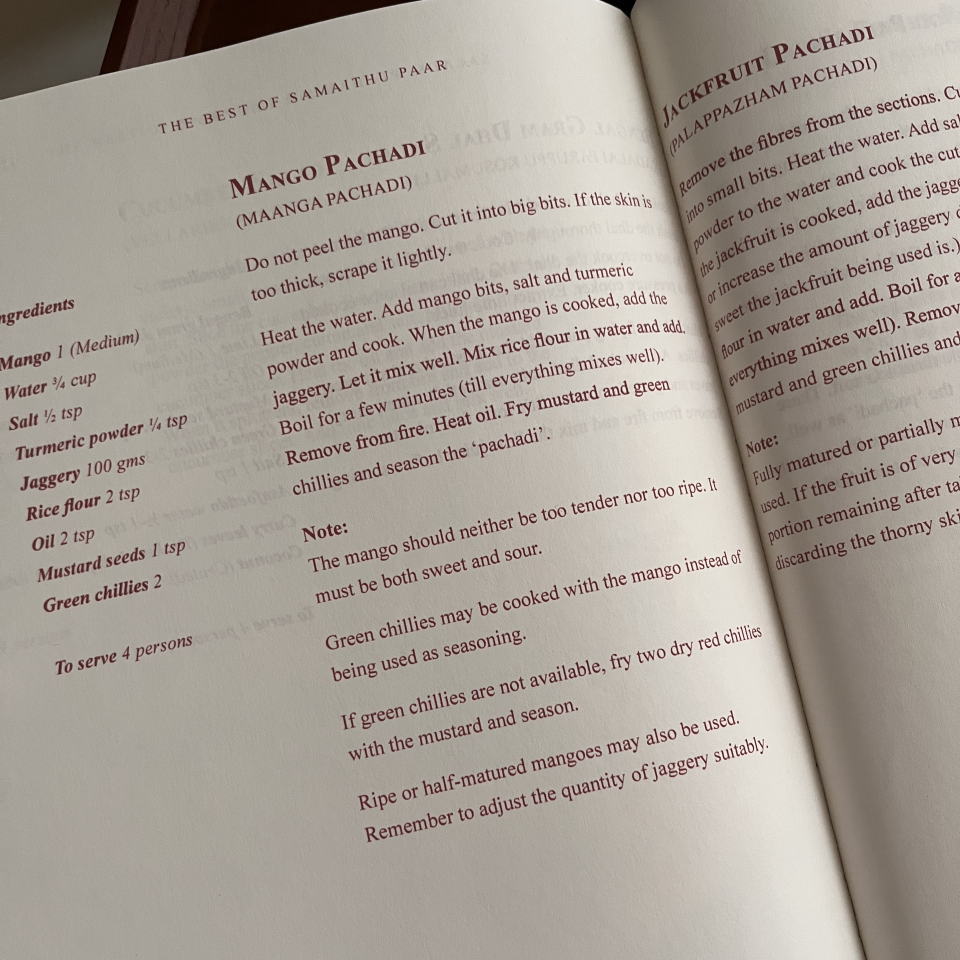
Of course, I also had to turn to a cookery book or two, starting with S Meenakshi Ammal’s Samaithu Paar, the classic compendium of South Indian Tamil cookery. There is an entire chapter dedicated to salads and pachadis. What I found interesting is that the Tamil versions omit coconut and lean towards sweetness: I found recipes for pachadi made with tender mangoes, ripe mangoes and jackfruit, with jaggery listed as an ingredient.
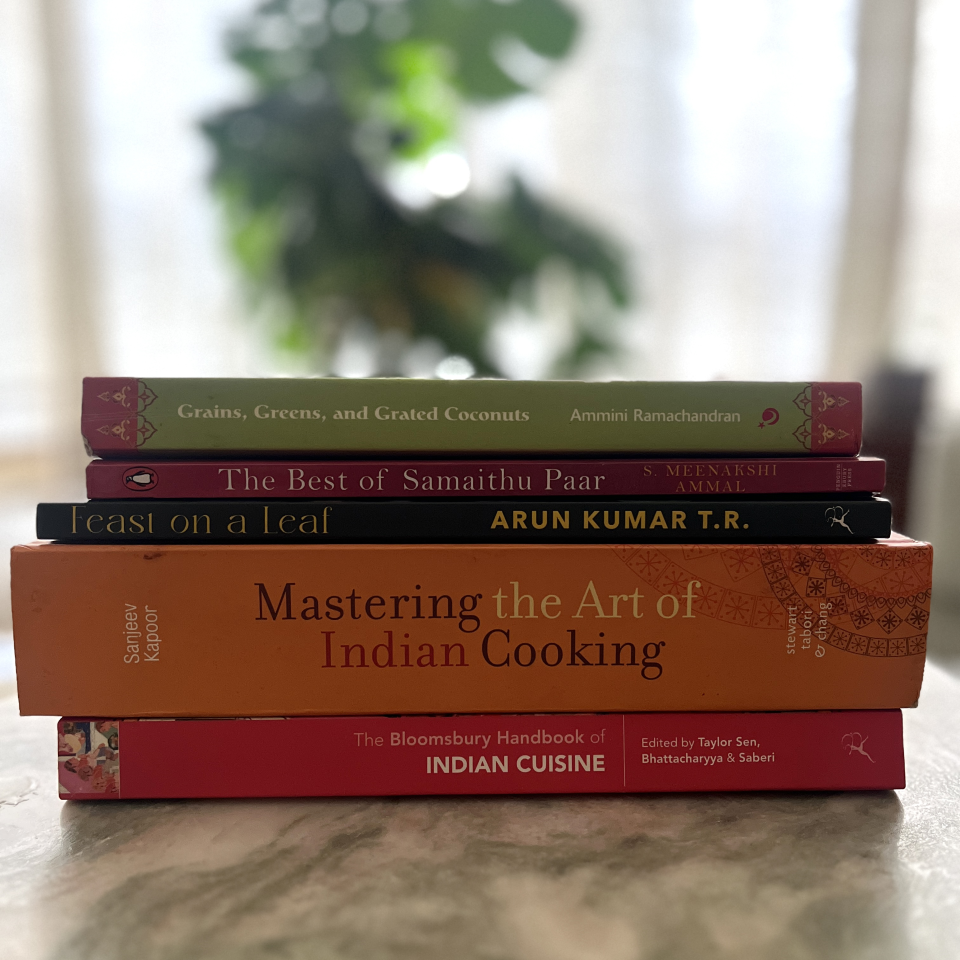
The late Ammini Ramachandran, culinary historian and author of Grains, Greens, and Grated Coconuts, a cookbook dedicated to Kerala’s vegetarian cuisine, has recipes for both dishes, with slight, blink-and-you-miss-them distinctions. Here, however, sweetness does not seem to factor in at all. Her recipe for tomato pachadi uses lightly simmered tomatoes mixed with yogurt and a coconut-chilli paste, while her lady’s finger kichadi calls for fried lady’s finger mixed with a yogurt-coconut-mustard paste. The treatment of the vegetables is the distinguishing element.
Finally, what is what?
So, can we safely say that pachadi is sweet and kichadi savoury? That one is fruit-forward and the other vegetable-based? Or does it come down to the coconut-and-spice paste, along with how much yogurt is added?
Well, even after speaking to experts, thumbing through multiple cookbooks and combing through dozens of recipe videos and blogs on the internet, I do not have a definitive answer. But what I can say with confidence is that they both taste wonderful and deserve a place in your Onam sadhya, however you choose to prepare them.
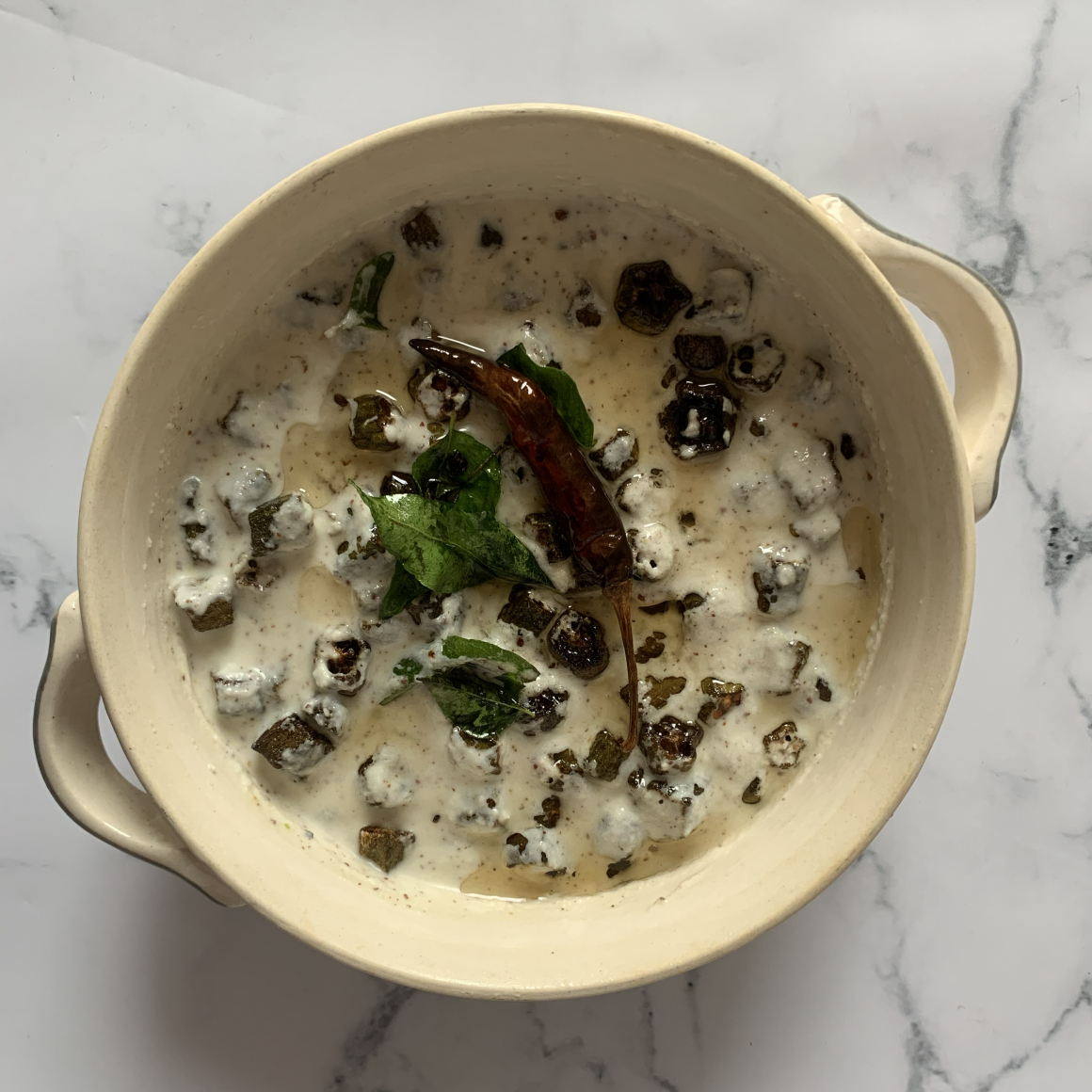
I shall leave you with a recipe for vendakkya, or lady’s finger, kichadi, prepared the only way I know how: family-style! Perhaps you will like it too.
Happy Onam!
Click here for the recipe.

Meenakshi Srikandath is a media and communications professional whose work spans newsrooms, advertising, e-commerce, and lifestyle publications. Over the years, she has written everything from breaking news headlines and branded content to product copy and culinary features. She is also a voice over artist, avid cookbook collector, and deeply interested in the intersection of food, culture, and storytelling.
“The views, historical interpretations, and opinions expressed in this article are solely those of the author and do not necessarily reflect the official position or stance of Bruite Magazine.”
Translations and detailed descriptions are provided to give a better understanding of the story to people from different cultural backgrounds across the globe.