
On cooking, memory, and the styles we inherit
Of all the things that distinguish us from the rest of the animal kingdom, perhaps none is more quietly radical than this: we are the only creatures on Earth who cook our food. Every other living thing eats the world as it finds it, raw and immediate. We alone paused and applied heat. In that pause, something extraordinary happened. We became more human. Yet for all its ancient origins, cooking remains one of the most intimate acts a person can perform. It carries within it everything a life has touched: the regions we come from, the people who shaped us, the losses we carry quietly forward.
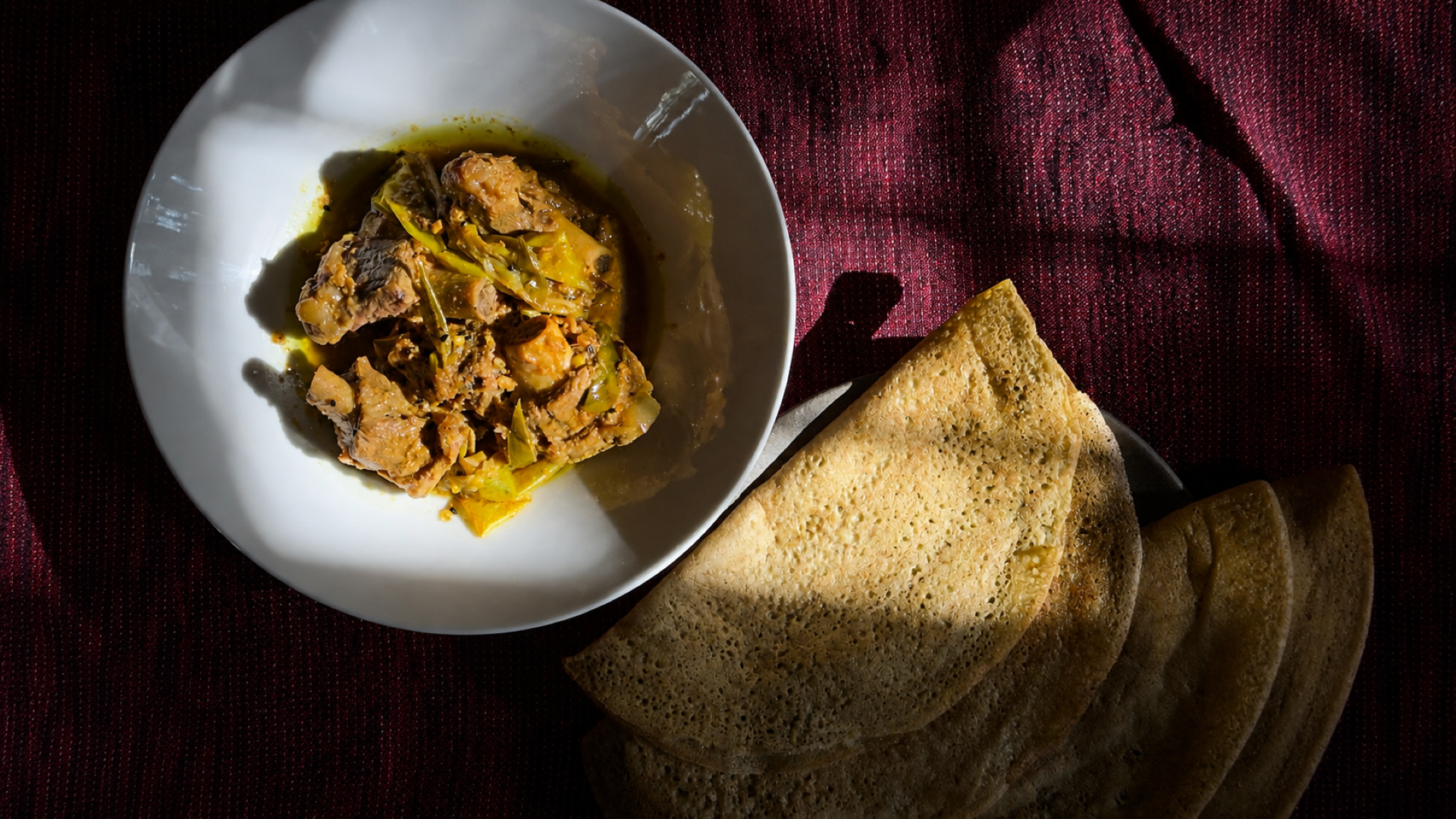
There is a meal I return to often, though it does not exist in any cookbook and was never designed to be eaten this way. On one side of the plate: achaar gosht, a mutton dish slow-cooked with the sharp, aromatic pickling spices of North India, that preserve things and make them last. It was my uncle Farhan’s recipe, rooted in Uttar Pradesh, made entirely from instinct and never written down until it had to be. On the other: pesarlattu, a thin, crisp crepe of green moong dal, light and clean, a dish from my grandmother Lalita’s maternal side in Karnataka, typically eaten alongside chutney. These two dishes have no natural reason to share a plate. Different regions, different textures, different inheritances. Yet, together they produce something I can only describe as comfort. Not the comfort of familiarity alone, but the deeper comfort of feeling, for a moment, close to people you cannot always reach.
Cooking itself is ancient beyond reckoning. Cooked food unlocked more calories, killed pathogens, and over generations, freed up biological energy that built the human brain. The hearth, in a very real sense, built the mind. Cooking has become, in the hands of chefs, a form of philosophy as much as craft.
Yet for all the spectacle of the professional kitchen, the more fascinating question may be a quieter one: what shapes the way an ordinary person cooks? Research published in the journal Appetite by Julia Wolfson and colleagues at Johns Hopkins University suggests it is a remarkable constellation of influences: family background, cultural environment, memory, and the slow sediment of every meal ever eaten and loved.
Social cognitive theory, as the psychologist Albert Bandura described it, tells us that cooking skills are largely absorbed through observation and modelling. We watch, we remember, we replicate, often without realising we are doing so. Some people cannot cook without a recipe in front of them, that printed contract between themselves and the dish. Others absorb a method by watching it once and carry the motion internally, translating memory into matter.
Then there is a third kind of cook, rarer and harder to explain: the person who opens the fridge with no plan and finds dinner in the gap between what is there and what is missing. This intuitive cook possesses what the philosopher Michael Polanyi called tacit knowledge, the kind we carry without being able to fully articulate, the knowledge, as he put it, that exceeds what we can tell. In the kitchen, it manifests as embodied fluency: a conversation happening below the level of thought, between the cook’s hands and the ingredients in front of them. Their relationship with cooking is one of un self-conscious expertise. They are not following a method so much as thinking in a language they have long since stopped noticing they speak.
Farhan Mujib, Bilu bhai as I called him, was my aunt’s husband. A man who had completed a PhD in science education and taught physics at Aligarh Muslim University, and who had found his way, in time, entirely to art. His was a particular kind of artistic vision: his work bloomed from elements of Indian architecture, Hindu deities, aesthetic interiors, and the radiant collision of colourful patterns and textures, assembled from photographs gathered on his travels and fragments cut from magazines. He was a collagist (an artist that works with collages), someone who looked at the world as a vast reservoir of material, who saw in a Mughal archway or a torn page or a flash of printed colour not what it was, but what it might become in combination with something else entirely.
One of my earliest and fondest memories of my own creative self is making collages alongside him in his well lit studio, encouraged to embark on the same journey. He cooked with exactly the same mind. There was no recipe, no method consulted, no plan made in advance. Only the same quality of attention he brought to his studio table, the same instinct for what belongs beside each other. The scientist in him understood systems; the artist in him trusted what lay beyond them. Unfortunately, he suffered from a rare heart condition, and I only spent my early childhood years in his presence. But I have carried him since, the way one carries a language learned young, not as a set of rules, but as a way of seeing.
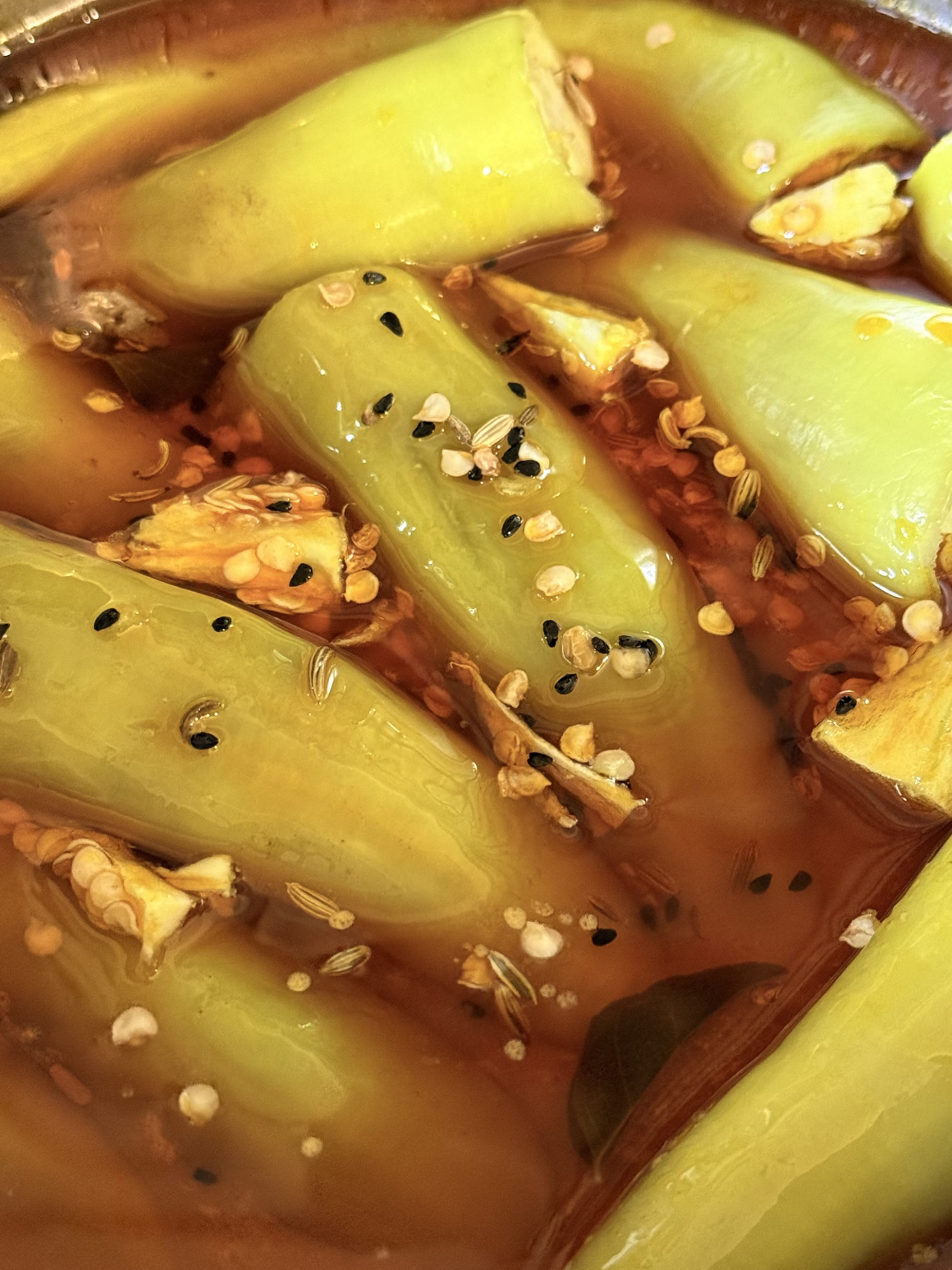
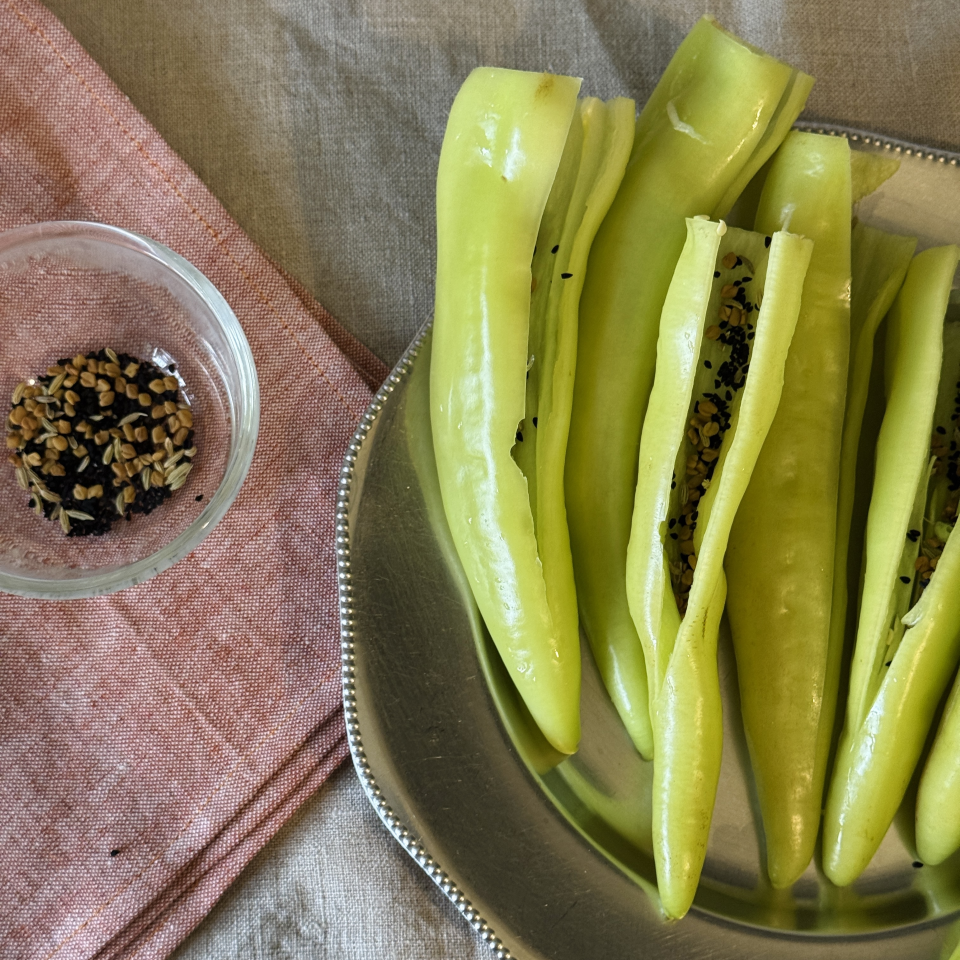
To make his achaar gosht, I begin with half a kilogram of goat shoulder and twelve small green chillies, Farhan’s original choice, selected for the particular quality of their skin and the depth of flavour it carries. He would pick ones that were slightly larger than the rest of the same variety, easier to work with, each one carefully slit, deseeded and stuffed with a mixture of methi seeds, saunf and kalonji, spices that in another life would be pressed into a pickle jar, doing the slow work of preservation. When the recipe passed to my mother, she made one quiet change: she moved to the larger achaari mirchi, the bajji menasinakayi as it is known in Bangalore, where it is easily found and widely used. Being considerably larger, it is easier to de-seed, often with the help of a spoon, and its heat is gentler, which suited her better. It is her version I follow now, which means the dish I make is already a translation of a translation.
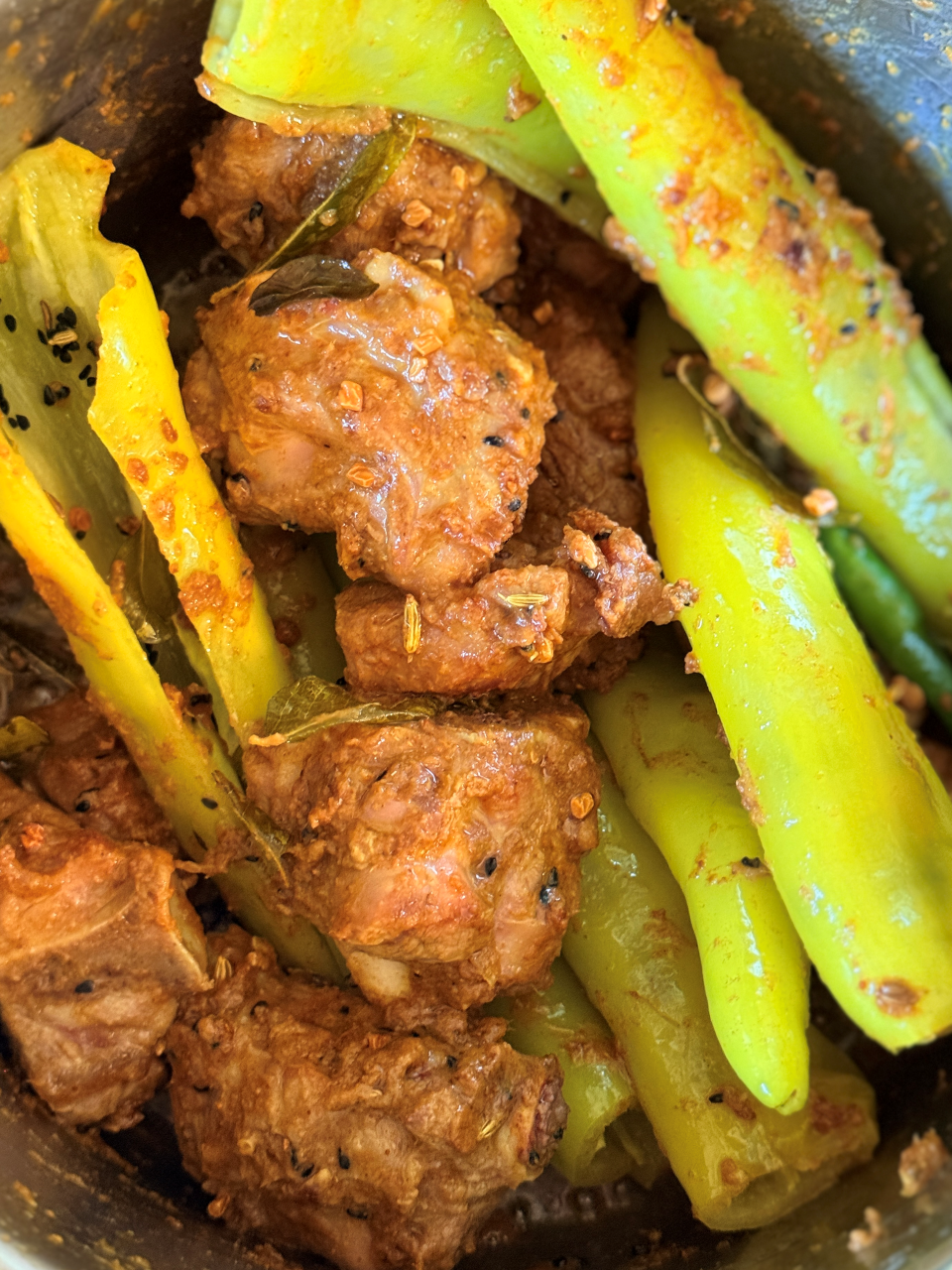
In a wide pan, I heat half a cup of oil with four teaspoons of dhaniya powder, a teaspoon of haldi and two generous tablespoons of ginger garlic paste, cooking it on a slow fire until the oil begins to separate. This is aparticular moment every Indian cook learns to read, when the spices have given everything they have and the fat rises back, clear and fragrant, to the surface. The meat goes in then, along with a few sprigs of fresh curry leaf, and is fried until it has coloured and taken on the spice. The stuffed chillies follow, then half a cup of dahi, stirred through, before a small cup of water is added and the lid goes on the pressure cooker for thirty-five minutes. When I open it, I am looking for meat that falls from the bone but hasn’t gone beyond itself, still with some integrity, the oil separated beautifully around it. Five more minutes open on the heat, and it is done. I have eaten this dish in three versions of itself: Farhan’s, my mother’s, and mine. Each time, it tastes like all of them at once.
My paternal grandmother, Lalita Krishnamurthy, arrived at the kitchen from an entirely different direction, and is no less extraordinary for it. Born in Bhadravathi into a warm, traditional family, her strength traces back to her own grandmother, who became a widow before twenty in an era that expected her to disappear, and instead taught herself languages, raised her children with ferocious independence, and refused every expectation placed upon her. Lalita inherited that spirit completely.
At sixteen, she married B.V. Krishnamurthy, an ecologist and economist with the UN and a man with a gourmet’s passion for food, and discovered that she had not cooked much before. Rather than be daunted, she taught herself entirely from scratch, learning to recreate the flavours that brought her husband joy while steadily developing her own culinary voice. Today, at ninety-four, she holds a degree in Ikebana (the Japanese art of flower arrangement), taught Sanskrit to schoolchildren for years, and is still, with characteristic determination, on YouTube — not seeking out new dishes entirely, but finding new ways to reinvent the ones she already knows. A different technique here, an alternative ingredient there, a fresh addition to a method she has made a hundred times. Her foundation in cooking is solid and decades deep, but her curiosity about what a familiar dish might yet become has never once been satisfied. She is the opposite of the cook who fears the unfamiliar. She is magnetised by it.
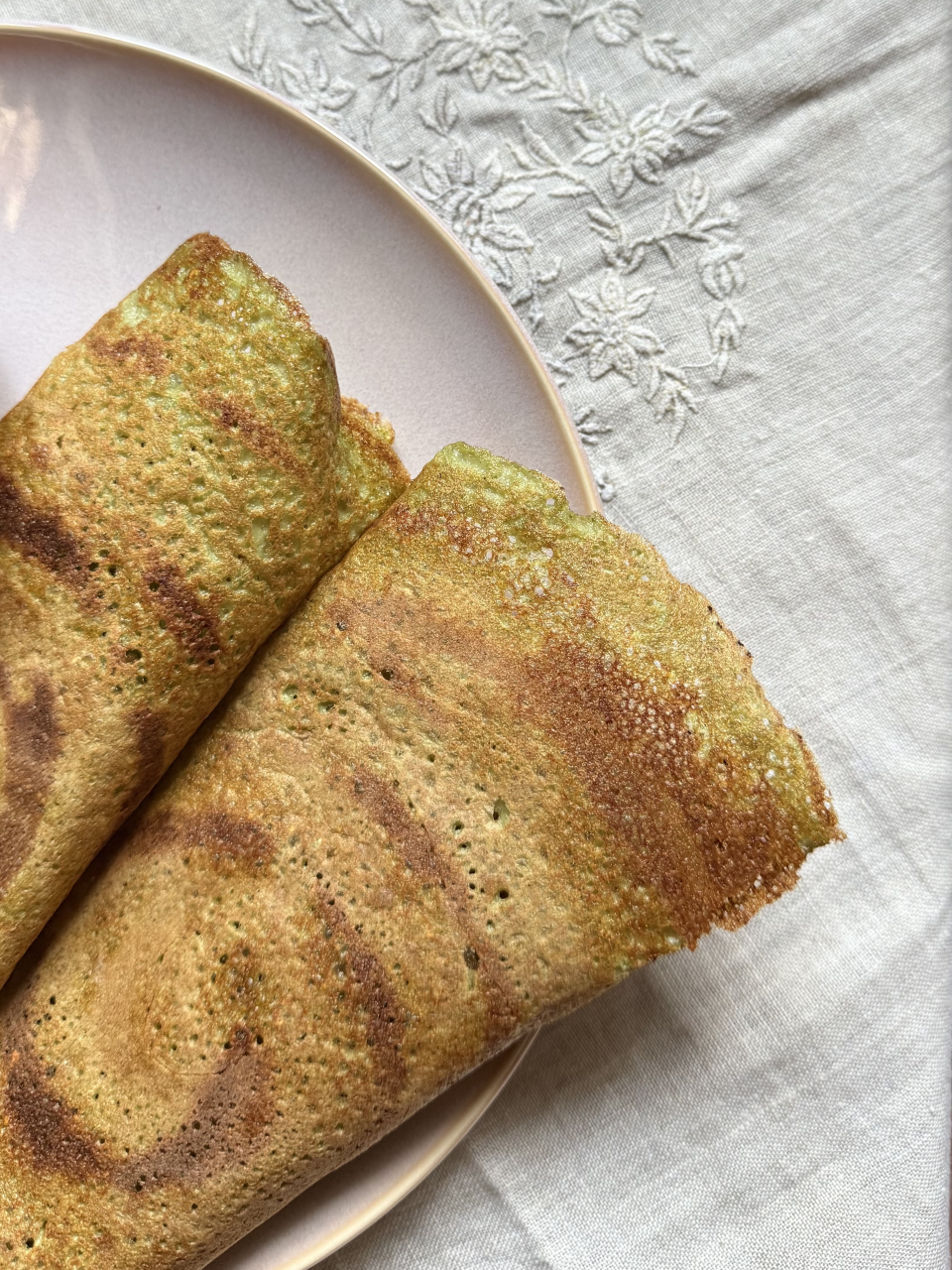
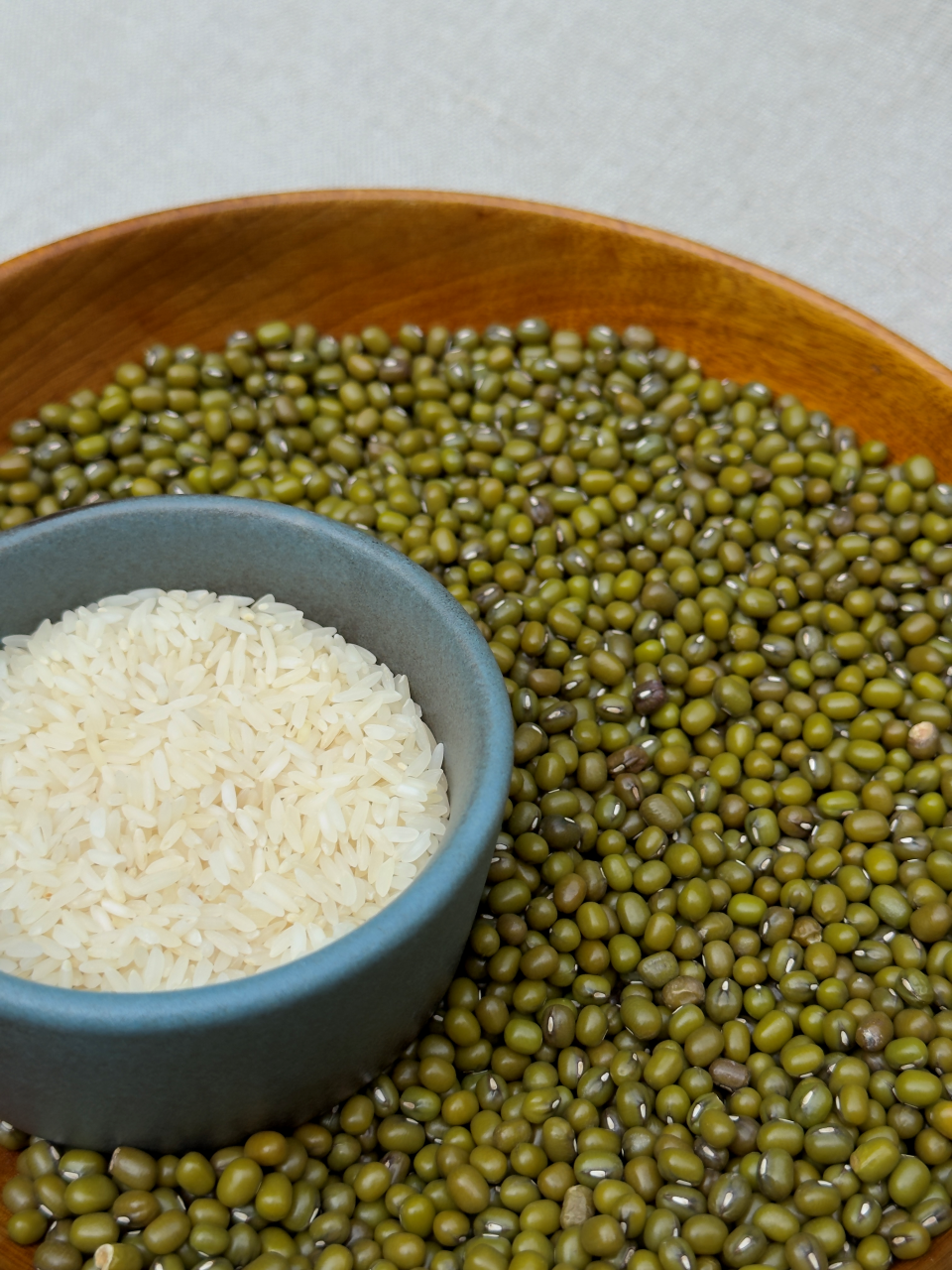
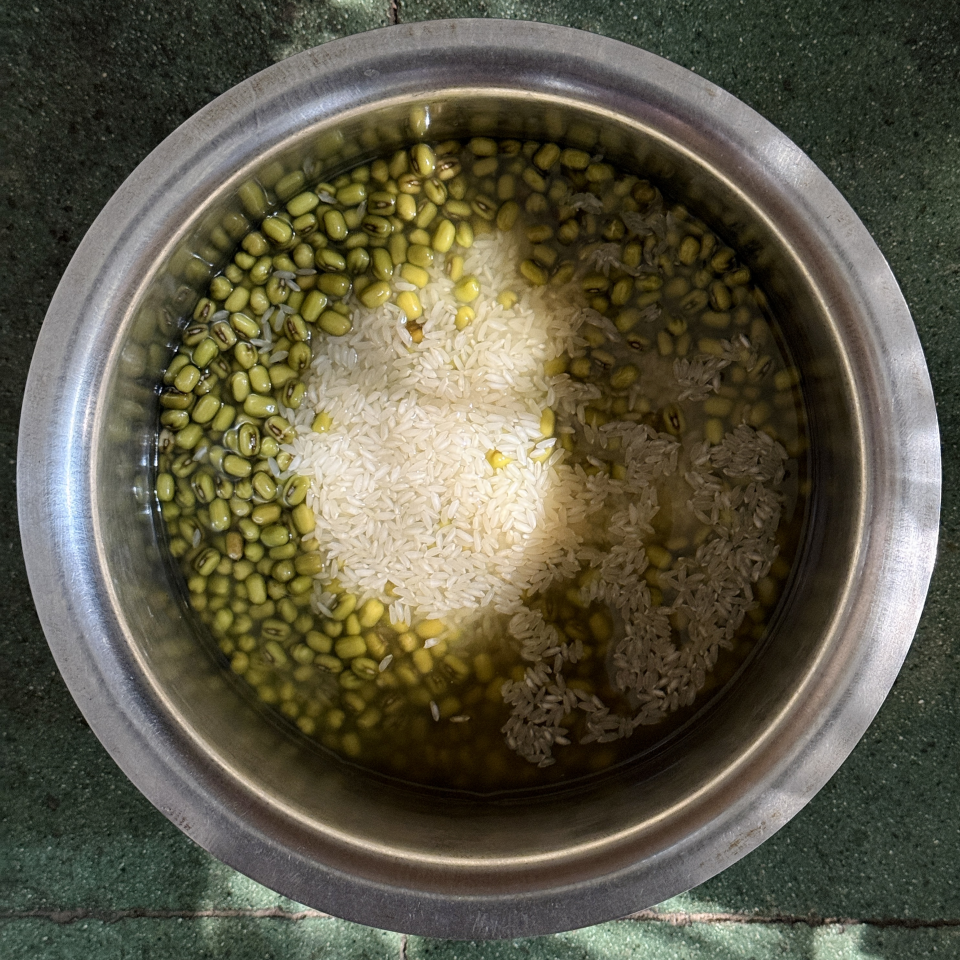
The pesarlattu begins the night before. This is important, and easy to forget. One and a half cups of sabut moong dal, whole green gram, combined with half a cup of dosa rice in a large bowl, covered generously with water and left to soak overnight. By morning the dal has softened and swelled, ready to give itself to something new. I drain it and move it to the blender with two green chillies, a pinch of hing, a thumb of finely chopped ginger, and just enough water to coax it into a thick, pourable batter, smooth, pale green, with a clean, grassy smell that is entirely its own. This batter does not ferment. It is used immediately, and that immediacy is part of what it is: no waiting, no sourness, nothing withheld.
I wait until the achaar gosht is done and resting, its flavours settling deeper into the meat, before I heat the cast-iron skillet and pour the first ladleful. It spreads into a thin circle, thinner than you think it should go, the edges beginning to crisp and lift while the surface dulls from wet to set. A little oil around the edges, two minutes, then the flip. Just a minute on the other side, enough to colour without hardening. Lalita taught me this dish, made it in front of me more times than I can count. Now I make it for her. She says I have perfected the art of making the thinnest ones, which is the kind of thing she says simply, without theatre, and which stays with you long after the meal is finished.
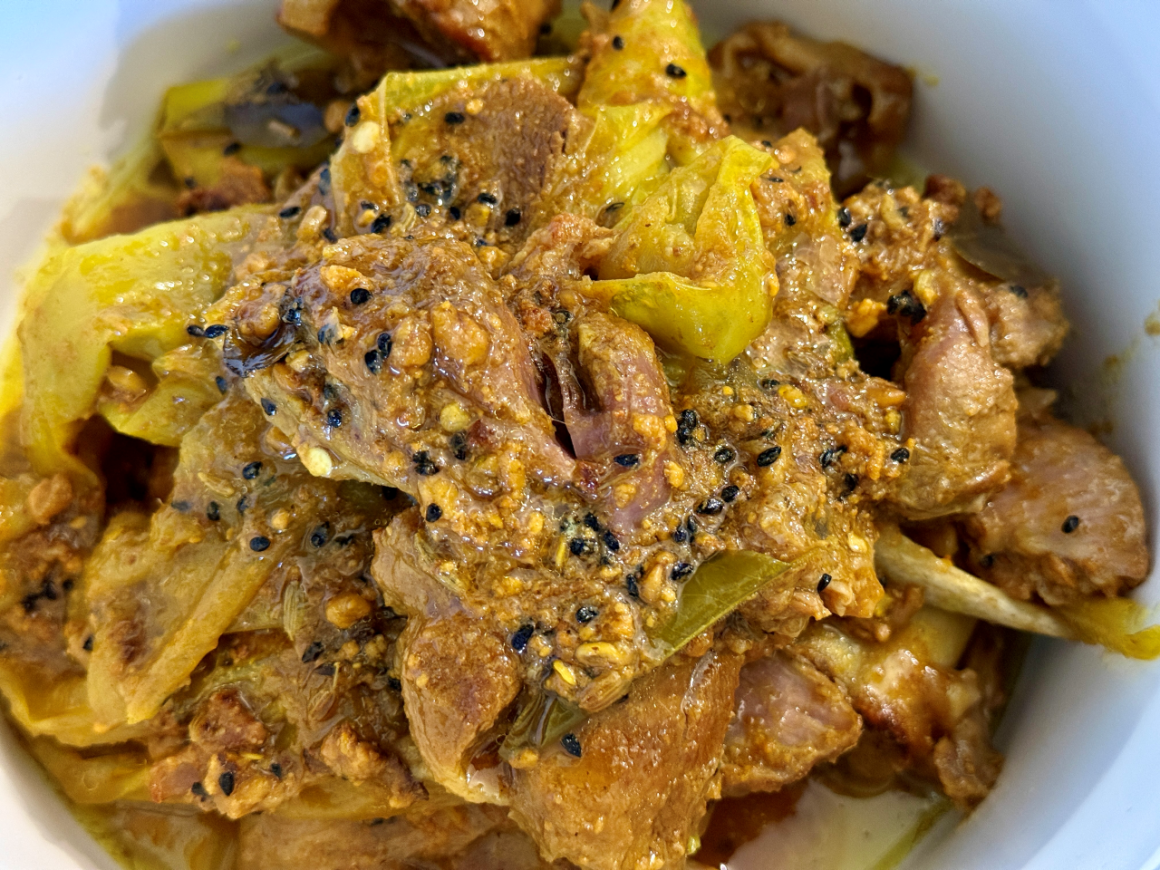
No cookbook places them side by side, no region would think to serve one alongside the other. Yet the flavours make their own argument — the heat and depth of the gosht finding something it needed in the clean, grassy simplicity of the pesarlattu, each one making the other more itself. I think of my uncle when I eat it, and I think of my grandmother. One dish is an act of memory, cooking toward someone you’ve lost, trying to close a distance that can’t quite be closed. The other is an act of love in the present tense, made for someone still here, still watching, still forming an opinion. Together on the plate, they hold both. We cook who we are. And sometimes, if we are very lucky, we cook who we are still becoming.
You can find a more detailed recipe here.
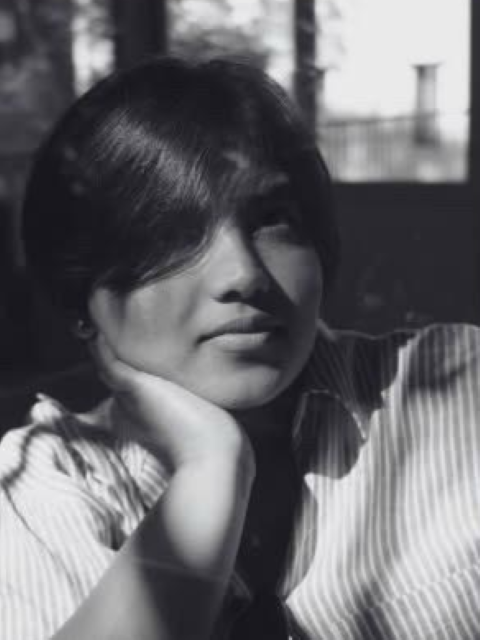
Seher Krishna is a designer, storyteller and food enthusiast who grew up in Bangalore sharing a kitchen and a life’s worth of stories with her grandmother, Lalita Krishnamurthy. With a Master’s in Design for Emergent Futures from Barcelona, Seher explores the intersections of design, sustainability and food cultures.
After working in creative environments, she embarked on a project close to her heart — documenting her grandmother’s life through stories and recipes. Their book @dmlcookbook is a deep dive into the culinary heritage from her paternal grandmother, a blend of both sides of her family, maternal and paternal, woven together through recipes, memories, and a shared delight in flavours. But perhaps the greatest ingredient in all of it is her paternal grandmother herself, who at 94, still greets life with an open mind. It is from her that Seher learned, and keeps learning, that curiosity is not something you grow out of. It is something you choose, every day.
When not writing or designing, Seher can be found coaxing saplings from seeds; repurposing leftovers into something delicious or cooking with her faithful sous-chef Hazel—a dog with surprisingly refined tastes and an uncanny ability to appear whenever something is being whipped up in the kitchen.
“The views, historical interpretations, and opinions expressed in this article are solely those of the author and do not necessarily reflect the official position or stance of Bruite Magazine.”
Translations and detailed descriptions are provided to give a better understanding of the story to people from different cultural backgrounds across the globe.
Wonderful writing , creates a mood and provokes thought, a rare skill..
Hope to read more from you
Well-articulated!