
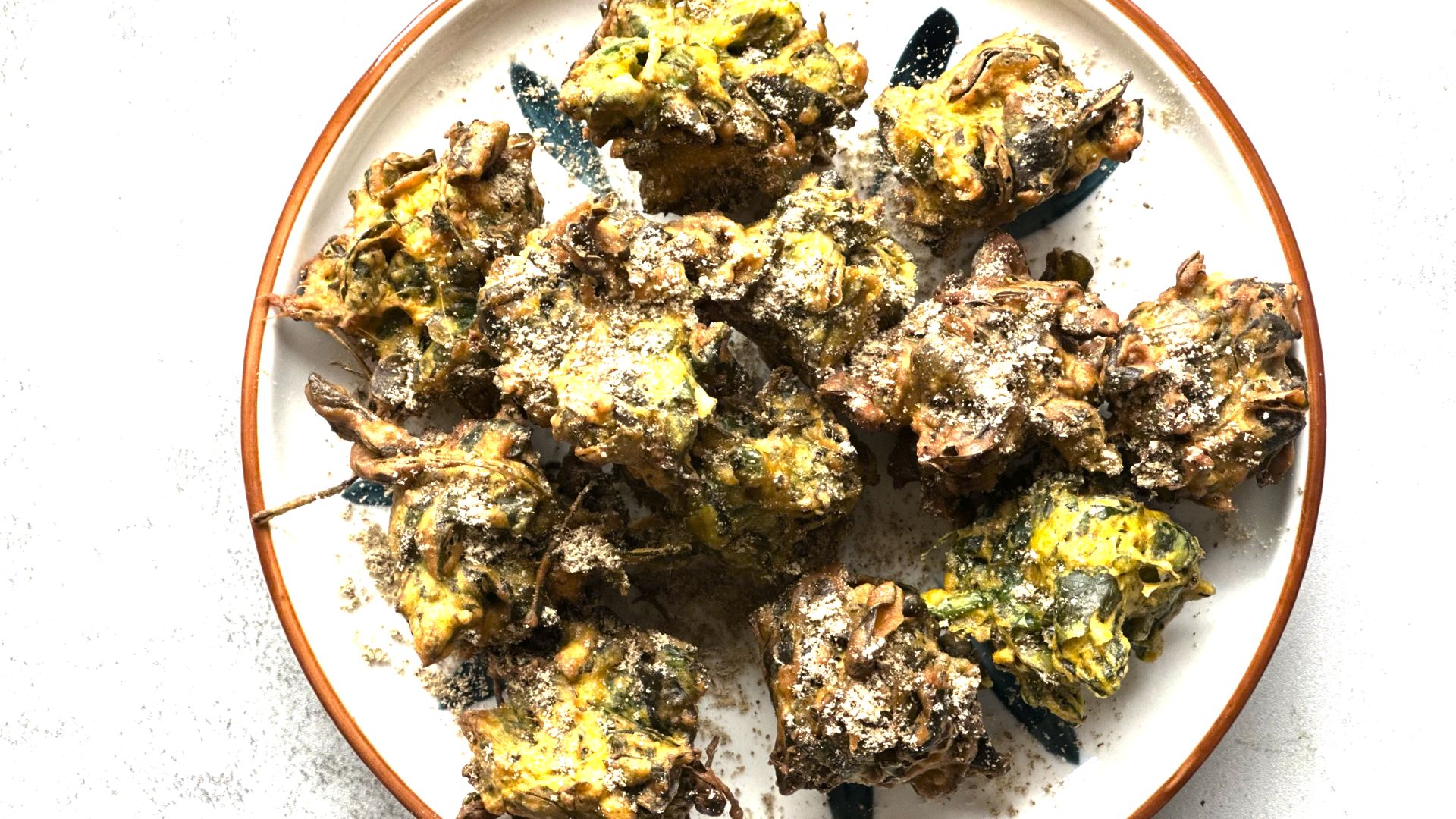
Outside the Brihadeeswarar Temple in Thanjavur, murungai keerai pakoras are part of the street’s rhythm. Crisp fritters made with drumstick leaves, gram flour, cumin, pepper, and curry leaves.
Though drumstick leaves are available through the year, the spring harvest is especially valued for its nutrient-rich character.
This recipe is a simple version of the temple-town snack, gently bound and fried until crisp.
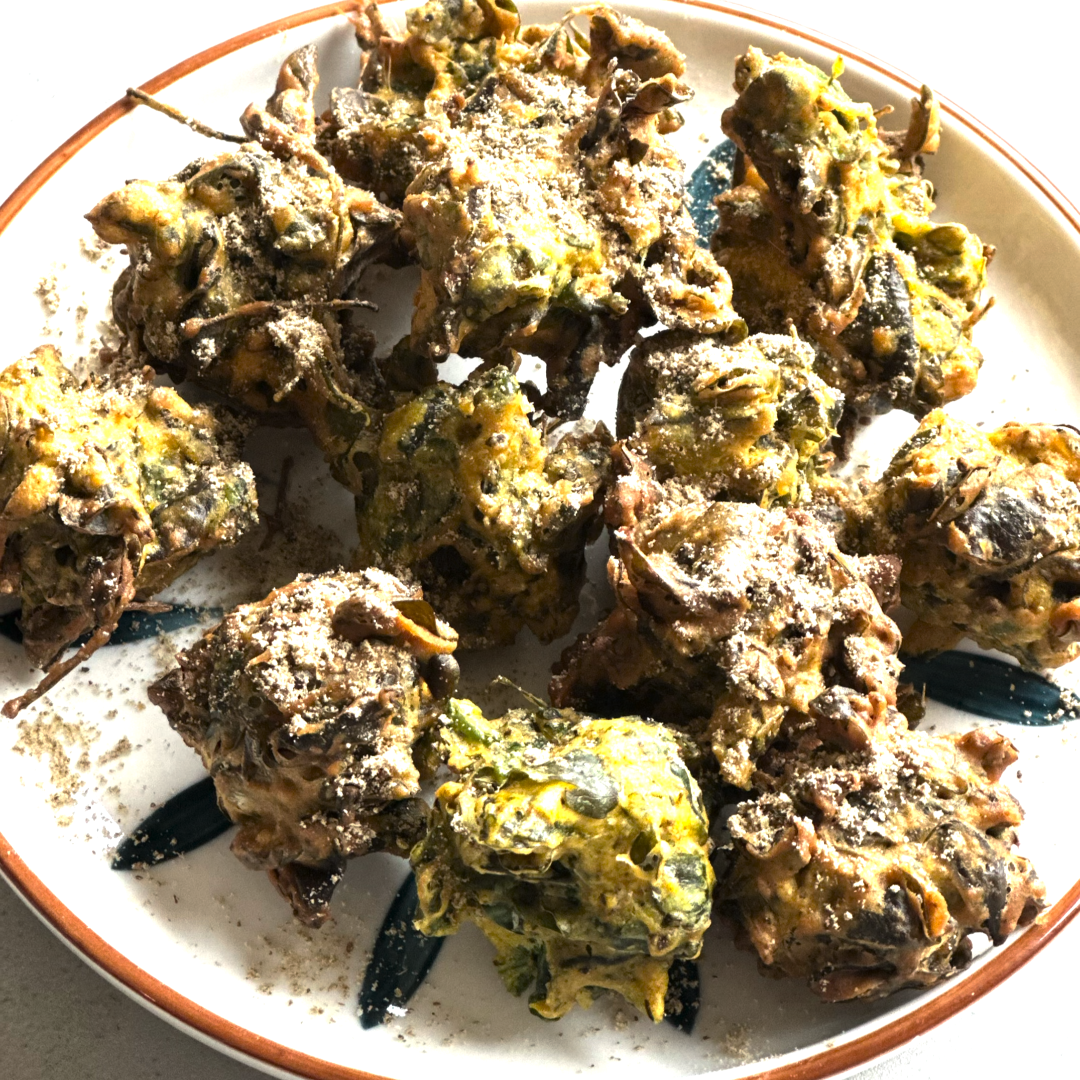
Murungai Keerai Vadai
(Drumstick Leaves Pakora)
Ingredients
- Fresh drumstick leaves (murungai keerai): 2 cups, stems removed
- Crushed fennel seeds: 1 tsp
- Coarsely crushed black pepper: 1 ½ tsp
- Curry leaves: 8-10, torn
- Red chilli powder: ½ tsp
- Turmeric powder: ¼ tsp
- Salt: to taste
- Besan (gram flour): ¾ cup
- Rice flour: 2 tbsp
- Water: as needed
- Oil: for frying
Method:
- Drumstick leaves need a little patience. Strip the leaves from the tougher stems and rinse them well in a few changes of water. Dry them as much as you can before using. If the leaves hold too much moisture, the pakoras steam instead of crisping.
- In a wide bowl, combine the drumstick leaves, fennel, curry leaves, chilli powder, turmeric, and salt. Use your hands to lightly crush and mix everything for a minute or two.
- Add the besan and rice flour. Mix again. Add water little by little, just enough for the flour to coat the leaves and onions. This should not become a smooth batter, but should look shaggy and clumpy.
- Heat oil in a kadai over medium heat. Once hot, pinch off small uneven portions of the mixture and drop them gently into the oil. Do not flatten them too much. The rough edges are what become crisp.
- Fry in batches until deep golden brown and crisp, turning occasionally. The drumstick leaves darken slightly as they fry and develop a toasted flavour that works especially well with the fennel and curry leaves.
- Drain on paper towels and serve hot.
Tanushree Kulkarni is a cultural historian and food researcher with a decade long background in art history, cultural development and museum practice. Trained in the pastry arts, her work examines the history and cultural power of Indian snacks, bakeries and sweets.
Translations and detailed descriptions are provided to give a better understanding of the story to people from different cultural backgrounds across the globe.